5 Best Free Alternatives to Relay.app in 2026
By Noahlast updated
Compared: free alternatives to Relay.app
| Alternative | Best for | Standout | Biggest weakness | Learning curve | Price |
|---|---|---|---|---|---|
| Relay.appreference | teams that already used Relay.app and need to export their workflows and data before the September 14, 2026 shutdown; not a fit for anyone starting new automation work | Human-in-the-loop AI steps that let a person review or edit an AI-generated action before it executed, rather than running AI actions fully autonomously. | Relay.app is shutting down entirely: free-user access ended August 15, 2026, and paying-customer access ends September 14, 2026. It is not accepting new customers and offers no ongoing product to evaluate or switch to. | Low | Pricing not verified |
| Zapier | non-developers and small operations teams who need to connect thousands of different apps through simple trigger-action automations, without engineering resources | The largest pre-built app-integration library in workflow automation, with thousands of supported apps, so most tools a team already uses can be connected without custom API work. | Pricing is metered by task volume, not just seats, so cost rises quickly for high-volume automations, and moving from 750 to 2,000 tasks/month on Professional roughly doubles the monthly bill; unused tasks don't roll over between billing periods. | Low | Free tier · paid from $19.99/mo |
| Make | operations, marketing, and IT teams that need visual, branching automation workflows across 3,000+ apps, beyond what simpler linear automation tools support | A canvas-style visual scenario builder with routers, filters, and branching logic that handles more complex multi-path automations than simpler linear automation tools, plus a natural-language builder (Maia) for describing automations in plain text. | Pricing is metered by operation credits rather than a flat seat price, so complex, high-volume scenarios can consume the monthly allowance quickly; the listed per-tier prices are also annual-billing rates, with monthly billing costing more, and building non-trivial branching scenarios has a real learning curve. | Moderate | Free tier · paid from $12/mo |
| n8n | technical teams that want to mix visual workflow building with custom code, either self-hosted for full control or on cloud paying per execution instead of per step | Billing by full workflow execution rather than by individual step or task, so complex multi-node automations don't multiply cost the way per-task pricing does on competitors. | Cloud pricing is listed in euros, not dollars, and jumps sharply from Pro (€50/month) to Business (€667/month), leaving a wide gap for teams that outgrow Pro's execution limits but don't need Business's SSO and compliance features. | Moderate | Free |
| Pipedream | developers who want code-level control (Python, Node.js, Bash, or Go) inside no-code-style workflow automation, and teams building AI agents against thousands of APIs | Any workflow step can run actual Python, Node.js, Bash, or Go code alongside no-code app connectors, and MCP servers expose 10,000+ tools directly to AI agents. | Pipedream's pricing moved to a credit-based model that's hard to estimate in advance — the public pricing page renders entirely client-side with no static content, and per-execution credit costs vary by step complexity, making exact monthly spend difficult to predict before building a workflow. | Moderate | Free |
| Activepieces | engineering-adjacent teams that want Zapier-style automation but need self-hosting, SOC 2/GDPR compliance, or freedom from per-task pricing | MIT-licensed Community Edition can be self-hosted for free with unlimited flows and runs, with no artificial cap on automation volume the way per-task pricing on closed competitors imposes. | The free self-hosted Community Edition excludes AI agents, chat-to-automation, API access, and admin controls like SSO and audit logs, so teams that want those features are pushed to a paid Cloud plan or commercial license despite the open-source branding. | Moderate | Free tier · paid from $16/mo |
 Relay.app
 Zapier
 Make
Make n8n
n8n Pipedream
 Activepieces
1.Zapier — best Relay.app alternative for non-developers and small operations teams who need to connect thousands of different apps through simple trigger-action automations, without engineering resources
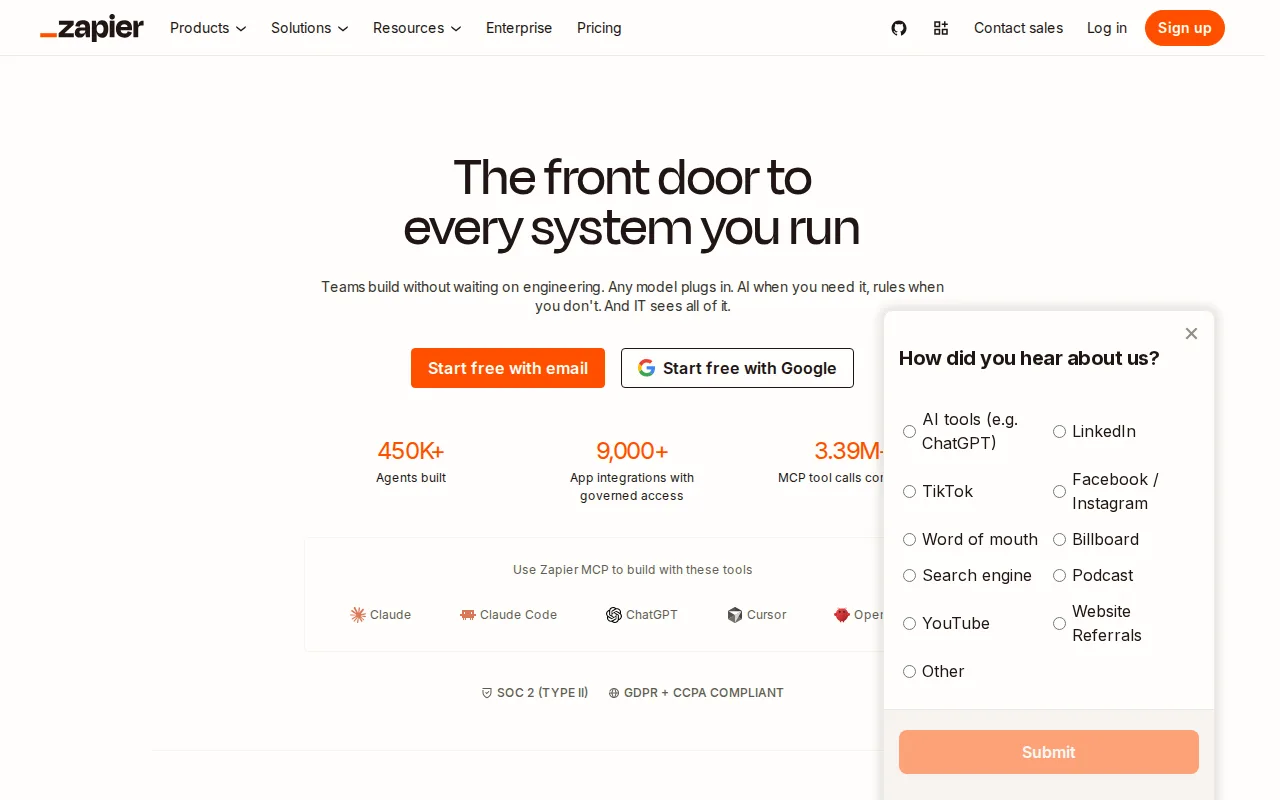
Zapier is the best Relay.app alternative for non-developers and small operations teams who need to connect thousands of apps through simple trigger-action automations, and who need a platform accepting new signups today, unlike Relay.app, which stopped onboarding customers before its September 14, 2026 shutdown. Zapier's Free plan supports real two-step automations at 100 tasks/month with no credit card, and Zapier holds a 4.7/5 rating from 3,069 Capterra reviews, a far larger verified sample than Relay.app's 5.0/5 from 43 Product Hunt reviews recorded before its closure. Zapier's thousands of pre-built app connectors mean most tools a team already uses connect without custom API work, a breadth beyond Relay.app's own Workflows and Sequences model. Zapier's AI-assisted Zap building also reduces manual setup, a different approach from Relay.app's human-in-the-loop AI-step review model, which let a person edit an AI-generated action before it ran. Relay.app, while it was operating, still holds an edge for anyone who specifically wants human-in-the-loop review of AI-generated automation steps before they execute: Zapier's AI Fields and AI-assisted building run with less built-in manual-approval friction, and Zapier's task-based pricing scales directly with automation volume, which can get expensive fast at high frequency, an ongoing cost structure to weigh once workflows are rebuilt on a new platform.
Compared to Relay.app: accepting new signups today vs Relay.app's closed signups ahead of its September 14, 2026 shutdown, 4.7/5 rating from 3,069 Capterra reviews vs Relay.app's 5.0/5 from 43 pre-shutdown reviews, thousands of pre-built connectors vs Relay.app's narrower integration set
Wins:Actively accepting new customers today, unlike Relay.app, which is not onboarding anyone ahead of its September 14, 2026 shutdown · 4.7/5 rating from 3,069 Capterra reviews, a far larger verified sample than Relay.app's 5.0/5 from 43 pre-shutdown reviews · Thousands of pre-built app connectors mean most existing tools connect without custom API work
Loses:No dedicated human-in-the-loop review step for AI-generated actions the way Relay.app's approval model offered before shutdown · Task-based pricing scales directly with automation volume, and high-frequency workflows can get expensive quickly · Linear Zap editor can be harder to debug for complex multi-branch logic than a visual canvas builder
Pros
- Free plan supports real two-step automations, not just a trial, at 100 tasks/month.
- Broadest app-integration library among no-code automation tools, covering thousands of connectors.
- AI-assisted Zap building and AI fields reduce the manual setup needed for common workflows.
- Multi-step Zaps with filters, paths, and webhooks cover moderately complex logic without custom code.
Cons
- Task-based pricing means cost scales directly with automation volume, and high-frequency workflows can get expensive fast.
- Unused monthly tasks don't roll over, unlike some competitors' credit systems.
- Team and Enterprise features like SSO and shared workflows require a meaningful jump in monthly cost over Professional.
- Complex multi-branch logic can be harder to debug in Zapier's linear Zap editor than in visual-flow competitors like Make.
Pricing: Free tier · paid from $19.99/mo — $19.99/month Professional (750 tasks) vs Relay.app's unpublished historical pricing (verified undefined NaN, NaN)
2.Make — best Relay.app alternative for operations, marketing, and IT teams that need visual, branching automation workflows across 3,000+ apps, beyond what simpler linear automation tools support
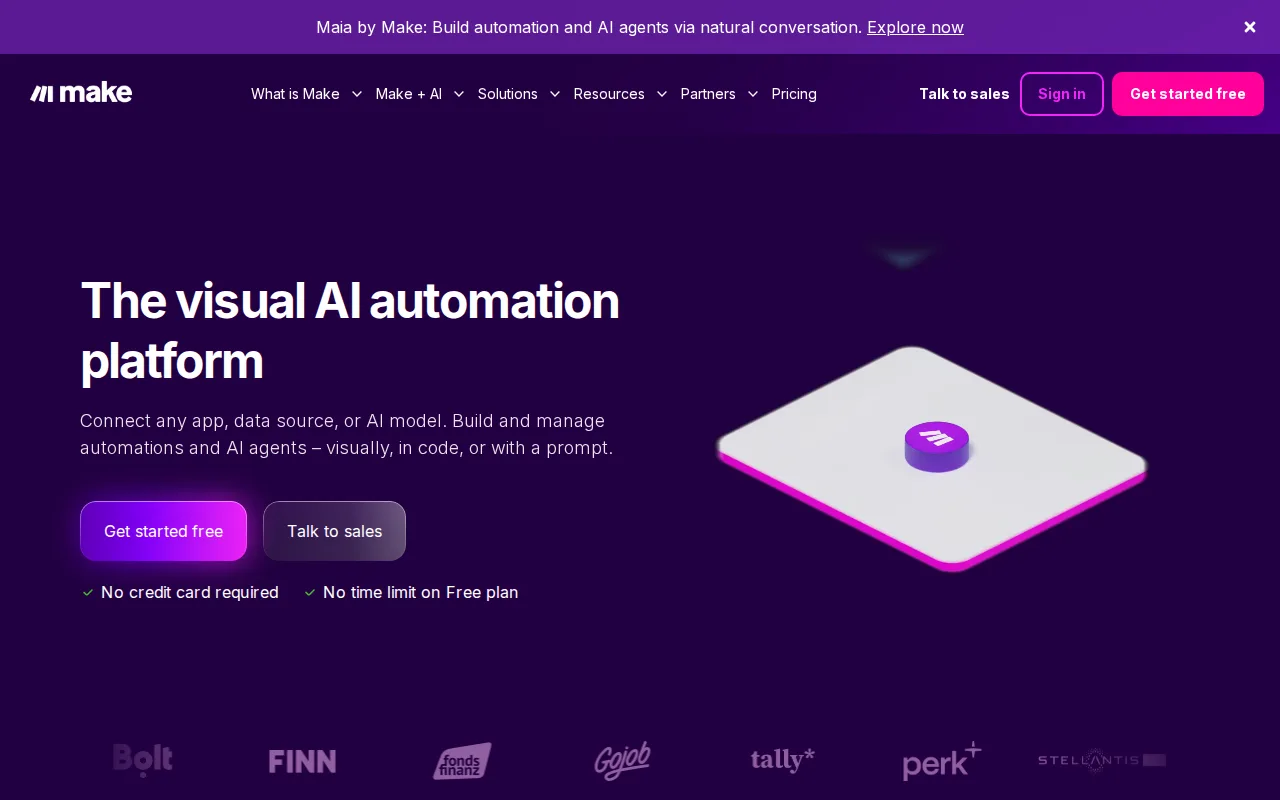
Make is the best Relay.app alternative for operations, marketing, and IT teams that need visual, branching automation workflows across thousands of apps, and who need to migrate off a platform that stopped accepting new customers ahead of its September 14, 2026 shutdown. Make's canvas-style scenario builder with routers, filters, and branching logic handles complex multi-path automations visibly, and Make holds a 4.8/5 rating from 408 Capterra reviews, well above Relay.app's own 5.0/5 from just 43 Product Hunt reviews recorded before its closure. Make's Free plan includes 1,000 operations/month, enough to rebuild and test real automations migrated from Relay.app's exported JSON workflows, and its Core plan starts at $12/month billed annually for 10,000 operations, a transparent published price. Make also supports building automations through "Maia," a conversational AI assistant for describing an automation in natural language, a different AI-assisted approach from Relay.app's human-in-the-loop AI-step review model. Relay.app, while it was operating, still held an edge for teams that specifically wanted a person to review or edit an AI-generated action before it ran: Make's listed tier prices are annual-billing rates, with monthly billing costing more, and building non-trivial branching scenarios carries a real learning curve for non-technical users migrating fresh from a simpler tool.
Compared to Relay.app: accepting new signups today vs Relay.app's closed signups ahead of shutdown, 4.8/5 rating from 408 Capterra reviews vs Relay.app's 5.0/5 from 43 pre-shutdown reviews, canvas-style visual builder with routers and filters for branching logic
Wins:Actively accepting new customers today, unlike Relay.app, which stopped onboarding ahead of its September 14, 2026 shutdown · 4.8/5 rating from 408 Capterra reviews, well above Relay.app's 5.0/5 from 43 pre-shutdown reviews · Canvas-style visual builder with routers and filters handles complex branching logic visibly
Loses:No dedicated human-in-the-loop review step for AI-generated actions the way Relay.app's approval model offered before shutdown · Listed tier prices are annual-billing rates; paying monthly costs more · Complex branching scenarios have a real learning curve for teams migrating fresh from a simpler tool
Pros
- Visual scenario builder supports branching, routers, and filters for genuinely complex multi-path automations.
- 3,000+ app integrations cover most common business tools out of the box.
- Free tier (1,000 ops/month) is enough to build and test real automations before paying.
- Core plan starts at $12/month, undercutting some competitors for lower-volume users.
Cons
- Operation-credit pricing means complex or high-volume scenarios can burn through a plan's monthly allowance quickly.
- Listed tier prices are annual-billing rates; paying monthly costs more.
- Complex branching scenarios have a real learning curve for non-technical users.
- Free plan's 15-minute minimum interval between scenario runs limits near-real-time automation.
Pricing: Free tier · paid from $12/mo — $12/month Core (10,000 operations) vs Relay.app's unpublished historical pricing (verified undefined NaN, NaN)
3.n8n — best Relay.app alternative for technical teams that want to mix visual workflow building with custom code, either self-hosted for full control or on cloud paying per execution instead of per step
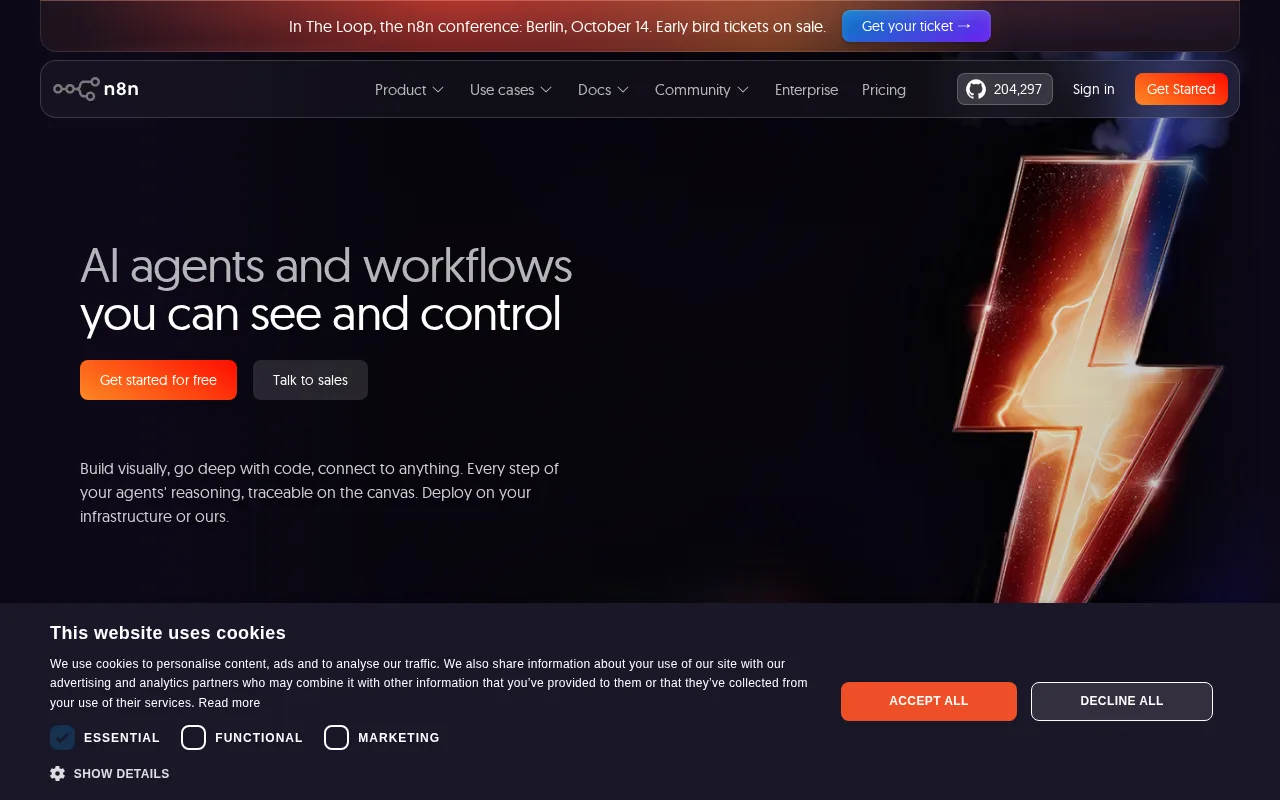
n8n is the best Relay.app alternative for technical teams that want to mix visual workflow building with custom code, either self-hosted for full control or on cloud, and who need an actively maintained platform now that Relay.app has stopped accepting customers ahead of its September 14, 2026 shutdown. n8n's Self-hosted Community edition is free via Docker under the Sustainable Use License with the complete automation engine, and it holds a 4.6/5 rating from 48 Capterra reviews, a verified sample Relay.app's own 5.0/5 from 43 pre-shutdown Product Hunt reviews is close to in size but not in ongoing reliability. Like Relay.app, n8n supports building multi-agent AI workflows with human-in-the-loop approval, the closest structural match to Relay.app's own AI-step review model among these alternatives, so teams that valued that workflow specifically can find a similar pattern here. n8n's cloud Starter tier publishes a clear €20/month price for 2,500 executions, a transparent number Relay.app's own historical pricing tiers weren't available to confirm after its shutdown notice replaced normal marketing pages. Relay.app, while it was operating, was simpler to onboard onto for non-technical teams: n8n's cloud pricing jumps sharply from Pro (€50/month) to Business (€667/month) with nothing in between, and self-hosting requires managing your own Docker infrastructure and updates, a technical commitment beyond what Relay.app's no-code builder required.
Compared to Relay.app: free, fully-featured self-hosted Community edition vs Relay.app's cloud-only, now-shutting-down service, supports multi-agent AI workflows with human-in-the-loop approval matching Relay.app's own review model, published €20/month Starter cloud pricing
Wins:Free, fully self-hostable Community edition via Docker with the complete automation engine, versus Relay.app's cloud-only service now shutting down · Supports multi-agent AI workflows with human-in-the-loop approval, the closest match to Relay.app's own AI-step review model among these alternatives · Published cloud pricing starting at €20/month for 2,500 executions, a transparent number Relay.app's shutdown notice replaced with no confirmable pricing
Loses:Cloud pricing jumps sharply from Pro (€50/month) to Business (€667/month), a wide gap · Self-hosting requires managing your own Docker infrastructure and updates, a technical commitment beyond Relay.app's no-code builder · Only 500+ pre-built app integrations, a narrower connector library than some no-code-first competitors
Pros
- Bills per full workflow execution, not per step, which can be cheaper than per-task pricing for complex automations.
- Free, fully-featured self-hosted Community edition via Docker with the complete automation engine.
- Every node can be extended or replaced with custom JavaScript or Python code.
- 500+ pre-built app integrations plus native support for building multi-agent AI workflows with human-in-the-loop steps.
Cons
- Large price jump between Pro (€50/month) and Business (€667/month) cloud tiers, with nothing in between.
- Sustainable Use License is not OSI-approved open source; enterprise features require a separate commercial license even for self-hosted use.
- Self-hosting requires managing your own Docker infrastructure, updates, and scaling, unlike a fully managed cloud automation tool.
- Visual canvas can get cluttered on large workflows with many branches and custom code nodes.
Pricing: Free — €20/month Starter cloud (2,500 executions) vs Relay.app's unpublished historical pricing (verified undefined NaN, NaN)
4.Pipedream — best Relay.app alternative for developers who want code-level control (Python, Node.js, Bash, or Go) inside no-code-style workflow automation, and teams building AI agents against thousands of APIs
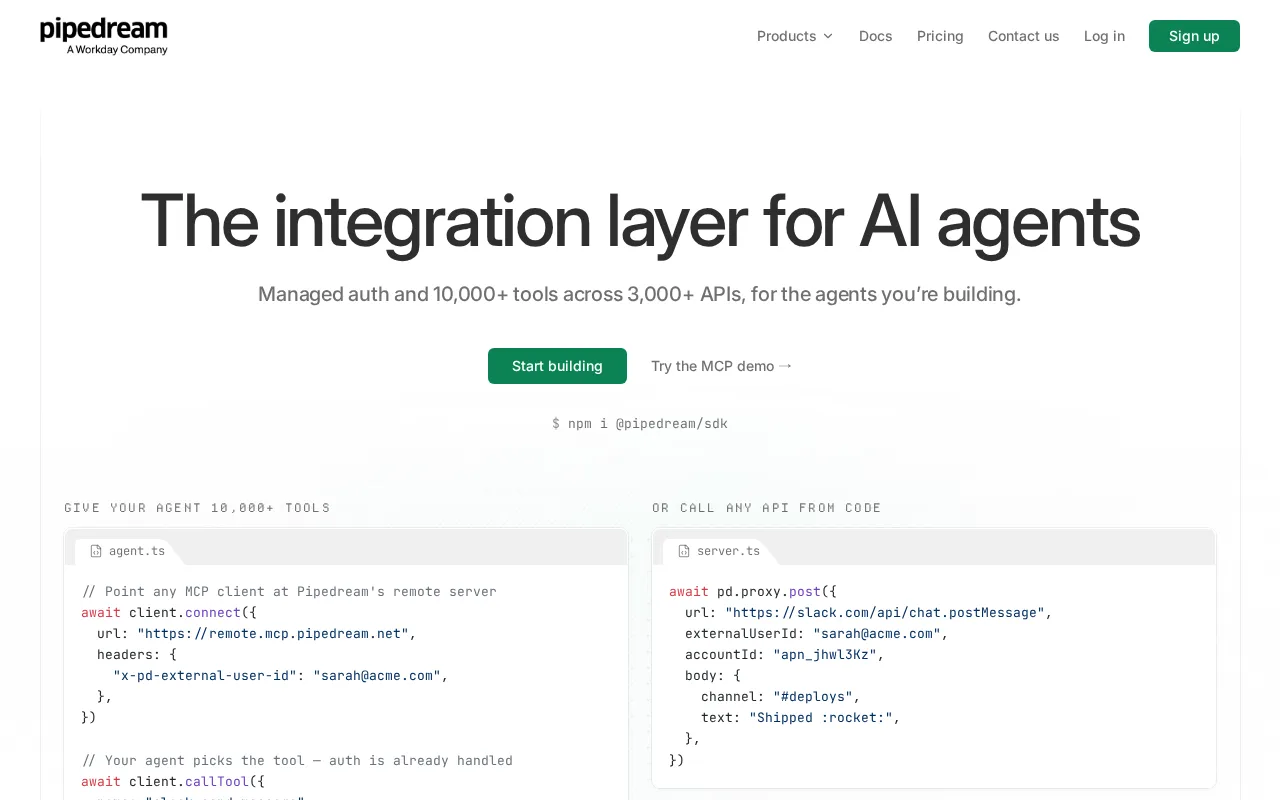
Pipedream is the best Relay.app alternative for developers who want code-level control inside no-code-style workflow automation, and teams building AI agents against thousands of APIs, filling the gap left by Relay.app's shutdown for technically-minded teams. Pipedream lets any workflow step run actual Python, Node.js, Bash, or Go code alongside no-code app connectors, a deeper code-level flexibility than Relay.app's own Workflows and Sequences builder offered. Pipedream's MCP servers expose 10,000+ tools directly to AI agents, and it's SOC 2 Type II, HIPAA, and GDPR compliant, compliance credentials that support production migrations away from Relay.app's now-shutting-down service. Pipedream's core workflow engine is open source on GitHub, giving migrating teams more long-term platform assurance than a closed, discontinued service like Relay.app. Relay.app, while it was operating, offered a more approachable no-code-first builder with a dedicated human-in-the-loop AI-step review model: Pipedream's paid tiers render pricing entirely client-side with no static content, making costs harder to estimate in advance than Relay.app's own published tiers were, and writing custom code steps assumes at least basic programming ability, a steeper ask for non-technical teams than Relay.app's workflow builder required.
Compared to Relay.app: code-level control (Python, Node.js, Bash, Go) inside workflow steps beyond Relay.app's no-code builder, MCP servers expose 10,000+ tools to AI agents, open-source core workflow engine vs Relay.app's now-discontinued closed platform
Wins:Any workflow step can run actual Python, Node.js, Bash, or Go code, deeper flexibility than Relay.app's no-code-first Workflows and Sequences · MCP servers expose 10,000+ tools directly to AI agents, and the platform is SOC 2 Type II, HIPAA, and GDPR compliant · Core workflow engine is open source on GitHub, offering more long-term assurance than Relay.app's now-discontinued closed platform
Loses:No dedicated human-in-the-loop review step for AI-generated actions the way Relay.app's approval model offered before shutdown · Paid tiers render pricing entirely client-side with no static content, harder to estimate than Relay.app's published tiers were · Writing custom code steps assumes at least basic programming ability, a steeper ask than Relay.app's no-code builder
Pros
- Mixes no-code app connectors with real code (Python, Node.js, Bash, Go) in the same workflow step.
- 1,000+ pre-built integrations and managed authentication across connected services.
- MCP servers expose 10,000+ tools for AI agent workflows out of the box.
- Core workflow engine is open source, and the platform is SOC 2 Type II, HIPAA, and GDPR compliant.
Cons
- Credit-based paid pricing is hard to estimate before building, since the pricing page isn't published as static, comparable numbers.
- Free plan's daily execution credit cap limits it to light usage or evaluation, not production workloads.
- Writing custom code steps assumes at least basic programming ability, a steeper ask than pure no-code tools for non-technical users.
Pricing: Free — Free plan with unpublished credit-based paid tiers vs Relay.app's unpublished historical pricing
5.Activepieces — best Relay.app alternative for engineering-adjacent teams that want Zapier-style automation but need self-hosting, SOC 2/GDPR compliance, or freedom from per-task pricing
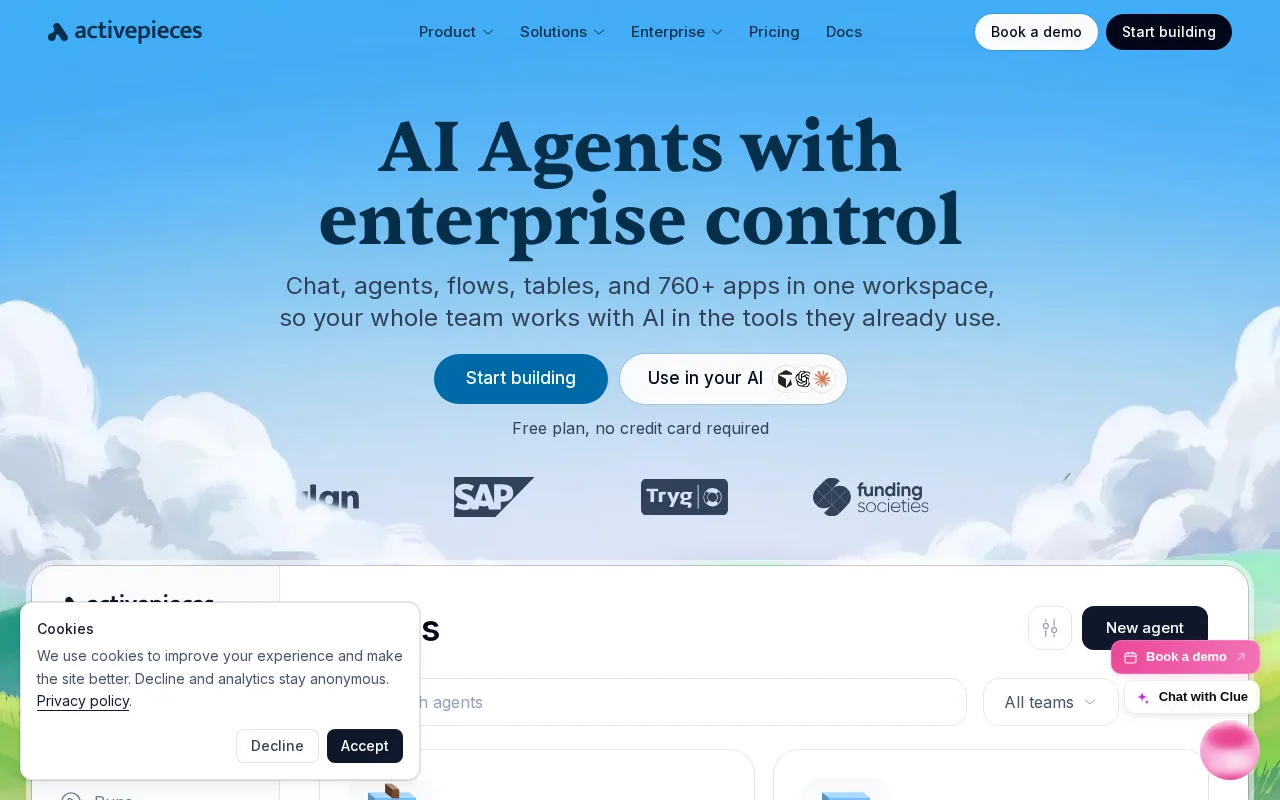
Activepieces is the best Relay.app alternative for engineering-adjacent teams that want Zapier-style automation but need self-hosting, SOC 2/GDPR compliance, or freedom from per-task pricing, all while migrating off a platform that is permanently discontinuing service. Activepieces' MIT-licensed Community Edition is free to self-host via Docker or Helm with unlimited flows, runs, and users, a stronger and more durable free option than anything Relay.app offered before its shutdown. Like Relay.app, Activepieces positions itself as "AI-first" with an AI agent builder and chat-to-automation feature that turns a natural-language request into a working flow, the closest conceptual match to Relay.app's own AI-assisted workflow building among these alternatives. Activepieces' GitHub repo has 23.9k stars with 60% of its integration "pieces" community-contributed, and it holds a 5.0/5 rating from 7 Product Hunt reviews, comparable in score to Relay.app's own pre-shutdown 5.0/5 from 43 reviews. Relay.app, while it was operating, offered a more mature, business-critical-automation-focused product with dedicated human-in-the-loop AI-step approval: Activepieces' free self-hosted Community Edition excludes AI agents, chat-to-automation, and API access, so teams that want those features must move to a paid Cloud plan, and it's a younger project than more established competitors, with a smaller integration library still growing.
Compared to Relay.app: MIT-licensed Community Edition free to self-host with unlimited flows, runs, and users, AI agent builder and chat-to-automation echoing Relay.app's own AI-assisted approach, 23.9k GitHub stars with 60% community-contributed integrations
Wins:MIT-licensed Community Edition is genuinely free to self-host with unlimited flows, runs, and users, a more durable option than Relay.app's now-discontinued cloud service · AI agent builder and chat-to-automation echo Relay.app's own AI-assisted workflow building, the closest conceptual match among these alternatives · SOC 2 Type II and GDPR-compliant cloud hosting available for teams that need it without self-hosting
Loses:AI agents, chat automation, and API access are withheld from the free self-hosted edition, pushing teams that want those features to a paid Cloud plan or commercial license · No dedicated human-in-the-loop review step for AI-generated actions the way Relay.app's approval model offered before shutdown · Younger project than more established competitors, so its integration library, while growing fast, is smaller
Pros
- MIT-licensed Community Edition is genuinely free to self-host with unlimited flows, runs, and users.
- 700+ integrations including Gmail, Slack, HubSpot, and OpenAI, with 60% of pieces community-contributed.
- SOC 2 Type II and GDPR-compliant cloud hosting for teams that need it without self-hosting.
- AI agent builder and chat-to-automation for turning natural-language requests into flows.
Cons
- AI agents, chat automation, and API access are withheld from the free self-hosted edition.
- Team plan jumps to $166/month for 25 users, a steep step up from the $16/month Plus tier's 5-user cap.
- Enterprise features (SCIM, custom roles, audit logs) require contacting sales for custom Ultimate pricing.
- Younger project than Zapier or Make, so its integration library, while growing fast, is smaller than established competitors.
Pricing: Free tier · paid from $16/mo — $16/month Plus (Cloud) vs Relay.app's unpublished historical pricing (verified undefined NaN, NaN)