6 Best Alternatives to AnythingLLM for Windows in 2026
By Noahlast updated pricing verified
All 6 AnythingLLM alternatives
Compared: AnythingLLM alternatives that run on Windows
| Alternative | Best for | Standout | Biggest weakness | Learning curve | Price |
|---|---|---|---|---|---|
| AnythingLLMreference | developers and privacy-sensitive teams that want document chat and agents running on their own hardware, with no per-token bill and no files leaving the machine | One install bundles a local model runner, a document knowledge base, and tool-using agents with no account or API key, including a meeting assistant that transcribes and summarizes calls on-device without a bot joining the call. | Mobile is Android-only — there is no iOS app — and the newer Magic features that make AnythingLLM work system-wide are capped by daily usage limits unless you buy a Desktop Pro license whose price appears nowhere on anythingllm.com or docs.anythingllm.com. Answer quality is also bounded by whatever model your own hardware can run, which varies far more than a fixed cloud model. | Moderate | Free tier · paid from $50/mo |
| Ollama | developers who want to run open-weight LLMs locally for privacy, offline use, or air-gapped applications, with optional cloud access for models too large to run on local hardware | Local inference stays entirely on-device by default with no telemetry, and the same CLI/API surface extends to paid cloud models when a task needs more compute than local hardware provides. | Local model quality and speed are bounded by the user's own hardware (RAM, GPU/VRAM), so running larger models still requires either capable hardware or upgrading to the paid cloud tier, and Max plan signups are currently paused while Ollama adds capacity. | Low | Free tier · paid from $20/mo |
| LM Studio | developers and privacy-conscious users who want to run open-weight LLMs locally on their own hardware, with an OpenAI-compatible API server for integrating local models into other tools | Runs open-weight models entirely on-device via llama.cpp and MLX with zero cloud dependency, while still exposing an OpenAI-compatible local API server so existing tools built for cloud LLM APIs can point at a local model instead. | Running larger local models at usable speed requires substantial RAM or a capable GPU, so users on modest hardware are effectively limited to smaller quantized models or pushed toward the optional paid cloud-inference tier; the Bionic Pass subscription tier also has no published pricing yet. | Moderate | Free |
| Open WebUI | individuals, startups, and regulated organizations that want a self-hosted, vendor-independent chat interface for local or API-based AI models | Full self-hosted control over AI model routing and chat data, connecting to local runners like Ollama or cloud providers such as OpenAI and Anthropic, with air-gapped and data-residency deployment options for regulated industries. | The core product is source-available rather than a standard OSI open-source license, since the Open WebUI License requires preserving Open WebUI branding unless an Enterprise license is purchased, and self-hosting requires ongoing maintenance of Docker/Ollama infrastructure that a hosted chatbot service does not. | Moderate | Free |
| Jan | developers and privacy-conscious users who want to run open-weight LLMs entirely offline while keeping the option to plug in cloud models from one interface | Runs open models like Llama, Gemma, and Qwen fully offline on local hardware via a bundled llama.cpp engine, while exposing an OpenAI-compatible API server for other apps to call. | The advertised Memory feature for persistent context across chats is still listed as coming soon, and running larger open models locally requires meaningful RAM/GPU resources that make performance uneven compared to cloud-only chat apps. | Low | Free |
| Msty | individuals who want a polished, one-click desktop app for comparing local and cloud LLM responses side by side without command-line setup | Parallel multiverse chats let a user send one prompt to multiple local and cloud models simultaneously and compare the responses side by side in the same window. | Closed source with no public GitHub repository for the core app, and the company has not yet completed SOC 2 or ISO 27001 certification, which limits adoption for security-conscious teams evaluating Msty against open-source alternatives. | Low | Free tier · paid from $149/yr |
| ChatGPT | individuals and teams who want a general-purpose AI assistant for writing, coding, research, and file analysis inside one chat interface | The breadth of the model and feature lineup in one product: chat, image generation, code execution, web browsing, and voice mode, all under a single subscription. | Responses can sound confident while being factually wrong, so outputs need independent verification for anything consequential, and the jump from Plus ($20/month) to Pro ($200/month) is a steep cliff for users who hit Plus's usage limits. | Low | Free tier · paid from $8/mo |
 AnythingLLM
 Ollama
 LM Studio
 Open WebUI
 Jan
Jan Msty
Msty ChatGPT
1.Ollama — best AnythingLLM alternative for developers who want to run open-weight LLMs locally for privacy, offline use, or air-gapped applications, with optional cloud access for models too large to run on local hardware
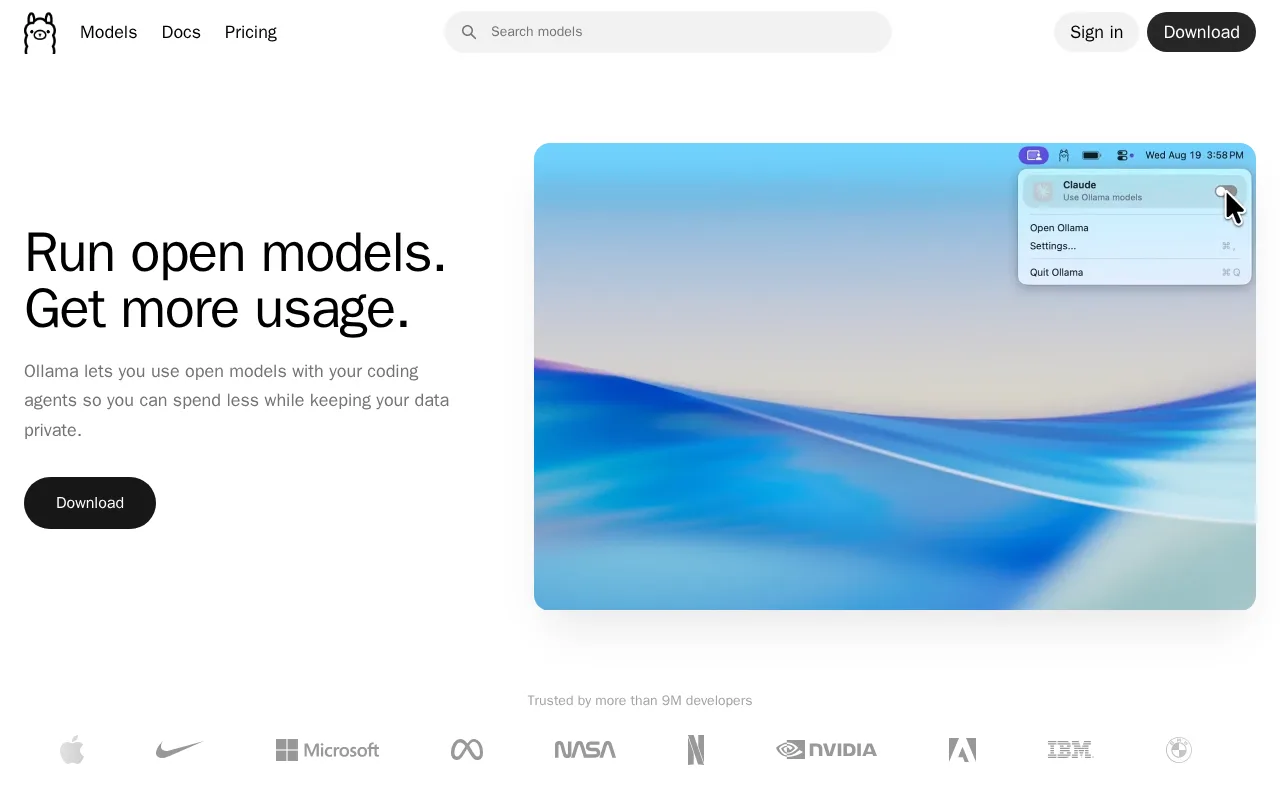
Both run open-weight models locally on a laptop or server; AnythingLLM can even use Ollama as its backend, so buyers compare Ollama's bare runtime against AnythingLLM's document chat and agent interface.
Pros
- Core local runtime is free, open source (MIT), and requires no account to run models offline.
- No telemetry from local inference; data never leaves the device unless a cloud model is explicitly used.
- Simple CLI and REST API make it easy to integrate into existing developer tools and 40,000+ community integrations.
- Cloud tier extends the same interface to larger models when local hardware isn't enough.
Cons
- Local performance depends entirely on the user's own hardware; larger models need significant RAM or GPU VRAM to run well.
- Max plan ($100/month) is currently paused for new signups while Ollama adds capacity.
- Cloud usage limits reset on 5-hour and 7-day cycles, which can be restrictive for bursty workloads compared to flat monthly quotas.
- Team plan has a 5-seat minimum ($125/month), which is a meaningful jump for very small teams.
Pricing: Free tier · paid from $20/mo (verified undefined NaN, NaN)
2.LM Studio — best AnythingLLM alternative for developers and privacy-conscious users who want to run open-weight LLMs locally on their own hardware, with an OpenAI-compatible API server for integrating local models into other tools
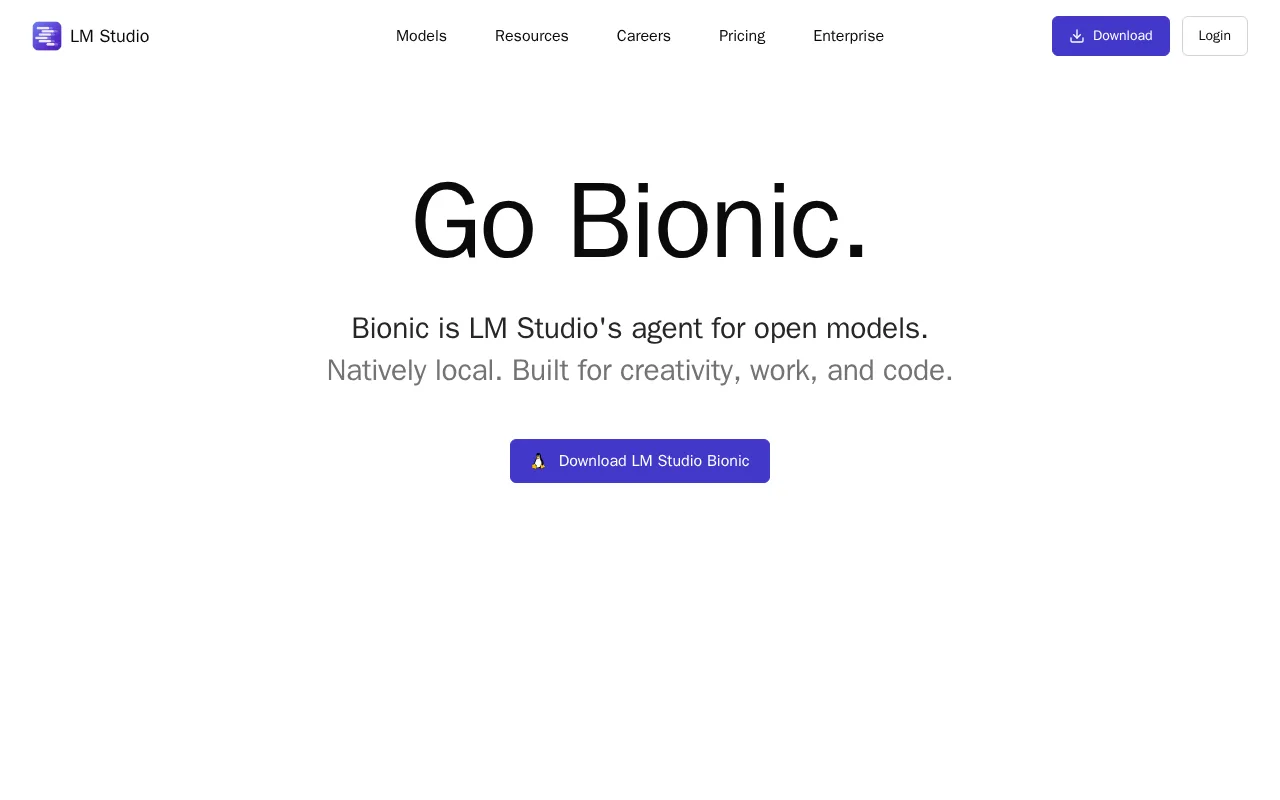
Both are free desktop apps that run local models with a GUI and chat over your own documents; LM Studio is closed-source, AnythingLLM is MIT-licensed and also self-hostable for teams.
Pros
- Entirely free for local model use with no account or subscription required.
- Runs models on-device via llama.cpp and MLX, keeping data off the cloud by default.
- Built-in OpenAI-compatible API server lets other tools call local models as a drop-in cloud API replacement.
- Optional pay-as-you-go cloud tier fills the gap when local hardware can't run larger models, without forcing a subscription.
Cons
- Running larger models well requires substantial RAM or a capable GPU; modest hardware is limited to smaller quantized models.
- Bionic Pass subscription tier has no published pricing yet ("coming soon").
- LM Studio itself is closed-source freeware, not open-source, despite being built on open-source inference engines.
- Very thin public review base (4 total on Product Hunt) makes it hard to gauge broad user sentiment.
Pricing: Free (verified undefined NaN, NaN)
3.Open WebUI — best AnythingLLM alternative for individuals, startups, and regulated organizations that want a self-hosted, vendor-independent chat interface for local or API-based AI models
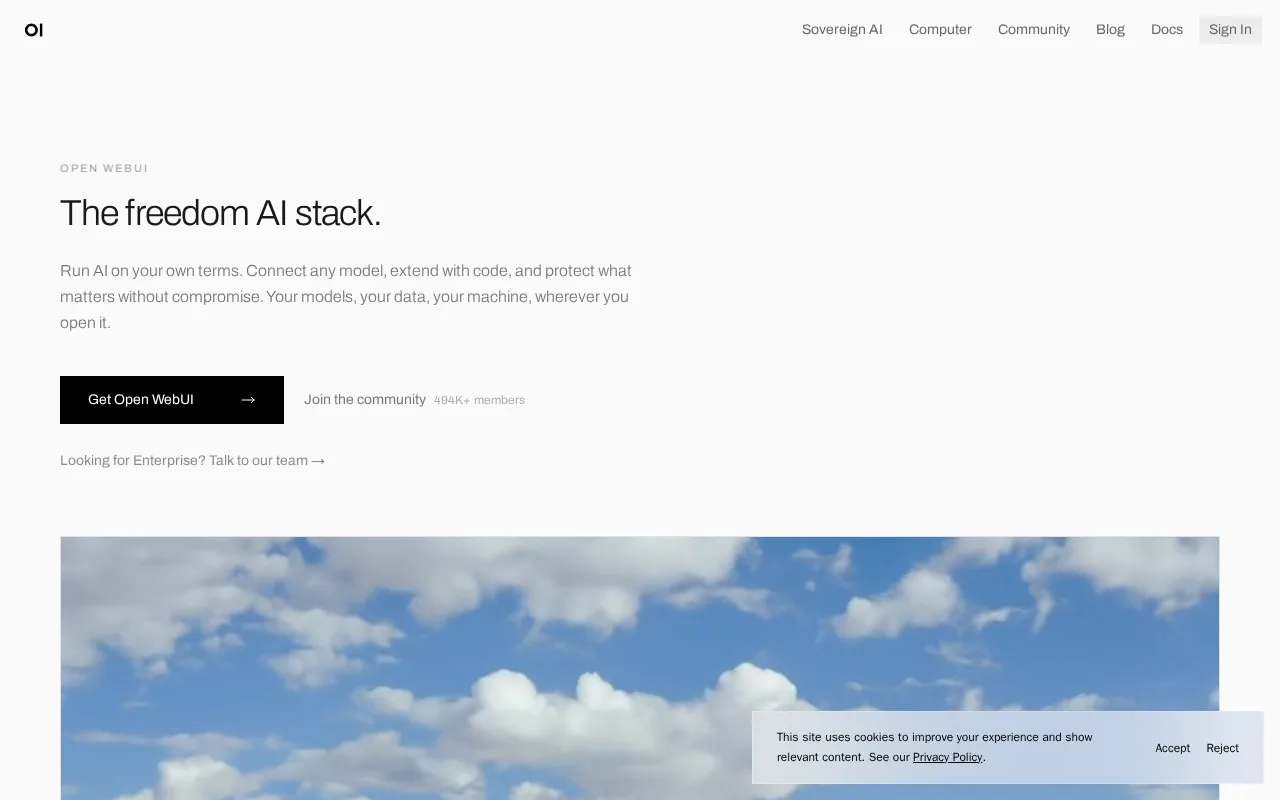
Both are self-hosted, multi-user chat interfaces with retrieval over private documents, cross-shopped for private team deployments behind a company firewall.
Pros
- Free to self-host with a one-command Docker or pip install, no account required.
- Connects to both local model runners (Ollama) and cloud APIs (OpenAI, Anthropic, and compatible providers) from one interface.
- Air-gapped and data-residency-controlled deployment options suit regulated industries.
- Large community library (478,000+ members) sharing prompts, tools, and custom functions.
Cons
- Source-available Open WebUI License requires preserving Open WebUI branding unless an Enterprise license is purchased, which is not a standard OSI open-source license.
- Self-hosting requires ongoing maintenance of Docker and, typically, a separate Ollama or model-serving backend.
- Enterprise pricing (SSO, RBAC, audit logs, branding removal) is not published and requires a sales conversation.
- No official native mobile app; access on phones is through the web interface.
Pricing: Free
4.Jan — best AnythingLLM alternative for developers and privacy-conscious users who want to run open-weight LLMs entirely offline while keeping the option to plug in cloud models from one interface
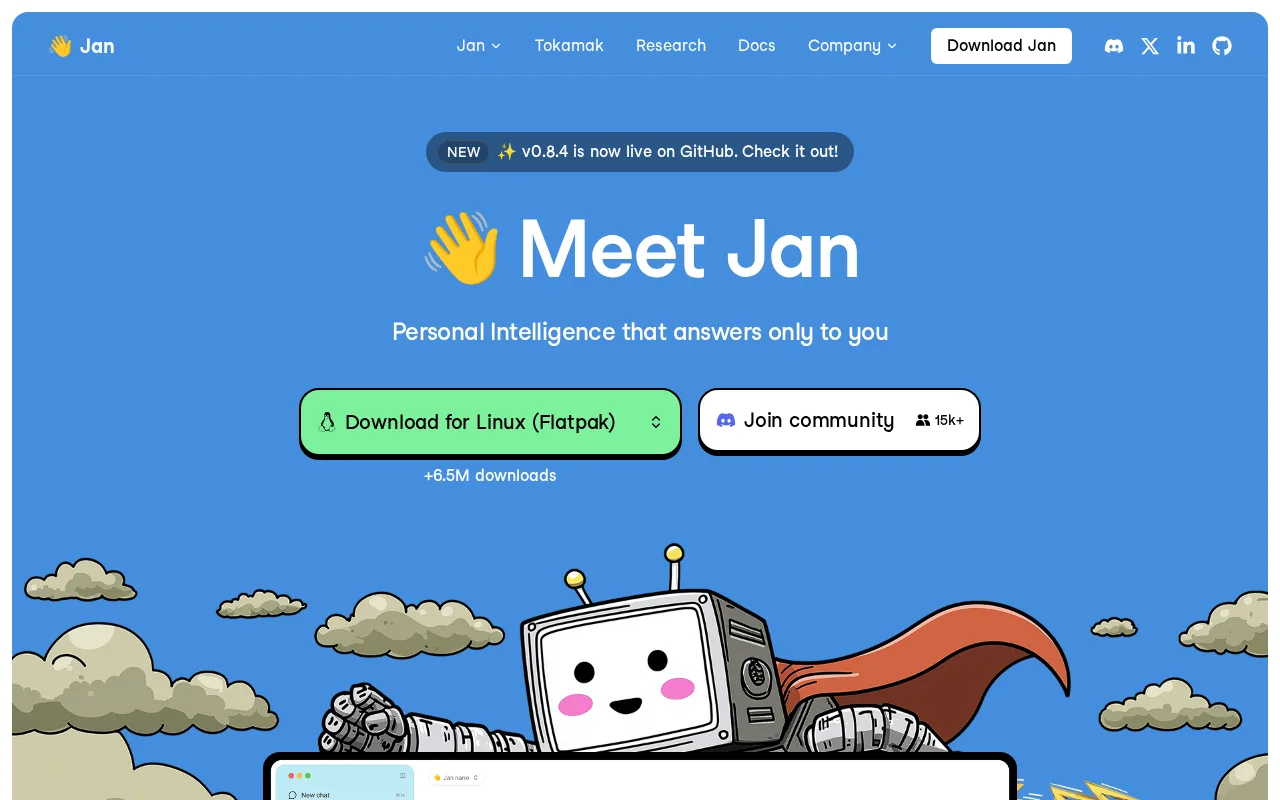
Both are open-source desktop AI assistants built around running models offline with no account, competing for the same privacy-first local-AI user.
Pros
- Fully open source under Apache 2.0 with no account or subscription required.
- Runs models 100% offline once downloaded, with no data leaving the device by default.
- OpenAI-compatible local API server lets other tools call locally hosted models.
- Supports both local open-weight models and cloud providers in one interface.
Cons
- No web or mobile client; desktop only (Windows, macOS, Linux).
- Memory/persistent-context feature is still marked coming soon.
- Running larger local models is limited by the user's own hardware, unlike cloud-only competitors.
- Smaller community and fewer integrations than Ollama, which some users prefer for headless/server use.
Pricing: Free (verified undefined NaN, NaN)
5.Msty — best AnythingLLM alternative for individuals who want a polished, one-click desktop app for comparing local and cloud LLM responses side by side without command-line setup
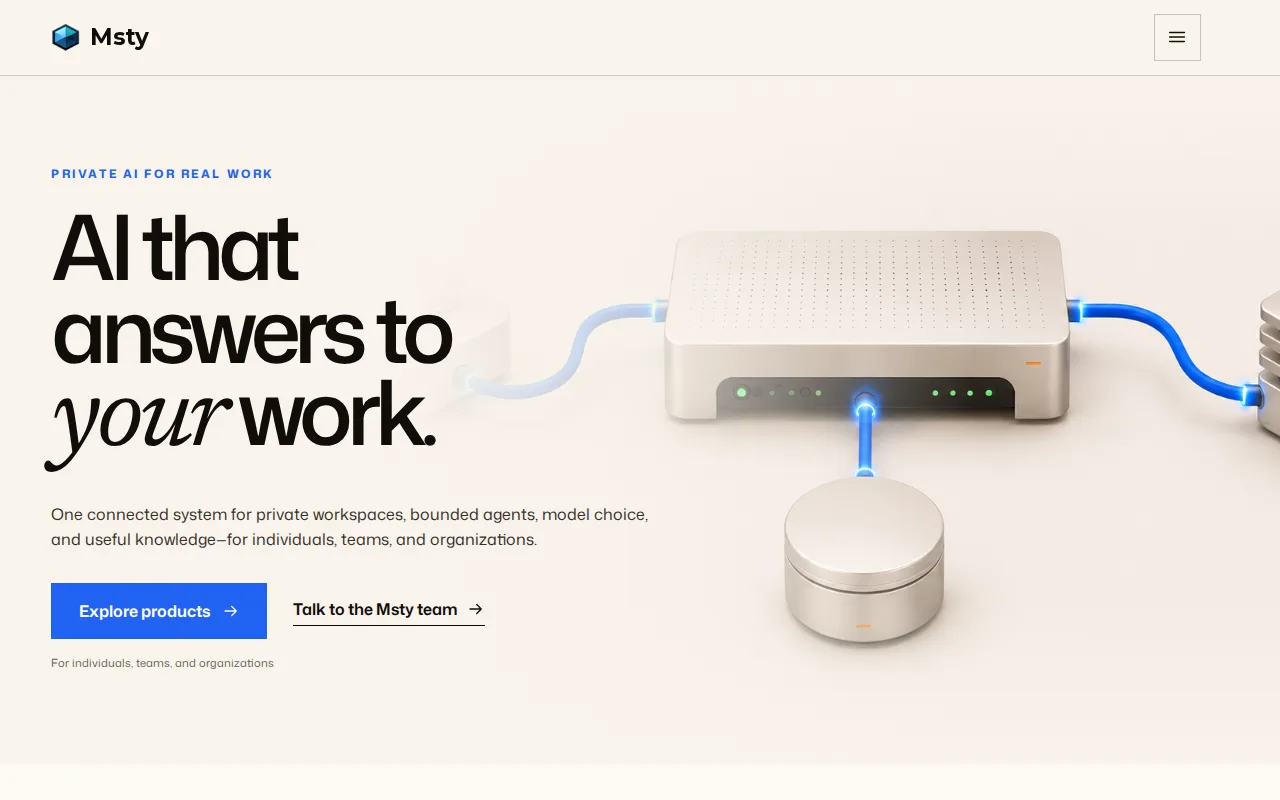
Both are desktop apps that put local and cloud models behind one interface with document knowledge bases, compared by users who want a single app rather than a stack.
Pros
- Core Studio app is free forever with no account required and fully local data storage.
- One-click local model downloads via a bundled MLX/llama.cpp engine, no separate Ollama install needed.
- Parallel multiverse chats compare multiple models' answers to the same prompt at once.
- Connects to 12+ cloud providers alongside local models in the same interface.
Cons
- Closed source, unlike direct competitors Jan and Open WebUI.
- No SOC 2 or ISO 27001 certification yet, a gap for enterprise buyers.
- No web or mobile client; desktop only (Windows, macOS, Linux).
- Go (agent product) and Stack (knowledge layer) are still in beta or listed as coming soon.
Pricing: Free tier · paid from $149/yr (verified undefined NaN, NaN)
6.ChatGPT — best AnythingLLM alternative for individuals and teams who want a general-purpose AI assistant for writing, coding, research, and file analysis inside one chat interface
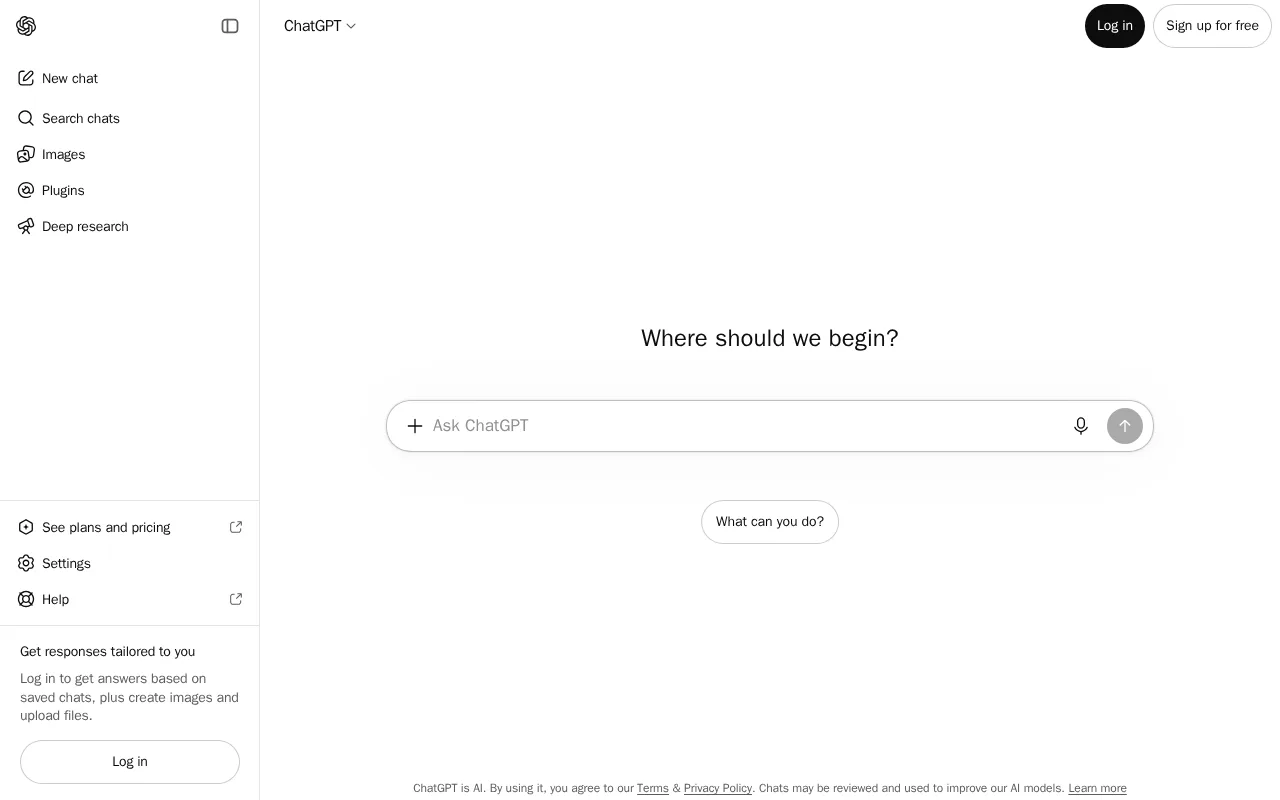
The hosted incumbent AnythingLLM is pitched against: buyers weigh ChatGPT's stronger models and polish against keeping documents and chats entirely on their own hardware.
Pros
- Broad feature set (chat, image generation, code execution, voice, web browsing) under one subscription.
- Free tier is genuinely usable for casual, low-volume use, not just a demo.
- Business and Enterprise plans exclude workspace conversations from model training by default.
- Available on web, desktop, and mobile with consistent conversation history across devices.
Cons
- Can produce confident-sounding but factually incorrect answers, requiring users to verify important claims.
- Large price jump from Plus ($20/month) to Pro ($200/month) for users who outgrow Plus's usage caps.
- Free tier usage limits reset periodically and can interrupt longer work sessions.
- Business plan monthly pricing (versus annual) is noticeably higher per seat.
Pricing: Free tier · paid from $8/mo