2 Best Open-Source Alternatives to Zed in 2026
By Noahlast updated pricing verified
Compared: open-source alternatives to Zed
| Alternative | Best for | Standout | Biggest weakness | Learning curve | Price |
|---|---|---|---|---|---|
| Zedreference | developers who want a genuinely fast, native (non-Electron) editor with built-in agentic AI support, and who are comfortable using their own API keys or a lean paid AI subscription instead of a bundled enterprise IDE | Native Rust performance (no Electron/Chromium runtime) combined with built-in multiplayer collaboration and support for bringing an external coding agent like Claude Code directly into the editor. | Extension ecosystem and IDE-style workflows (debugging integrations, language-specific tooling) are noticeably thinner than VS Code's, since Zed is a much younger project without VS Code's decade-plus head start on plugins; teams standardized on VS Code extensions will find some tooling missing. | Moderate | Free tier · paid from $10/mo |
| IntelliJ IDEA | Java and Kotlin developers who want the strongest JVM-focused IDE, using the free Community edition unless they specifically need Ultimate's web-framework or database tooling | The Community edition is a genuinely full-featured, free, open-source Java/Kotlin IDE, not a crippled trial, so most individual developers never need to pay unless they touch specific Ultimate-only frameworks or database tools. | Ultimate's per-seat annual subscription is expensive for individuals compared to fully free competitors like Visual Studio Code or Eclipse, and figuring out whether a project genuinely needs Ultimate-only features (versus staying on free Community) is not always obvious upfront. | Moderate | Free tier · paid from $169/yr |
| Neovim | developers who already use Vim's modal editing and want built-in LSP, Tree-sitter, and Lua scripting without relying on third-party Vim plugins to add them | A built-in LSP client and native Tree-sitter integration ship in the core editor, so modern code intelligence and accurate syntax parsing don't require assembling and maintaining a plugin stack. | The learning curve is steep for anyone not already comfortable with Vim's modal, keyboard-driven editing model, and a productive setup still typically requires configuring a plugin ecosystem (completion, file trees, fuzzy finders) since the out-of-the-box experience is minimal by design. | Steep | Free |
 Zed
Zed IntelliJ IDEA
 Neovim
1.IntelliJ IDEA — best Zed alternative for java and Kotlin developers who want the strongest JVM-focused IDE, using the free Community edition unless they specifically need Ultimate's web-framework or database tooling
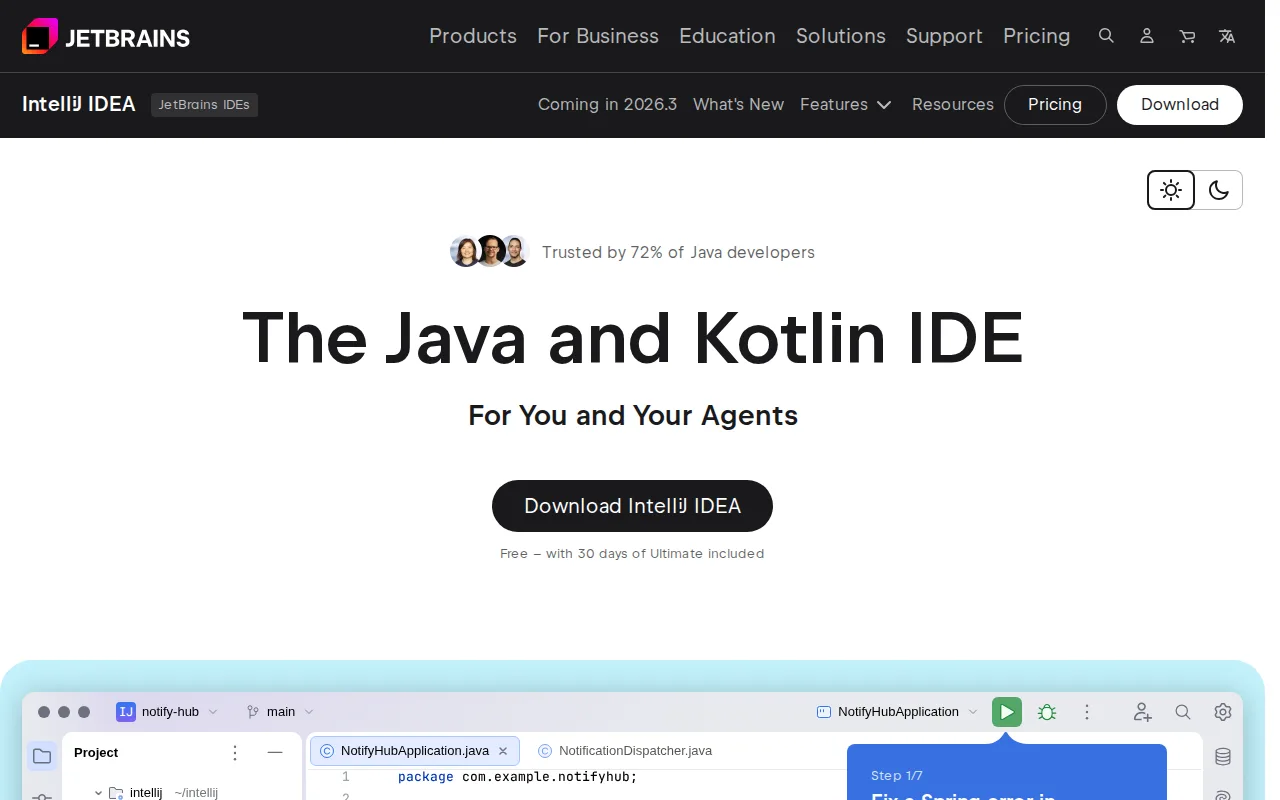
IntelliJ IDEA is the best Zed alternative for Java and Kotlin developers who want deep, language-specific IDE tooling instead of a lightweight, general-purpose editor. IntelliJ's Community edition is completely free and open source under Apache 2.0 with no expiration or feature paywall, covering core Java, Kotlin, Groovy, and Android development with refactoring and debugging tools tuned specifically for the JVM, capabilities Zed's more general editor doesn't match natively. IntelliJ holds a 4.7/5 rating from 1,259 Capterra reviews, far more review volume than Zed's 5.0/5 from just 46 Product Hunt reviews, and its Ultimate edition ($169/year individual, first-year price) adds web-framework support, database tools, and profiling for teams that need them. Zed is still the better choice for developers who want a fast, native, non-Java-specific editor: IntelliJ carries heavier resource usage (RAM and startup time) than Zed's Rust-built editor, especially on large codebases, and IntelliJ's Ultimate tier is a recurring per-seat subscription that can cost more than Zed's $10/month Pro plan once seat count and framework needs grow.
Compared to Zed: free, open-source Community edition with deep Java/Kotlin-specific refactoring and debugging tools, 4.7/5 rating from 1,259 Capterra reviews vs Zed's 5.0/5 from just 46, Ultimate edition adds database tools and web-framework support Zed doesn't offer natively
Wins:Free, open-source Community edition with deep Java/Kotlin-specific refactoring and debugging tools · 4.7/5 rating from 1,259 Capterra reviews vs Zed's 5.0/5 from just 46 reviews · Ultimate edition adds database tools and web-framework support Zed doesn't offer natively
Loses:Heavier resource usage (RAM and startup time) than Zed's native Rust-built editor, especially on large codebases · Ultimate edition is a recurring per-seat subscription that can cost more than Zed's $10/month Pro plan as seat count grows · Deep Java/Kotlin focus makes it a poor fit for developers working primarily in other languages, unlike Zed's general-purpose design
Pros
- Community edition is completely free and open source with no feature countdown or nag screens.
- Deep, JetBrains-grade refactoring, code completion, and debugging tools tuned specifically for Java and Kotlin.
- Ultimate adds integrated database tools and web-framework support without needing separate plugins from third parties.
- Strong out-of-the-box Gradle/Maven build tool integration reduces project setup friction.
Cons
- Ultimate is a recurring per-seat subscription rather than a one-time purchase, an ongoing cost for teams that need its features.
- Heavier resource usage (RAM and startup time) than lighter editors like Visual Studio Code, especially on large codebases.
- The line between what requires Ultimate versus what Community already covers is not always clear to new users.
- Organization/business licensing costs meaningfully more per seat than individual licensing, a real budget factor for teams standardizing on Ultimate.
Pricing: Free tier · paid from $169/yr — Free (Community) or $169/year (Ultimate, Individual, first-year price) vs Zed's free Personal plan ($0) with Pro at $10/month
2.Neovim — best Zed alternative for developers who already use Vim's modal editing and want built-in LSP, Tree-sitter, and Lua scripting without relying on third-party Vim plugins to add them
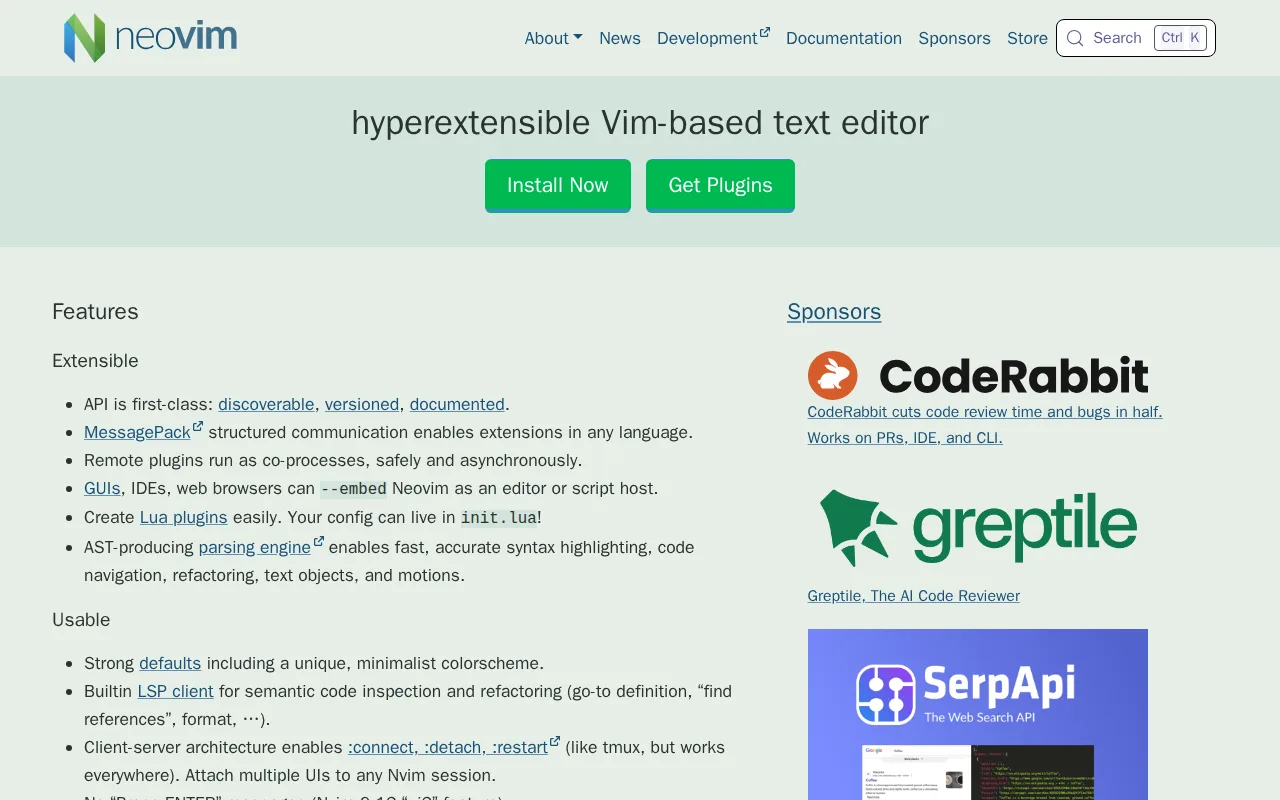
Neovim is the best Zed alternative for developers who already know Vim's modal editing and want a completely free, open-source editor with no paid tier of any kind. Neovim is entirely free under Apache 2.0 with no AI subscription or seat-based pricing at all, unlike Zed's $10/month Pro or $30/seat/month Business tiers once a user exceeds the free Personal plan's usage limits. Neovim ships a built-in Language Server Protocol client and native Tree-sitter integration for accurate syntax parsing, both included in the free core rather than gated behind a subscription, and it holds a matching 5.0/5 rating on Product Hunt to Zed's own score, though from a much smaller sample of 7 reviews versus Zed's 46. Zed is still the better choice for developers who don't already know Vim: Neovim's learning curve is steep for anyone not already comfortable with Vim's modal, keyboard-driven editing model, its out-of-the-box experience is minimal by design and typically requires assembling a plugin configuration, and it has no official GUI beyond the terminal, while Zed ships a full graphical editor with built-in AI features ready to use immediately.
Compared to Zed: entirely free under Apache 2.0 with no paid tier of any kind, built-in LSP client and Tree-sitter integration included in the free core, matching 5.0/5 Product Hunt rating though from a much smaller sample (7 reviews)
Wins:Entirely free under Apache 2.0 with no paid tier of any kind · Built-in LSP client and native Tree-sitter integration included in the free core, not gated behind a subscription · Matching 5.0/5 Product Hunt rating to Zed's own score
Loses:Steep learning curve for anyone not already comfortable with Vim's modal, keyboard-driven editing model · Minimal out-of-the-box experience typically requires assembling and maintaining a plugin configuration · No official GUI beyond the terminal, unlike Zed's full graphical editor with built-in AI features
Pros
- Built-in LSP client provides code completion, diagnostics, and go-to-definition without third-party plugins.
- Native Tree-sitter support gives more accurate syntax highlighting and code navigation than regex-based highlighting.
- Lua scripting and configuration alongside traditional Vimscript, with a large modern plugin ecosystem built around it.
- Completely free with no paid tier, and compatible with most existing Vim 8.x plugins.
Cons
- Steep learning curve for anyone not already familiar with Vim's modal editing and keybindings.
- Minimal out-of-the-box experience; a productive setup usually requires assembling and maintaining a plugin configuration.
- No official GUI beyond the terminal; graphical front-ends are separate community projects with varying maturity.
- Configuration in Lua (or Vimscript) has a real learning investment compared to GUI-based settings in editors like VS Code.
Pricing: Free — Free (no paid tier at all) vs Zed's free Personal plan ($0) with Pro at $10/month for unlimited edit predictions (verified undefined NaN, NaN)