5 Best Alternatives to Tresorit in 2026
By Noahlast updated

From our data: All 5 of the alternatives listed here (Proton Drive, Sync.com, pCloud, Box, and Icedrive) offer a permanent free tier, while Tresorit has none; among the alternatives with a published starting subscription price (Sync.com $4/month, Proton Drive $4.99/month, Box from $5/month), the median starting price is $4.99/month.
 Proton Drive
 Sync.com
 pCloud
 Box
BoxHow we picked
- Ranked partly on transparent pricing: Proton Drive, Sync.com, pCloud, and Box all carry verified pricing timestamps from live vendor pages, while Tresorit's own pricing page renders dollar figures through client-side JavaScript that returned no exact numbers, and Icedrive's pricing was not independently reverified.
- Encryption model was weighted as a distinguishing feature signal: Proton Drive and Sync.com both offer true end-to-end (zero-knowledge) encryption included by default like Tresorit, while pCloud sells its zero-knowledge option as a paid add-on and Box relies on server-side encryption without a zero-knowledge model.
- Entry price was compared directly against Tresorit's lack of a permanent free tier: Proton Drive, Sync.com, pCloud, and Box all offer a free tier (5GB, 5GB, an unspecified free allotment, and 10GB respectively), while Tresorit requires every plan to start as a 14-day trial before billing.
- External review signal was used where available: Box's Capterra rating (4.4/5 from 5,641 reviews) and pCloud's (4.5/5 from 180 reviews) and Sync.com's (4.3/5 from 57 reviews) were weighed against Tresorit's own 4.8/5 from 130 reviews, while Proton Drive and Icedrive carry no external rating on record and were ranked on feature and pricing signals instead.
Paid placement never alters editorial rank — read the full methodology.
Tresorit alternatives at a glance
| Alternative | Best for | Standout | Biggest weakness | Learning curve | Price |
|---|---|---|---|---|---|
| Tresoritreference | financial, legal, and healthcare teams that need zero-knowledge encrypted file storage plus encrypted data rooms for sharing with outside parties | Zero-knowledge, client-side encryption combined with Tresorit Engage's encrypted data rooms, letting compliance-sensitive teams collaborate with external clients and partners without ever exposing files to Tresorit's own servers. | No permanent free tier and no self-serve pricing transparency: exact per-user costs are not published as plain numbers on the live pricing page (they render via client-side JavaScript), and third-party sources quote inconsistent figures, so buyers have to request a quote or dig through a trial signup to confirm current cost. | Moderate | Custom pricing |
| Proton Drive | privacy-focused individuals and small teams who want end-to-end encrypted cloud storage with a genuinely usable free tier and open-source, independently-audited clients | Files are end-to-end encrypted before upload — Proton itself cannot read them — and the client source code (GPL-3.0) is public on GitHub for independent review. | End-to-end encryption means there is no way for Proton to recover a lost password or restore access to encrypted files without a saved recovery kit; the free tier's 5 GB is modest, and getting the best per-dollar value requires bundling into the pricier $12.99/month Proton Unlimited plan rather than buying Drive storage alone. | Low | Free tier · paid from $4.99/mo |
| Sync.com | privacy-conscious individuals and regulated businesses (legal, healthcare, finance) who need zero-knowledge encrypted file storage that even the vendor cannot read | True end-to-end (zero-knowledge) encryption on all stored files, meaning Sync.com cannot decrypt user content even under legal compulsion, unlike mainstream competitors that can technically access unencrypted files. | Reviewers report real reliability problems including slow performance and basic operations like folder creation failing at times, along with slow customer support response times where users describe having to perform their own recovery steps after minimal guidance; because encryption is end-to-end, a lost password also means permanently lost access to files with no vendor-side recovery. | Low | Free tier · paid from $4/mo |
| pCloud | users who want to pay once for cloud storage instead of an ongoing monthly subscription, and who value choosing between EU and US data residency | One-time lifetime storage plans (500GB to 10TB) that replace recurring subscriptions entirely, backed by a choice of EU or US data centers. | Client-side zero-knowledge encryption (pCloud Encryption) is sold as a separate paid add-on rather than included by default, and the large lifetime payments ($199-$1,190 upfront) are a bigger initial commitment than a monthly competitor's plan. | Low | Free tier · paid from $199 one-time |
| Box | mid-size and large enterprises that need compliance-grade file storage (HIPAA, FINRA, GDPR) plus AI-powered document workflows, not just file sync | Box AI layer for document summarization, structured data extraction from contracts and handwritten forms, and a drag-and-drop builder for automating multi-step business workflows like loan processing or onboarding. | Business plans require a minimum of 3 users, and Box's own pricing page shows the headline "from $5/user/month" without displaying exact per-tier dollar amounts as static text — the numbers only appear through an interactive calculator, making upfront comparison harder than with competitors like Dropbox. | Moderate | Free |
| Icedrive | privacy-conscious individuals who want low-cost cloud storage with client-side encryption and are comfortable with a smaller feature set than Dropbox or Google Drive | Uses Twofish client-side encryption instead of the AES standard most competitors use, paired with direct media streaming from the cloud without a full local download. | The desktop and mobile clients are closed source, which cuts against the privacy-focused positioning, and the company has had gaps in native app support (including periods without a Linux client) that frustrated longtime users. | Low | Free tier · paid from $1.67/mo |
 Tresorit
 Icedrive
1.Proton Drive — best Tresorit alternative for privacy-focused individuals and small teams who want end-to-end encrypted cloud storage with a genuinely usable free tier and open-source, independently-audited clients
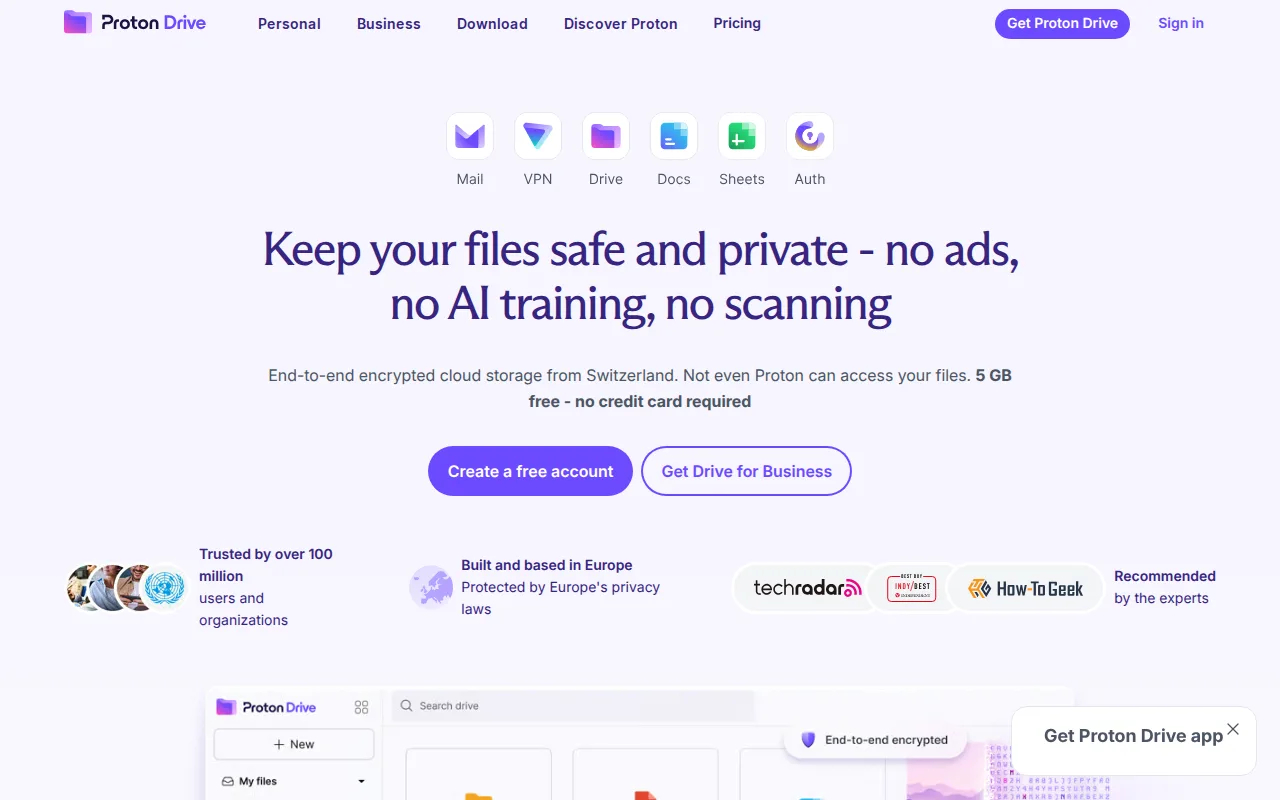
Proton Drive is the best Tresorit alternative for individuals and small teams who want end-to-end encrypted cloud storage without Tresorit's 14-day-trial-then-pay model. Proton Drive's Free plan gives 5GB of storage at no cost, and Drive Plus costs just $4.99/month for 200GB, compared to Tresorit's Professional tier, which has no published price and requires at least 1 paying user with no permanent free option. Like Tresorit, Proton Drive encrypts files on-device before upload so the vendor cannot read stored content, but Proton Drive goes further by publishing its client source code on GitHub under GPL-3.0 for independent review, something Tresorit's closed-source clients do not offer. Tresorit is still the better choice for regulated financial, legal, and healthcare teams that specifically need Tresorit Engage's encrypted data rooms for external due-diligence collaboration, SSO integration with Azure AD or Okta, and a choice of 12 global data-residency regions, none of which Proton Drive's four consumer-oriented tiers provide. Proton Drive's free tier is also more modest than some rivals at just 5GB, and a lost password with no saved recovery kit means permanently lost access to encrypted files.
Compared to Tresorit: has a permanent free tier (5GB) vs none, open-source GPL-3.0 clients vs closed-source, cheaper entry price ($4.99/mo Drive Plus vs no published Tresorit price)
Wins:Permanent free tier (5GB) vs Tresorit's 14-day-trial-then-pay model with no free option · Client source code is public on GitHub under GPL-3.0 vs Tresorit's closed-source clients · Drive Plus starts at $4.99/month for 200GB, a published, transparent price vs Tresorit's unpublished per-user figures
Loses:No Tresorit Engage equivalent for encrypted data rooms with external clients and partners · No SSO integration (Azure AD, Okta, Google) or choice of 12 global data-residency regions · Lost passwords cannot be recovered without a saved recovery kit, and the free tier's 5GB is modest next to some rivals
Pros
- Files are end-to-end encrypted client-side, so Proton cannot read stored content.
- Client source code is open source (GPL-3.0) and independently audited.
- 5 GB free tier is more generous than most end-to-end encrypted competitors.
- Based in Switzerland, subject to strict Swiss privacy law rather than US or EU data requests.
Cons
- Lost passwords can't be recovered by Proton for end-to-end encrypted content without a saved recovery kit.
- Free tier storage (5 GB) is modest compared to Google Drive's 15 GB free tier.
- Best value per dollar requires the pricier Proton Unlimited bundle rather than a Drive-only plan.
Pricing: Free tier · paid from $4.99/mo — $4.99/month Drive Plus (200GB) vs Tresorit's unpublished Professional pricing (Tresorit shows no plain-text dollar figures on its live pricing page) (verified undefined NaN, NaN)
2.Sync.com — best Tresorit alternative for privacy-conscious individuals and regulated businesses (legal, healthcare, finance) who need zero-knowledge encrypted file storage that even the vendor cannot read
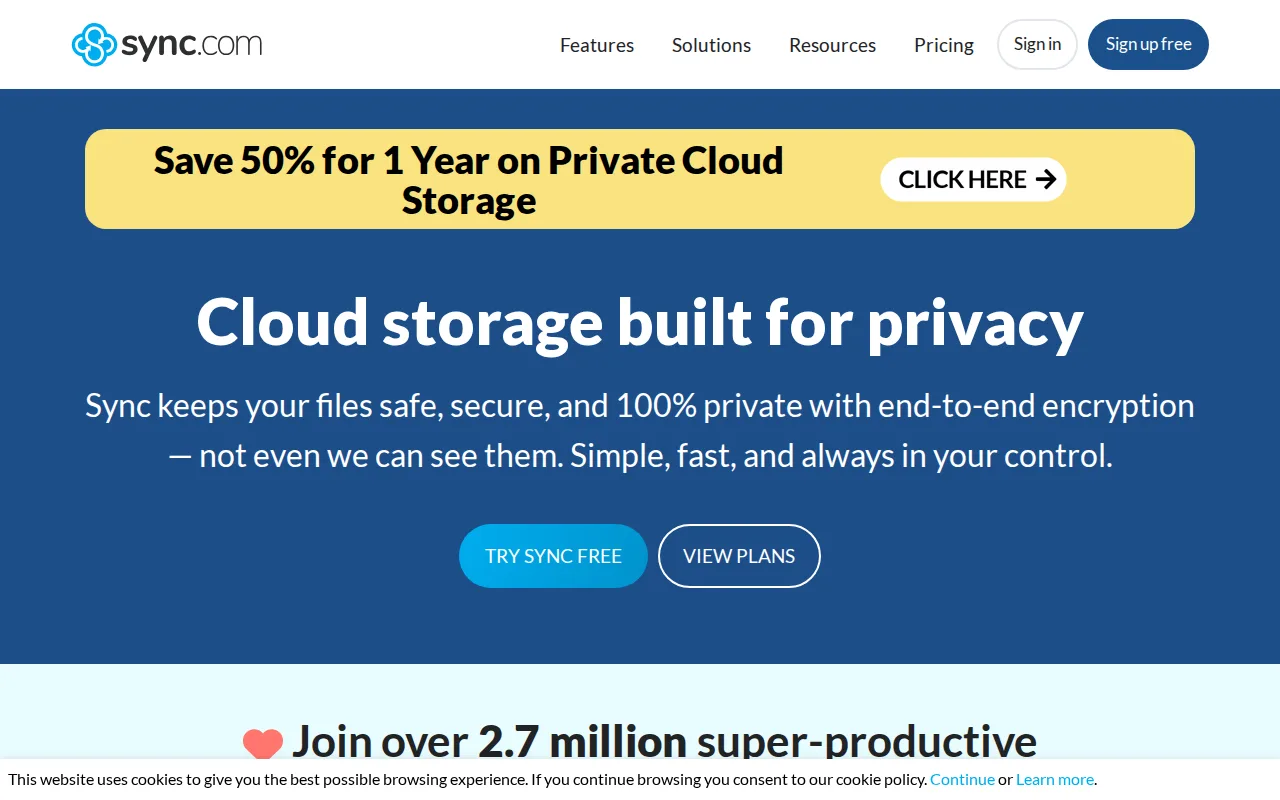
Sync.com is the best Tresorit alternative for privacy-conscious users who want zero-knowledge encryption plus a genuine free tier, something Tresorit doesn't offer at all. Sync.com's Free plan includes 5GB of storage with no credit card required, and Personal 150GB starts at just $4/month ($3.50/month billed annually), while Tresorit has no permanent free plan and doesn't publish exact per-user pricing as plain text. Both services encrypt files end-to-end so the vendor cannot decrypt user content, and Sync.com's Canadian jurisdiction appeals to users who want data outside U.S. legal reach, similar to how Tresorit offers EU-only data residency for compliance-driven teams. Tresorit is still the better choice for regulated businesses that need Tresorit Engage's purpose-built encrypted data rooms for due diligence and external client collaboration, SSO with Azure AD or Okta, and audit logging, none of which Sync.com's individual-focused plans include. Sync.com also draws complaints about slow customer support and occasional reliability issues like failed folder creation, and its 1TB and 5TB tiers are priced as promotional against a regular price roughly double that, making long-term cost less transparent.
Compared to Tresorit: has a free tier (5GB) vs none, cheaper entry price ($4/mo vs unpublished), Capterra rating of 4.3/5 from 57 reviews vs Tresorit's 4.8/5 from 130 reviews
Wins:Permanent free tier (5GB, no credit card required) vs Tresorit's trial-only model · Personal 150GB starts at $4/month, a published price vs Tresorit's unpublished figures · Canadian jurisdiction outside U.S. legal reach, comparable to Tresorit's own EU-residency option
Loses:No equivalent to Tresorit Engage's encrypted data rooms for external client and partner collaboration · No SSO (Azure AD, Okta, Google) or audit logging built for compliance teams · Capterra rating of 4.3/5 from 57 reviews trails Tresorit's 4.8/5 from 130 reviews, and reviewers report slow support and occasional sync failures
Pros
- True zero-knowledge encryption means even Sync.com cannot read stored files.
- Free tier includes 5GB of storage with no credit card required to start.
- Canadian jurisdiction appeals to users wanting data outside U.S. legal reach.
- CloudFiles integrates directly with Windows Explorer and Mac Finder for native-feeling sync.
Cons
- Some users report inconsistent reliability, including folder creation and sync operations failing at times.
- Customer support response times draw complaints, with some users left to self-resolve recovery issues.
- Zero-knowledge encryption means a lost password results in permanently inaccessible files, with no vendor-side reset.
- 1TB and 5TB tier pricing shown as 'promotional' against a listed regular price roughly double, making true long-term cost less transparent.
Pricing: Free tier · paid from $4/mo — $4/month Personal 150GB ($3.50/month billed annually) vs Tresorit's unpublished Professional pricing (verified undefined NaN, NaN)
3.pCloud — best Tresorit alternative for users who want to pay once for cloud storage instead of an ongoing monthly subscription, and who value choosing between EU and US data residency
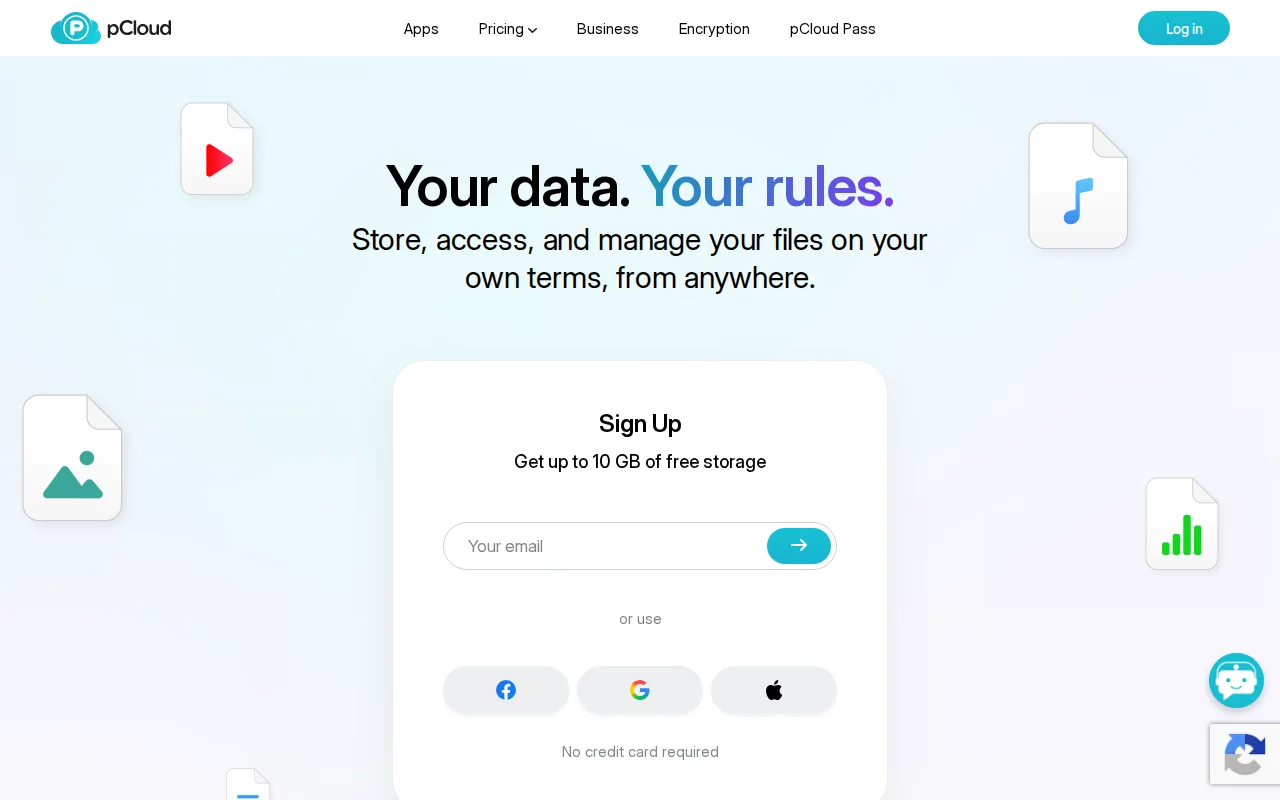
pCloud is the best Tresorit alternative for users who want to pay once instead of an ongoing subscription, a pricing model Tresorit doesn't offer at all. pCloud's lifetime plans run from $199 one-time for 500GB up to $1,190 for 10TB, letting users own storage permanently, while every Tresorit plan restarts as a 14-day trial before recurring billing begins with no published exact price. pCloud also holds a 4.5/5 rating from 180 Capterra reviews, close to Tresorit's 4.8/5 from 130 reviews, and offers a choice of EU (Luxembourg) or US data centers similar in spirit to Tresorit's own data-residency controls. Tresorit is still the better choice for regulated teams that need true zero-knowledge encryption built in by default and Tresorit Engage's encrypted data rooms for external collaboration: pCloud only offers its zero-knowledge pCloud Encryption as a separate paid add-on rather than including it standard, and pCloud has no equivalent to Tresorit's SSO integration with Azure AD or Okta. pCloud's lifetime plans also require a large upfront payment of $199 to $1,190, a bigger initial commitment than a monthly competitor.
Compared to Tresorit: one-time lifetime payment ($199-$1,190) vs recurring unpublished pricing, published starting price vs none, zero-knowledge encryption sold as paid add-on vs included by default
Wins:One-time lifetime plans ($199-$1,190) eliminate recurring subscription costs entirely, unlike Tresorit's ongoing billing · Publishes exact dollar pricing on its site, unlike Tresorit's JavaScript-rendered figures with no plain-text numbers · Choice of EU (Luxembourg) or US data center, comparable to Tresorit's own residency options
Loses:Zero-knowledge client-side encryption (pCloud Encryption) costs extra rather than being included by default like Tresorit's · No equivalent to Tresorit Engage's encrypted data rooms for external due-diligence collaboration · No SSO integration (Azure AD, Okta, Google) or audit logging for compliance-driven teams
Pros
- One-time lifetime plans eliminate recurring subscription costs for long-term storage.
- Choice of EU (Luxembourg) or US data center for stored files.
- 30-day file version history and password-protected sharing links included on paid plans.
- 14-day money-back guarantee on lifetime purchases.
Cons
- True zero-knowledge client-side encryption (pCloud Encryption) costs extra rather than being built in.
- Lifetime plans require a large upfront payment ($199-$1,190) instead of a low monthly fee.
- Free plan's exact storage allocation isn't clearly stated on the pricing page.
- No annual/monthly subscription pricing is prominently displayed alongside the lifetime plans, which can make comparison shopping harder.
Pricing: Free tier · paid from $199 one-time — $199 one-time for 500GB (lifetime) vs Tresorit's unpublished Professional pricing (Tresorit shows no recurring dollar figure as plain text) (verified undefined NaN, NaN)
4.Box — best Tresorit alternative for mid-size and large enterprises that need compliance-grade file storage (HIPAA, FINRA, GDPR) plus AI-powered document workflows, not just file sync

Box is the best Tresorit alternative for mid-size and large enterprises that need compliance-grade file storage plus AI-powered document workflows, matching Tresorit's compliance focus but adding capabilities Tresorit doesn't have. Box's Business plans start at $5/user/month with a 3-user minimum, and its free Individual plan includes 10GB of storage, while Tresorit requires at least 1 paying user with no published exact price and no permanent free tier. Box AI summarizes documents and extracts structured data from contracts and handwritten forms using OpenAI, Anthropic, and Google models, a workflow-automation layer Tresorit's encryption-first product doesn't offer. Box also holds a 4.4/5 rating from 5,641 Capterra reviews, a much larger review base than Tresorit's 130. Tresorit is still the better choice for teams whose top priority is that the vendor itself can never read stored files: Box relies on server-side encryption rather than Tresorit's zero-knowledge model, and Box's own pricing page doesn't display exact per-tier dollar amounts as static text either, requiring an interactive calculator just like Tresorit's JavaScript-rendered pricing.
Compared to Tresorit: has a free tier (10GB) vs none, Box AI document workflows vs none, server-side encryption vs Tresorit's zero-knowledge model
Wins:Free Individual plan with 10GB storage vs Tresorit's trial-only model with no free tier · Box AI summarizes documents and extracts structured data from contracts and handwritten forms, a capability Tresorit lacks · Larger Capterra review base (5,641 reviews at 4.4/5) than Tresorit's 130 reviews at 4.8/5
Loses:Server-side encryption rather than Tresorit's zero-knowledge, client-side encryption model · No equivalent to Tresorit Engage's purpose-built encrypted data rooms for external due-diligence collaboration · Business plans still require a 3-user minimum, and exact per-seat pricing isn't shown as static text, requiring an interactive calculator
Pros
- Compliance certifications (HIPAA, FINRA, GDPR support) that matter for regulated industries like banking and life sciences.
- Box AI summarizes documents and extracts structured data from contracts and scanned forms.
- 1,500+ third-party integrations plus a full developer API.
- Unlimited e-signature requests included even on lower-tier Business plans.
Cons
- Business plans require a minimum of 3 users, ruling out solo or two-person teams.
- Business Starter tier caps storage at 100GB while higher tiers are unlimited, creating a hard upgrade point for growing teams.
- Exact per-seat pricing isn't published as static text on Box's own pricing page, requiring an interactive calculator to compare plans.
Pricing: Free — "From $5/user/month" (Box Business, 3-user minimum, exact tier figures not shown as static text) vs Tresorit's unpublished Professional pricing (verified undefined NaN, NaN)
5.Icedrive — best Tresorit alternative for privacy-conscious individuals who want low-cost cloud storage with client-side encryption and are comfortable with a smaller feature set than Dropbox or Google Drive
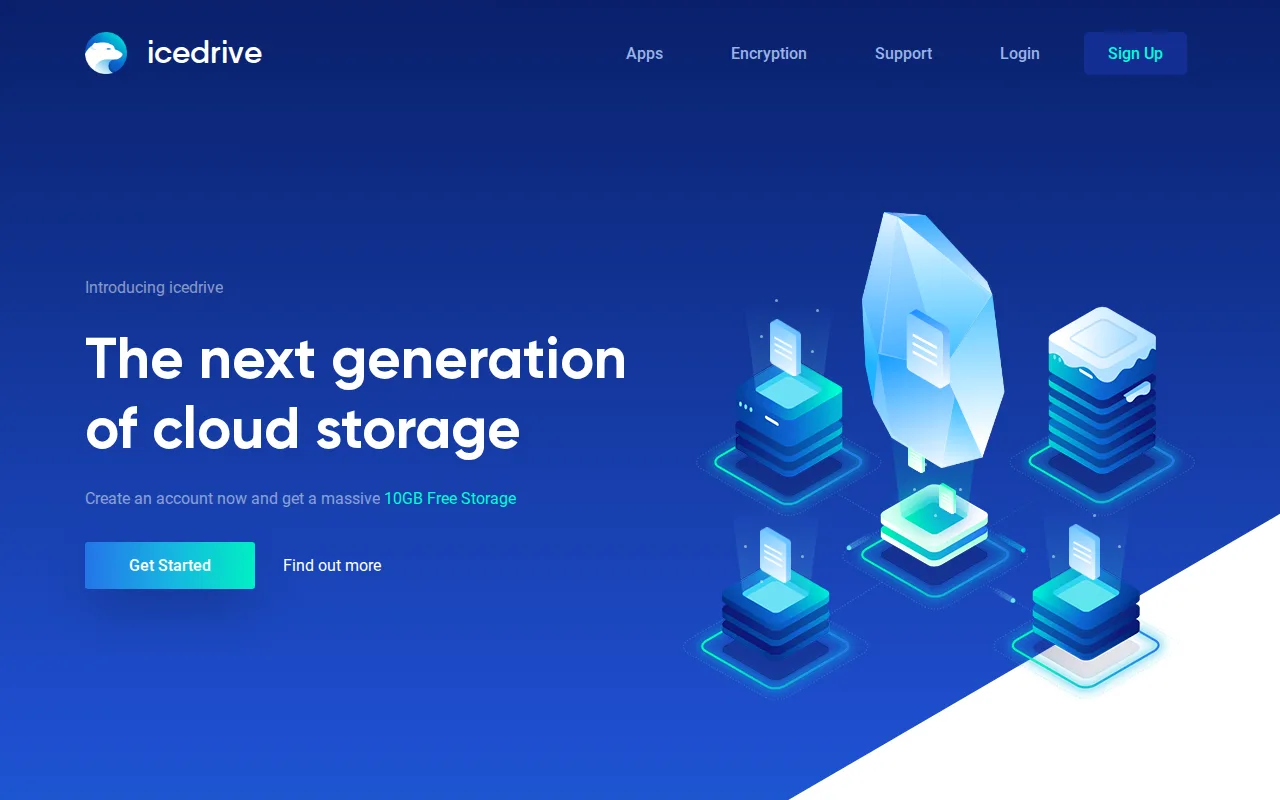
Icedrive is the best Tresorit alternative for individuals who want client-side encrypted cloud storage at a much lower price point than Tresorit's business-focused plans. Icedrive gives every account 10GB of free storage, and its Lite plan runs around $1.67/month for 150GB, far below Tresorit's unpublished per-user pricing, which requires at least one paying user with no free tier at all. Both services encrypt files client-side, though Icedrive uses the Twofish cipher rather than the AES standard most competitors (including Tresorit) use. Tresorit is still clearly the better choice for compliance-driven organizations: Icedrive has no equivalent to Tresorit Engage's encrypted data rooms for external client collaboration, no SSO integration with Azure AD or Okta, and no data-residency choice across 12 global regions, and Icedrive's desktop and mobile clients are closed source, which cuts against its own privacy positioning the same way Tresorit's closed-source clients do. Icedrive has also had gaps in native Linux app availability in the past, and it carries no external Capterra or G2 rating in our listing data to compare against Tresorit's 4.8/5 from 130 reviews.
Compared to Tresorit: has a free tier (10GB) vs none, much lower entry price (~$1.67/mo vs unpublished), Twofish encryption vs AES
Wins:Free tier with 10GB of storage vs Tresorit's trial-only model with no permanent free option · Lite plan starts around $1.67/month for 150GB, far below Tresorit's unpublished per-user rates · Uses Twofish client-side encryption, a less common cipher than the AES standard Tresorit and most competitors use
Loses:No equivalent to Tresorit Engage's encrypted data rooms for external due-diligence or client collaboration · No SSO integration (Azure AD, Okta, Google) or choice of 12 global data-residency regions · Closed-source clients undercut its own privacy pitch, and it has had past gaps in native Linux app support
Pros
- 10GB free tier with no credit card required to start.
- Twofish client-side encryption on paid plans, a less common cipher than the AES most competitors use.
- Native apps across Windows, macOS, Linux, iOS, and Android plus a web client.
- Lifetime one-time-purchase plans available as an alternative to ongoing subscriptions.
Cons
- Closed-source clients undercut the privacy pitch compared to fully open-source alternatives.
- Has had gaps in native Linux and iOS app availability in the past, based on user reports.
- Fewer office-suite and collaboration integrations than Dropbox or Google Drive.
- Exact current pricing requires checking the live plans page, as third-party trackers show slightly different numbers across billing terms.
Pricing: Free tier · paid from $1.67/mo — About $1.67/month for the Lite plan (150GB) vs Tresorit's unpublished Professional pricing
Which one is right for you?
- You want end-to-end encrypted storage with a genuinely usable free tier and open-source clientsProton Drive
- You want a free tier plus true zero-knowledge encryption and data stored outside U.S. jurisdictionSync.com
- You'd rather pay once for storage than commit to a recurring subscriptionpCloud
- You're an enterprise that needs compliance certifications (HIPAA, FINRA, GDPR) plus AI-powered document workflowsBox
- You want the cheapest possible client-side encrypted storage and don't need enterprise compliance featuresIcedrive
- You need encrypted data rooms for external due-diligence collaboration but Tresorit's pricing opacity is a dealbreakerProton Drive
Frequently asked questions
Is there a free alternative to Tresorit?
- Yes — Proton Drive (5GB), Sync.com (5GB), and Box (10GB) all offer permanent free tiers, and Icedrive gives 10GB free as well, unlike Tresorit, which has no free plan and only a 14-day trial before billing begins.
What is the closest alternative to Tresorit?
- Proton Drive is the closest match on encryption model, since both use true end-to-end, zero-knowledge encryption by default, though Proton Drive targets individuals and small teams rather than Tresorit's compliance-driven business focus with Engage data rooms.
Can Proton Drive replace Tresorit?
- Yes for individuals and small teams that mainly need end-to-end encrypted file storage and sharing, since Proton Drive's encryption model matches Tresorit's. Regulated teams that specifically need Tresorit Engage's encrypted data rooms for external due-diligence collaboration, SSO with Azure AD or Okta, or a choice of 12 data-residency regions should stay on Tresorit, since Proton Drive's four consumer-oriented tiers don't include those.
Which Tresorit alternative is cheapest?
- Icedrive is the cheapest paid option, with its Lite plan starting around $1.67/month for 150GB, well below Sync.com's $4/month and Proton Drive's $4.99/month entry-level paid tiers.
Which Tresorit alternative has the best reviews?
- Among the alternatives with external ratings in our listing data, pCloud (4.5/5 from 180 Capterra reviews) and Box (4.4/5 from 5,641 reviews) rate close to Tresorit's own 4.8/5 from 130 reviews, though Tresorit's score is the highest of the group.
Which Tresorit alternative offers one-time lifetime pricing instead of a subscription?
- pCloud is the only alternative here with one-time lifetime plans, ranging from $199 for 500GB to $1,190 for 10TB, replacing recurring billing entirely.