7 Best Alternatives to Livestorm for Web in 2026
By Noahlast updated pricing verified
Compared: Livestorm alternatives that run on Web
| Alternative | Best for | Learning curve | Price |
|---|---|---|---|
| Livestormreference | marketing teams running recurring webinars and virtual events who want a browser-based platform with CRM integrations and no install required for attendees | Moderate | Custom pricing |
| Zoom | hybrid teams that need reliable HD video meetings, phone, and chat under one login, from solo users on the free plan up to 1,000-participant company town halls | Low | Free tier · paid from $14.16/mo |
| Webex | organizations already inside the Cisco ecosystem (phones, networking, security) that want video meetings, calling, and messaging from one vendor instead of stitching together Zoom, a separate phone system, and a separate contact center | Moderate | Free |
| GoTo Meeting | regulated and IT-managed businesses (healthcare, education, professional services) that need HIPAA-compliant video conferencing with enterprise admin controls | Low | Custom pricing |
| Microsoft Teams | organizations already using Microsoft 365 that need chat, video meetings, and calling tightly integrated with Word, Excel, Outlook, and SharePoint, from small teams under 300 people up to large enterprises | Moderate | Free tier · paid from $4/mo |
| Google Meet | individuals and teams already using Gmail, Calendar, and Google Workspace who want video calls that launch directly from a calendar invite with no separate app install | Low | Free |
| Whereby | coaches, consultants, and client-facing professionals who want guests to join a video call from one reusable link with no download or account | Low | Free tier · paid from $10.99/mo |
| BigBlueButton | schools, universities, and training organizations that need LMS-integrated virtual classrooms and are willing to self-host or pay a commercial BigBlueButton hosting provider | Moderate | Free |
 Livestorm
 Zoom
 Webex
 GoTo Meeting
 Microsoft Teams
 Google Meet
 Whereby
 BigBlueButton
1Zoom — best Livestorm alternative for hybrid teams that need reliable HD video meetings, phone, and chat under one login, from solo users on the free plan up to 1,000-participant company town halls
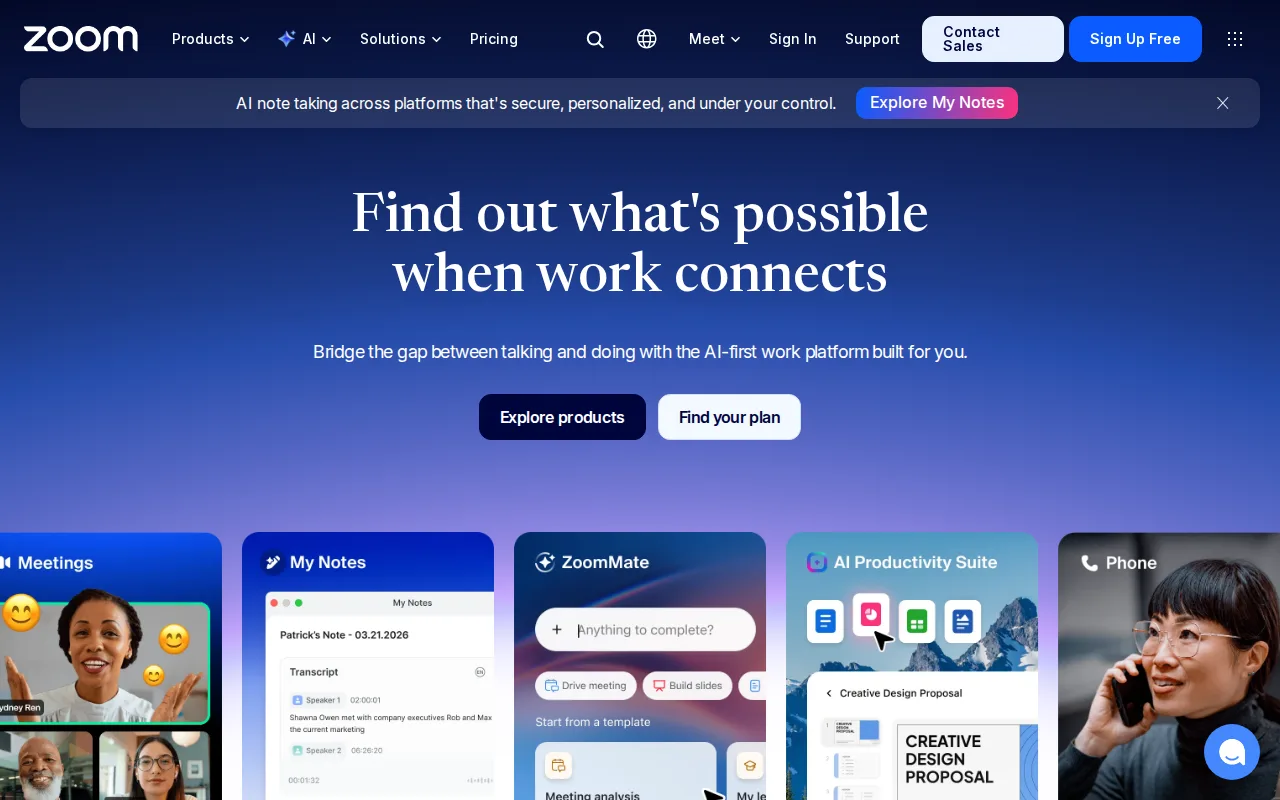
Zoom is the best Livestorm alternative for teams that run far more meetings than marketing webinars and want one platform with a free tier. Zoom's free Basic plan allows unlimited 1:1 meetings and group meetings of up to 100 participants for 40 minutes, where Livestorm has no free tier, only a trial. Zoom Pro runs about $14.16/user/month billed annually, a figure from third-party trackers since Zoom stopped publishing it, for 30-hour meetings with 100 participants, unlimited AI Companion summaries, and 10GB of cloud storage, while a single 100-person Livestorm session consumes 100 attendee credits, or EUR 250 at EUR 2.50 each. Zoom ships native apps for web, Windows, macOS, Linux, iOS, and Android, its learning curve is rated low against Livestorm's moderate, and it holds 4.6/5 from 14,659 Capterra reviews. Livestorm is still the better choice for marketing webinars. Livestorm runs registration pages, live, on-demand, and automated webinars, UTM analytics, and events of up to 3,000 attendees entirely in the browser, while Zoom sells Zoom Webinars as a separate add-on and lists 500-attendee webinars only on its quote-only Enterprise plan. Zoom's free plan cuts group calls at 40 minutes, and Zoom's exact Pro and Business prices are no longer published on its own site.
Compared to Livestorm: a free plan with 40-minute group meetings where Livestorm offers only a trial, per-host pricing from about $14.16/user/month instead of EUR 2.50 per attendee, and webinars sold as a separate add-on
Wins:Free Basic plan with unlimited 1:1 meetings and 40-minute group meetings for up to 100 participants, where Livestorm has no free tier · Pro at about $14.16/user/month billed annually covers 30-hour meetings with 100 participants, where one 100-person Livestorm session uses EUR 250 of attendee credits · Native apps on web, Windows, macOS, Linux, iOS, and Android, a learning curve rated low against Livestorm's moderate, and 4.6/5 from 14,659 Capterra reviews
Loses:Webinars are a separate Zoom Webinars add-on, and 500-attendee webinars sit on quote-only Enterprise, where Livestorm includes registration pages, automated webinars, and up to 3,000 live attendees · Zoom's own pricing page no longer publishes Pro and Business prices, so the figures here come from third-party trackers · Free plan caps group meetings at 40 minutes, and Zoom Phone and Zoom Rooms are also sold as separate add-ons
Pros
- AI Companion (meeting summaries, smart chapters, follow-up suggestions) is included free on paid plans rather than a paid add-on.
- Consistently reliable HD video and audio even on weaker connections, thanks to adaptive bandwidth handling.
- One platform covers meetings, phone (Zoom Phone), team chat, whiteboard, and docs instead of stitching together separate tools.
- Native apps for Windows, macOS, Linux, iOS, and Android, including a full Linux client many competitors skip.
Cons
- Free Basic plan limits group meetings to 40 minutes, forcing an upgrade for most recurring team calls.
- Exact Pro and Business pricing is no longer published on Zoom's own site, requiring a sales conversation or third-party source to confirm.
- Zoom Phone, large-meeting capacity, and webinar capabilities are separate paid add-ons on top of the base per-user license.
- Business Plus was folded into a bundled add-on rather than sold as its own standalone tier, complicating plan comparisons.
Pricing: Free tier · paid from $14.16/mo — About $14.16/user/month for Zoom Pro billed annually (third-party figure) vs Livestorm Pro at EUR 2.50 per attendee credit, or EUR 250 for one 100-person session
2Webex — best Livestorm alternative for organizations already inside the Cisco ecosystem (phones, networking, security) that want video meetings, calling, and messaging from one vendor instead of stitching together Zoom, a separate phone system, and a separate contact center

Webex is the best Livestorm alternative for organizations already running Cisco phones, networking, or room hardware that want meetings, calling, messaging, webinars, events, and whiteboarding from one vendor. Webex's free tier allows unlimited meetings of up to 40 minutes with up to 100 attendees, screen sharing, unlimited whiteboards, local recording, and Cisco's noise cancellation, where Livestorm has no free tier. The custom-priced Enterprise plan raises capacity to 1,000 attendees and adds unlimited cloud recording, an AI Assistant for summaries and follow-ups, and FedRAMP-authorized security for government customers, and Webex ships native apps for web, Windows, macOS, Linux, iOS, and Android. Webex holds 4.4/5 from 7,410 Capterra reviews. Livestorm is still the better choice for marketing teams. Livestorm publishes its Pro pricing at EUR 2.50 per attendee credit, while Cisco does not publish the per-user price of the Webex Suite plan and requires a checkout flow or a sales call. Livestorm events reach 3,000 live attendees against Webex Enterprise's 1,000, Livestorm's listing details registration pages, automated webinars, and UTM analytics that Webex's listing does not, and Webex's interface and admin console are often described as more complex than Zoom's for small teams without IT support.
Compared to Livestorm: meetings, calling, messaging, webinars, and events from one Cisco suite, a free tier with 40-minute meetings for 100 attendees, and an unpublished Webex Suite price
Wins:Free tier allows unlimited meetings of up to 40 minutes with 100 attendees, unlimited whiteboards, and local recording, where Livestorm has no free tier · One Cisco suite covers meetings, calling, messaging, webinars, events, and whiteboarding, alongside desk devices, room systems, and a separate contact center line · FedRAMP-authorized security on Enterprise and native apps for web, Windows, macOS, Linux, iOS, and Android, where Livestorm runs only in the browser
Loses:Webex Suite's per-user price is not published and requires a checkout flow or sales contact, where Livestorm publishes EUR 2.50 per attendee credit · Enterprise tops out at 1,000 attendees against Livestorm's 3,000 live attendees per event · Interface and admin console are often described as more complex than Zoom's for small teams without dedicated IT support
Pros
- Free tier supports up to 100 meeting attendees, more generous than many competitors' free plans.
- Deep integration with Cisco's broader collaboration and networking hardware for organizations already using Cisco infrastructure.
- AI Assistant and FedRAMP-authorized security available at the Enterprise tier for regulated and government customers.
- Single platform covers meetings, calling, messaging, webinars, and whiteboarding instead of requiring separate tools.
Cons
- Mid-tier Webex Suite pricing isn't published; users must start checkout or contact sales to see the real monthly cost.
- Free tier caps individual meetings at 40 minutes, pushing active users toward a paid plan quickly.
- Interface and admin console are frequently described as more complex than Zoom's for smaller teams without dedicated IT support.
Pricing: Free — Free for 40-minute meetings vs Livestorm's trial-only access; Webex Suite's price is unpublished, against Livestorm Pro's EUR 2.50 per attendee credit (verified )
3GoTo Meeting — best Livestorm alternative for regulated and IT-managed businesses (healthcare, education, professional services) that need HIPAA-compliant video conferencing with enterprise admin controls
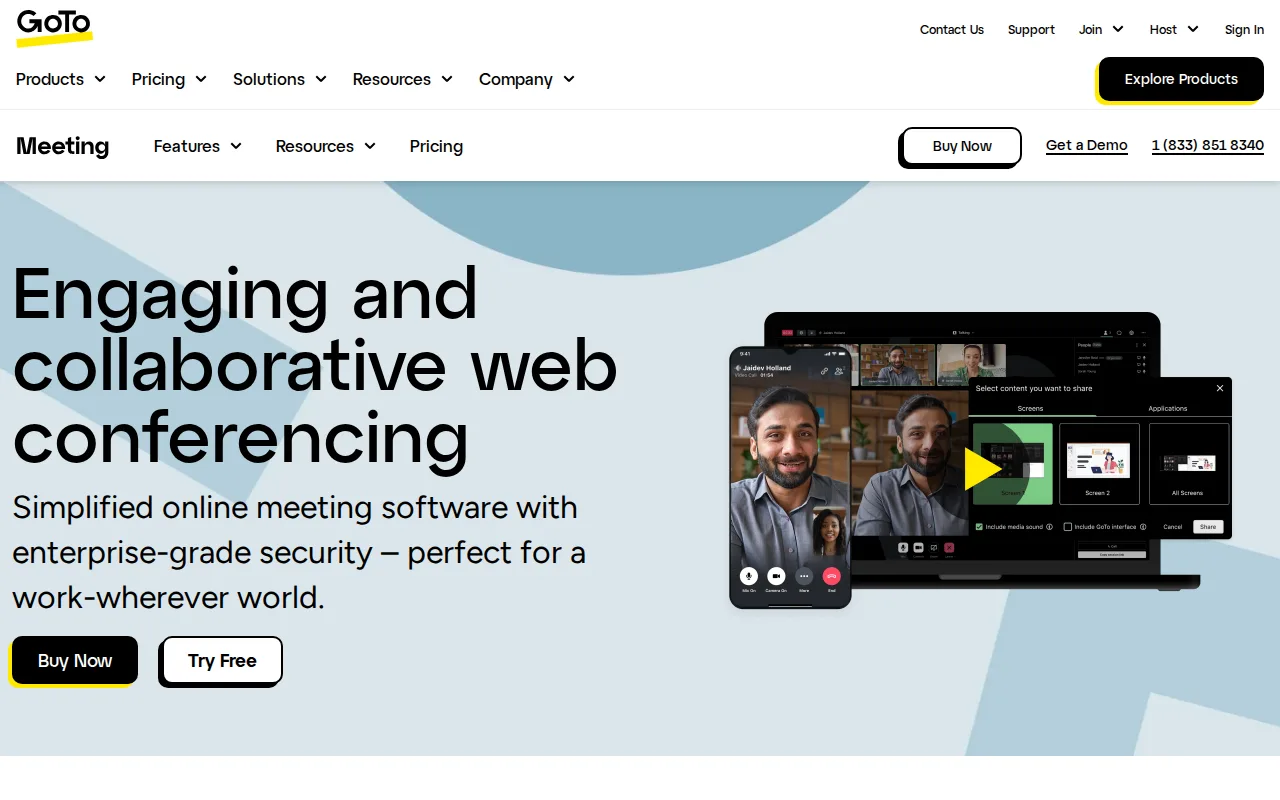
GoTo Meeting is the best Livestorm alternative for healthcare, education, and professional-services teams that need compliant video meetings under IT control rather than marketing webinars. GoTo Meeting offers HIPAA-compliant video with SOC2-certified data centers, single sign-on, an active directory connector, and downloadable admin reports, and its paid plans include AI meeting summaries and transcription, breakout rooms, and unlimited cloud recording. Attendees join with one click and no download, as with Livestorm, but GoTo Meeting also ships Windows, macOS, iOS, and Android apps, and it integrates with Slack, Google Calendar, Office 365, and Salesforce. Pricing is per organizer rather than per attendee, so a host's bill does not rise with attendance, where Livestorm consumes one EUR 2.50 credit per unique attendee per session. GoTo Meeting's learning curve is rated low against Livestorm's moderate, and it holds 4.4/5 from 11,531 Capterra reviews. Livestorm is still the better choice for large audiences and transparent pricing. GoTo Meeting caps meetings at 150 participants on Professional and 250 on Business and Enterprise, against Livestorm's 3,000, its dollar prices load dynamically instead of being published, and like Livestorm it has no free tier, only a 14-day trial.
Compared to Livestorm: HIPAA-compliant meetings with SOC2-certified data centers and an active directory connector, per-organizer pricing instead of per-attendee credits, and a 250-participant cap against Livestorm's 3,000
Wins:HIPAA-compliant video with SOC2-certified data centers, single sign-on, an active directory connector, and downloadable admin reports · Per-organizer pricing with unlimited cloud recording and AI summaries and transcription on paid plans, so cost does not rise with attendance as Livestorm's per-attendee credits do · Native Windows, macOS, iOS, and Android apps, a learning curve rated low against Livestorm's moderate, and 4.4/5 from 11,531 Capterra reviews
Loses:Meetings cap at 150 participants on Professional and 250 on Business and Enterprise, against Livestorm's 3,000 live attendees · Dollar prices load dynamically on the pricing page instead of being published as static text, where Livestorm publishes EUR 2.50 per credit · No free tier, only a 14-day trial, the same gap Livestorm has
Pros
- HIPAA-compliant video meetings with SOC2-certified data centers for healthcare and regulated industries.
- One-click meeting join with no download required for attendees.
- AI meeting summaries, transcription, and slide-to-PDF conversion included on paid plans.
- Admin center with active directory connector, SSO, and downloadable diagnostic reports for IT-managed rollouts.
Cons
- Exact pricing is not published as static text; the pricing page loads dollar amounts dynamically, requiring extra steps to compare costs.
- No free tier; only a 14-day trial with no credit card required.
- Professional tier caps at 150 participants, below the 250-person capacity of competitors like Zoom at similar price points.
- GoTo's broader product suite (GoTo Connect, GoTo Resolve) can make it unclear which bundle a buyer actually needs versus standalone GoTo Meeting.
Pricing: Custom pricing
4Microsoft Teams — best Livestorm alternative for organizations already using Microsoft 365 that need chat, video meetings, and calling tightly integrated with Word, Excel, Outlook, and SharePoint, from small teams under 300 people up to large enterprises
Microsoft Teams is the best Livestorm alternative for organizations already on Microsoft 365 that want meetings, webinars, and town halls inside the tools they use every day. Teams Essentials costs $4/user/month billed annually and covers chat, calling, video meetings, file sharing, 10GB of storage, meeting recordings with transcripts, and English live captions, while Microsoft 365 Business Basic at $7/user/month adds Exchange email, SharePoint, OneDrive, and 1TB of storage. Meetings support AI-generated notes through Copilot on eligible plans, live captions with real-time translation, webinars, and town halls, and Teams integrates natively with Word, Excel, PowerPoint, Outlook, and SharePoint. Teams Free covers basic messaging and calling with 60-minute group video calls, where Livestorm has no free tier, and Teams holds 4.5/5 from 11,129 Capterra reviews. Livestorm is still the better choice for external marketing webinars. Livestorm's listing details branded registration pages, on-demand and automated webinars, RTMP restreaming, UTM analytics, and events of up to 3,000 attendees with no install, none of which Teams' listing describes. Teams reviewers report crashes, login errors, and sync failures, Teams has no official Linux client, and its learning curve is moderate, the same as Livestorm's.
Compared to Livestorm: meetings, webinars, and town halls inside Microsoft 365 from $4/user/month, a free plan with 60-minute group calls, and no registration-to-analytics webinar tooling described in its listing
Wins:Teams Essentials at $4/user/month billed annually includes video meetings, recordings with transcripts, and live captions, with no per-attendee charge like Livestorm's EUR 2.50 credits · Native integration with Word, Excel, PowerPoint, Outlook, SharePoint, and OneDrive, plus Copilot meeting notes on eligible plans · Free plan for basic messaging and calling with 60-minute group calls, and 4.5/5 from 11,129 Capterra reviews, against Livestorm's trial-only access and 398 reviews
Loses:No branded registration pages, automated webinars, RTMP restreaming, or UTM analytics described in Teams' listing, all of which Livestorm includes · Reviewers report recurring crashes, login errors, sync failures, and unreliable status indicators · No official Linux client, and full desktop Office apps require Microsoft 365 Business Standard at $23.50/user/month
Pros
- Free tier is usable for small teams with unlimited 1:1 messaging and calling.
- Tight native integration with Word, Excel, PowerPoint, Outlook, and SharePoint.
- AI-generated meeting notes, live captions, and real-time translation on paid tiers.
- Scales from a $4/user/month Essentials plan up to enterprise-grade Teams Phone and Teams Premium add-ons.
Cons
- Users report recurring bugs: crashes, login errors, sync failures, and unreliable status indicators.
- Free tier caps group video calls at 60 minutes.
- Full desktop Office apps require a $23.50/user/month Microsoft 365 Business Standard plan, not a lower-cost Teams-only upgrade.
- No official native Linux client.
Pricing: Free tier · paid from $4/mo — $4/user/month for Teams Essentials billed annually vs Livestorm Pro at EUR 2.50 per attendee credit, or EUR 250 for one 100-person session (verified )
5Google Meet — best Livestorm alternative for individuals and teams already using Gmail, Calendar, and Google Workspace who want video calls that launch directly from a calendar invite with no separate app install
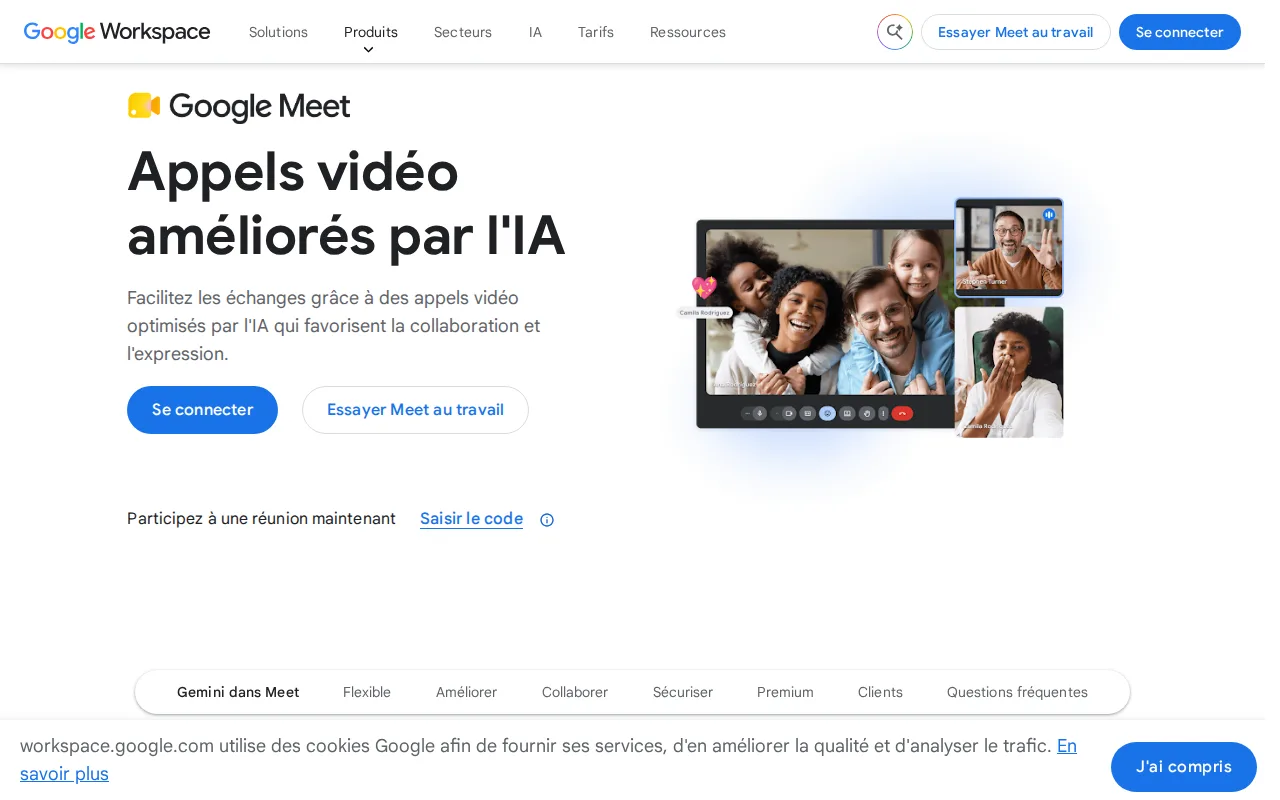
Google Meet is the best Livestorm alternative for teams that already run on Gmail, Calendar, and Google Workspace and mostly need meetings rather than marketing webinars. Google Meet launches from a Calendar invite or a link with no software install on desktop, the same no-download experience Livestorm offers, and its free plan supports up to 100 participants for 60-minute group calls, where Livestorm has no free tier. Paid Workspace editions raise capacity to 150 participants on Business Standard, 500 on Business Plus, and 1,000 on Enterprise, add meeting recording and Studio Sound from Business Standard, and build in Gemini note-taking, meeting summaries, live captions, and real-time translation, with tight integration into Docs, Sheets, and Slides. Google Meet's learning curve is rated low against Livestorm's moderate. Livestorm is still the better choice for anything with a registration page. Google Meet's listing describes no webinar registration, automated webinars, or attendee analytics, its largest tier tops out at 1,000 participants against Livestorm's 3,000, the free plan has no recording, and Google does not show per-user Workspace prices without a sign-in or purchase flow. Google Meet has no native Windows or macOS app and no rating on record here, against Livestorm's 4.7/5 from 398 Capterra reviews.
Compared to Livestorm: meetings that launch from Google Calendar with no install, a free plan for 100 participants and 60-minute calls, and no webinar registration or attendee analytics in its listing
Wins:Free plan supports up to 100 participants with 60-minute group calls, where Livestorm has no free tier · Meetings launch straight from Google Calendar, and Gemini adds note-taking, summaries, live captions, and real-time translation on paid tiers · Learning curve rated low against Livestorm's moderate, with in-meeting collaboration in Docs, Sheets, and Slides
Loses:No webinar registration, automated webinars, or attendee analytics described in Google Meet's listing, and the top tier reaches 1,000 participants against Livestorm's 3,000 · Free plan has no recording, and recording needs at least Workspace Business Standard, whose per-user price is not shown without a sign-in or purchase flow · No native Windows or macOS app, and no rating on record here against Livestorm's 4.7/5 from 398 Capterra reviews
Pros
- Meetings launch directly from a Google Calendar invite with no separate app download required on desktop.
- Gemini features generate live captions, real-time translation, and automatic meeting notes on paid tiers.
- Free tier supports up to 100 participants, generous enough for most small-team or casual calls.
- Tight integration with Google Docs, Sheets, and Slides for in-meeting collaboration.
Cons
- Free tier caps group calls at 60 minutes and includes no recording option.
- No native Windows or macOS desktop app; runs only through the browser or mobile apps.
- Exact per-user pricing for Workspace Business Starter, Standard, and Plus is not shown on the plan-comparison page without starting a purchase flow.
- Meeting recording and Studio Sound require at least the Business Standard tier, not available on Business Starter.
Pricing: Free — Free for 60-minute calls with up to 100 participants vs Livestorm's trial-only access; Workspace per-user prices are unpublished, against Livestorm Pro's EUR 2.50 per attendee credit
6Whereby — best Livestorm alternative for coaches, consultants, and client-facing professionals who want guests to join a video call from one reusable link with no download or account
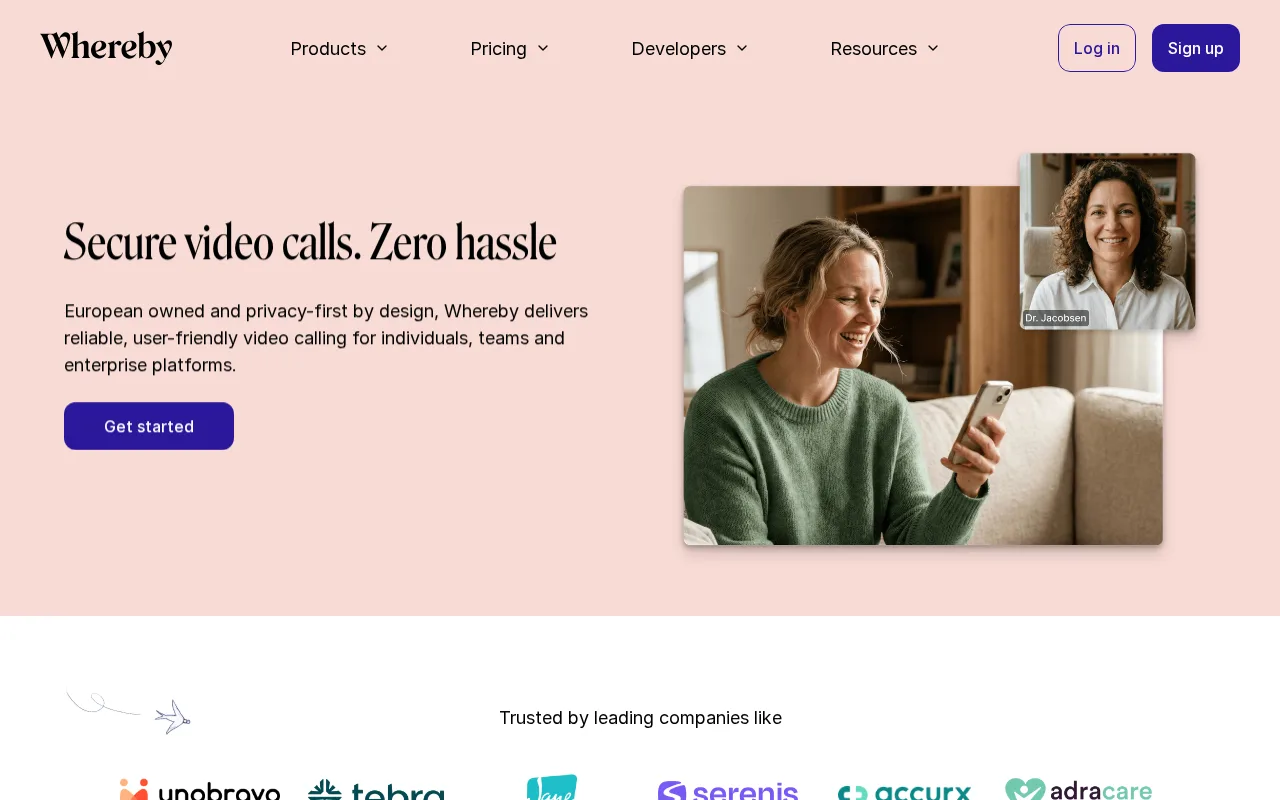
Whereby is the best Livestorm alternative for coaches, consultants, and client-facing teams who hold recurring calls rather than marketing webinars. Guests join Whereby from a browser link with no download, plugin, or account, as with Livestorm, and each host keeps a permanent room URL to reuse for every call. Whereby Pro costs $10.99/month for 3 rooms, up to 100 attendees, unlimited meeting length, custom branding, unlimited recording, background effects, and noise reduction, and Business costs $13.99/month per host with a 3-host minimum and 17% off annually, adding unlimited rooms, 200 attendees, breakout groups, and hybrid meetings. Because Whereby charges per host, a weekly 100-person session costs the same $10.99 a month, where one 100-person Livestorm session consumes EUR 250 in attendee credits. Whereby's learning curve is rated low against Livestorm's moderate, it is European-owned with GDPR-oriented positioning, it sells an embeddable video API, and it holds 4.5/5 from 117 Capterra reviews. Livestorm is still the better choice for events and lead generation. Whereby caps rooms at 100 attendees on Pro and 200 on Business against Livestorm's 3,000, it has fewer built-in integrations such as transcription, and its free plan allows only 1 room, 4 attendees, and 30 minutes.
Compared to Livestorm: a permanent room link guests join with no download or account, flat per-host pricing from $10.99/month instead of per-attendee credits, and caps of 100 attendees on Pro and 200 on Business
Wins:Pro at $10.99/month covers unlimited-length meetings with up to 100 attendees at a flat price, where Livestorm charges EUR 2.50 per unique attendee per session · Each host keeps a permanent, reusable room URL, and Pro adds custom branding, unlimited recording, and noise reduction · A free plan, a learning curve rated low against Livestorm's moderate, and a separate embeddable video API for building calls into your own app
Loses:Attendee caps of 100 on Pro and 200 on Business, against Livestorm's 3,000 live attendees per event · Fewer built-in integrations such as calendar scheduling and transcription, where Livestorm includes AI transcription and live translation · Free plan allows only 1 room, 4 attendees, and 30-minute meetings, and Business requires at least 3 paid hosts
Pros
- No download or account required for guests to join a meeting from a browser link.
- Permanent, reusable room URLs suit recurring client or coaching calls better than one-off meeting links.
- Separate Embedded API/SDK lets developers add WebRTC video directly into their own apps.
- European-owned with GDPR-oriented positioning, relevant for privacy-conscious teams.
Cons
- Business plan requires a minimum of 3 paid hosts, adding cost for small teams that don't need three seats.
- Free plan caps meetings at 30 minutes and a single room, tighter than some competing free tiers.
- Attendee caps (100 on Pro, 200 on Business) are lower than large webinar-focused platforms.
- Fewer built-in productivity integrations (calendar scheduling, transcription) than Zoom or Google Meet.
Pricing: Free tier · paid from $10.99/mo — $10.99/month for Whereby Pro (100 attendees, unlimited length) vs Livestorm Pro at EUR 2.50 per attendee credit, or EUR 250 for one 100-person session (verified )
7BigBlueButton — best Livestorm alternative for schools, universities, and training organizations that need LMS-integrated virtual classrooms and are willing to self-host or pay a commercial BigBlueButton hosting provider
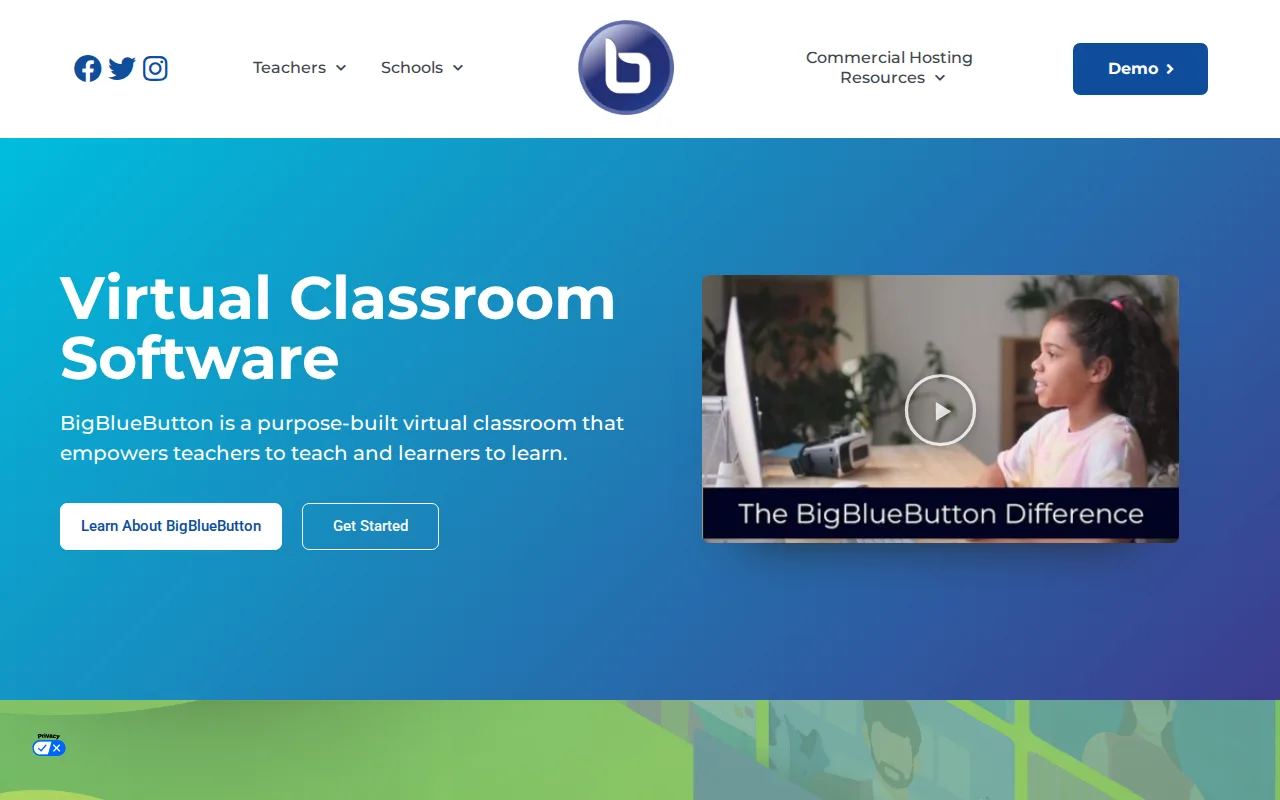
BigBlueButton is the best Livestorm alternative for schools, universities, and training organizations that teach online rather than market through webinars. BigBlueButton is free and open source under the LGPL-3.0 license, with full source on GitHub, so an institution can self-host it with no per-attendee charge, where Livestorm bills EUR 2.50 per unique attendee per session and has no free tier. BigBlueButton ships classroom tools instead of marketing tools: a multi-user whiteboard, document upload with slide annotation, breakout rooms, polling, hand-raise, shared notes, and AI-generated smart slides, and it integrates directly into Moodle, Canvas, Sakai, D2L, Jenzabar, and Schoology so instructors start sessions inside their LMS. Like Livestorm, BigBlueButton runs entirely in the browser with nothing to install. Livestorm is still the better choice for anyone who wants a managed service or runs marketing events. BigBlueButton has no first-party paid plan: running it means maintaining a Linux server with enough CPU and RAM for video processing, where underpowered servers drop audio and video, or buying from a third-party host whose prices vary. BigBlueButton's own listing says it lacks advanced webinar registration, and it holds 4.2/5 from 66 Capterra reviews against Livestorm's 4.7/5 from 398.
Compared to Livestorm: free LGPL-3.0 self-hosting with no per-attendee charge, classroom tools and native LMS integration, and no managed service or advanced webinar registration
Wins:Free and open source under LGPL-3.0 with full source on GitHub, so self-hosted sessions carry no per-attendee charge like Livestorm's EUR 2.50 credits · Classroom tools including a multi-user whiteboard, slide annotation, breakout rooms, polling, hand-raise, shared notes, and AI smart slides · Native integration with Moodle, Canvas, Sakai, D2L, Jenzabar, and Schoology, so instructors launch sessions from inside their LMS
Loses:No first-party paid plan, so self-hosting needs a Linux server with real CPU and RAM headroom, or a third-party host whose prices vary · Lacks advanced webinar registration by its own listing, where Livestorm runs registration pages, automated webinars, and UTM analytics · 4.2/5 from 66 Capterra reviews, against Livestorm's 4.7/5 from 398
Pros
- Free and open source under LGPL-3.0, with full source available on GitHub.
- Purpose-built classroom tools: multi-user whiteboard, breakout rooms, polling, shared notes, AI smart slides.
- Native integration with major LMS platforms (Moodle, Canvas, Sakai, D2L, Schoology).
- Runs entirely in the browser, no desktop or mobile client to install.
Cons
- Self-hosting requires a Linux server with real CPU/RAM headroom for video processing; underpowered servers cause dropped audio and video.
- No single official paid SaaS tier — commercial hosting pricing varies by third-party provider, not standardized.
- Built for classroom teaching, not general business meetings, so it lacks features common in tools like Zoom, such as advanced webinar registration.
Pricing: Free — Free to self-host under LGPL-3.0 vs Livestorm Pro at EUR 2.50 per attendee credit; third-party hosted BigBlueButton prices vary by provider (verified )