6 Best Free Alternatives to Pixlr in 2026
By Noahlast updated pricing verified
Compared: free alternatives to Pixlr
| Alternative | Best for | Standout | Biggest weakness | Learning curve | Price |
|---|---|---|---|---|---|
| Pixlrreference | casual creators, social media managers, and small businesses who want quick AI-assisted photo edits in a browser without paying for Photoshop | A no-signup, ad-supported free tier that includes real AI tools (generative fill, background removal, upscaling) rather than gating every AI feature behind a paywall. | Ads interrupt the editing workflow on the free tier, and the entry-level Plus plan's 80 monthly AI credits run out quickly for anyone generating images or video regularly; professional designers also cite limited customization compared to desktop editors. | Low | Free tier · paid from $1.99/mo |
| Canva | marketers, small business owners, and social media managers who need on-brand graphics fast without hiring a designer or learning Illustrator or Photoshop | The template-first workflow combined with Magic Resize, which reformats one design across dozens of platform-specific sizes automatically. | Designs can't be exported as editable source files (no .psd or .ai export), so work started in Canva is effectively locked into Canva, and premium templates and the full content library sit behind the Pro paywall. | Low | Free tier · paid from $18/mo |
| Photopea | students, social media creators, and small business owners who need Photoshop-style PSD editing without buying or installing desktop software | Native PSD, AI, XD, and Sketch file compatibility running entirely in the browser, so files stay local instead of uploading to a server. | As a single-developer, ad-supported project, Photopea lacks the cloud sync, version history, and dedicated customer support that a paid product like Photoshop offers, and performance on very large multi-layer files depends entirely on the user's device and browser. | Moderate | Free |
| GIMP | photographers, illustrators, and designers who want a full-featured, scriptable photo editor without paying a subscription or license fee | A scripting API in Python, C, C++, and Scheme lets users automate batch processing and build custom filters and plugins, backed by a large community library of scripts built up over the project's history. | No official vendor support: there is no paid support tier or SLA, so troubleshooting relies entirely on community forums and documentation, and the interface is widely considered less approachable for beginners than Photoshop or Affinity Photo. | Steep | Free |
| Adobe Photoshop | photographers and designers who need pixel-level compositing, retouching, or AI-generated image edits beyond what non-destructive editors offer | Generative Fill and Generative Expand, which use Firefly and partner AI models to add, remove, or extend image content directly from a text prompt inside the layer stack. | Subscription-only with no perpetual license, a steep learning curve for anyone new to layers and masks, and heavy enough on CPU/GPU that Capterra reviewers report performance issues even on capable machines. | Steep | Free tier · paid from $19.99/mo |
| Fotor | individuals and small businesses who want browser-based photo editing with AI background/object removal and image generation, without a Photoshop-level learning curve | Combines traditional photo editing with generative AI tools (background removal, object removal, text-to-image via Flux/Gemini/Nano Banana models) in one browser-based editor with no watermarks even on the free plan. | AI generation credits and concurrent-generation limits are tight even on the paid Pro tier (10 concurrent generations), and the free plan's 512MB cloud storage cap is small for users who want to keep a working library of projects. | Low | Free tier · paid from $8.99/mo |
| BeFunky | Solo creators and small businesses who need quick browser-based photo touch-ups, collages, and templated graphics (banners, flyers, social posts) without learning Photoshop or Illustrator. | One-click AI tools (background remover, object eraser, photo enhancer, image upscaler, sky replacer, deblur, old photo restorer) plus a Pro-tier batch AI editing and batch background removal workflow driven by monthly credits. | BeFunky gates many effects, filters, overlays, and templates behind "Limited" versions on the Free plan, and its Pro-tier batch AI features run on a credit system that does not roll over month to month, pushing users toward top-up purchases or a higher tier. | Low | Free |
 Pixlr
Pixlr Canva
Canva Photopea
 GIMP
GIMP Adobe Photoshop
 Fotor
Fotor BeFunky
1.Canva — best Pixlr alternative for marketers, small business owners, and social media managers who need on-brand graphics fast without hiring a designer or learning Illustrator or Photoshop
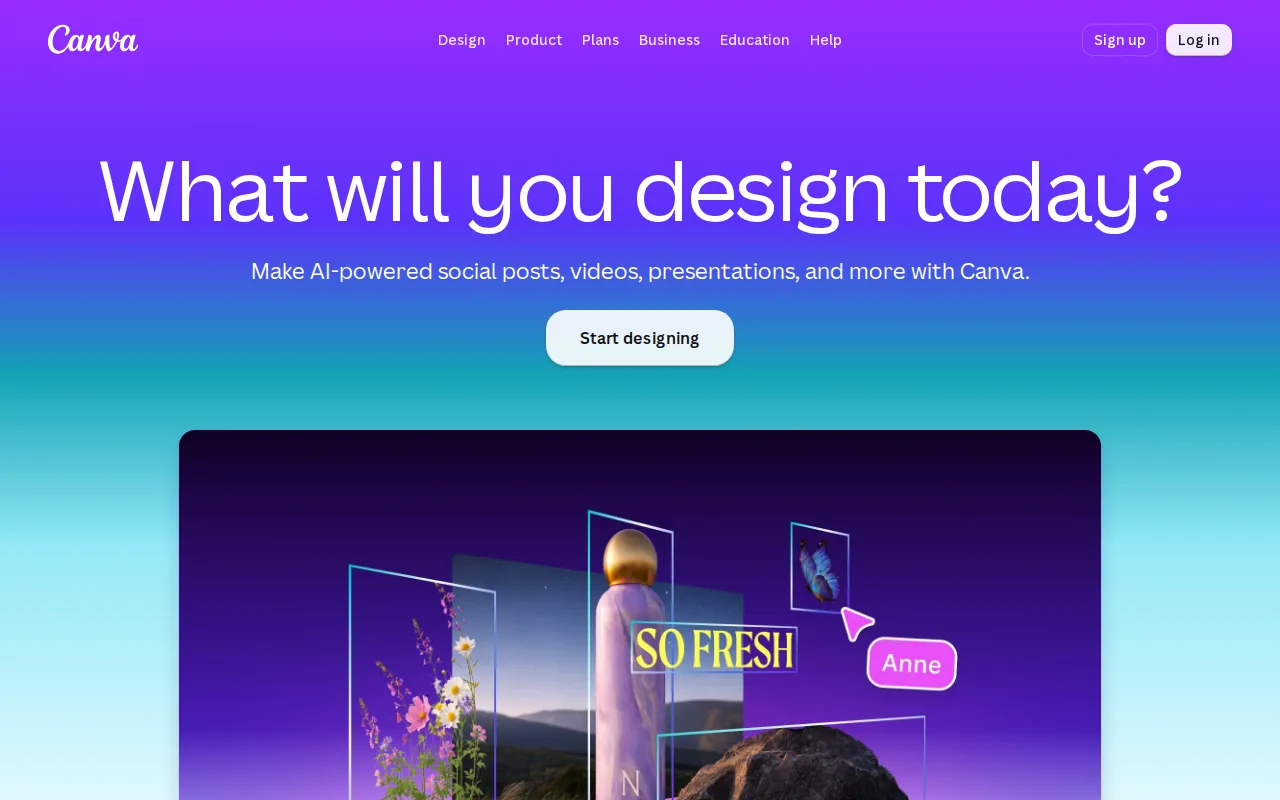
Canva is the best Pixlr alternative for marketers, small business owners, and social media managers who want template-driven design rather than Pixlr's more traditional layers-and-tools editing approach. Canva holds a 4.7/5 rating from 13,411 Capterra reviews, a far larger review base than Pixlr's own 4.9/5 rating from just 53 Product Hunt reviews. Canva's free plan includes 2M+ templates and 5GB of storage with no signup cost, comparable to Pixlr's ad-supported free tier, while Canva Pro costs $18/month (or roughly $12/month billed annually) and adds premium templates, a brand kit, and background removal, priced close to Pixlr's Premium tier at $7.99/month for 1,000 monthly AI credits. Canva's Magic Resize feature reformats one design across dozens of platform-specific sizes automatically, a template-first workflow advantage Pixlr's more traditional editor doesn't offer. Pixlr remains the better choice for users who specifically need to edit an existing photo pixel-by-pixel with layers, filters, and AI generative fill rather than start from a template: Canva's designs can't be exported as editable source files like .psd or .ai, locking work into Canva's own editor, while Pixlr's free tier includes real AI editing tools (generative fill, background removal, upscaling) without requiring a Pro-tier upgrade the way Canva gates its premium templates and full content library.
Compared to Pixlr: 4.7/5 rating from 13,411 Capterra reviews vs Pixlr's 4.9/5 from just 53 Product Hunt reviews, template-first Magic Resize workflow vs Pixlr's traditional layers-and-AI-tools editor, no export to editable .psd/.ai source files unlike Pixlr's standard image export
Wins:4.7/5 rating from 13,411 Capterra reviews, a much larger review base than Pixlr's 53 Product Hunt reviews · Template library and drag-and-drop editor let non-designers produce usable graphics in minutes, without Pixlr's more traditional tool-based workflow · Magic Resize adapts one design to many platform-specific formats automatically, a template-first capability Pixlr doesn't offer
Loses:No export to editable source formats like .psd or .ai; designs are effectively locked to Canva's own editor, unlike Pixlr's standard image exports · Most premium templates, stock assets, and AI features require the $18/month Pro or Business tier, versus Pixlr's AI tools included even on its free plan · Mobile app is noticeably more limited than the desktop/web editor
Pros
- Template library and drag-and-drop editor let non-designers produce usable graphics in minutes.
- Magic Resize adapts one design to many platform-specific formats automatically.
- Business plan's brand kits and approval workflows keep team output on-brand without a design lead reviewing everything.
- Bundles docs, presentations, and a website builder alongside design, reducing the number of separate tools a small team needs.
Cons
- No export to editable source formats like .psd or .ai; designs are effectively locked to Canva's own editor.
- Most premium templates, stock assets, and AI features require the Pro or Business paid tier.
- Mobile app is noticeably more limited than the desktop/web editor.
- Some users report confusing billing transitions between the free trial and paid subscription.
Pricing: Free tier · paid from $18/mo — $18/month (Pro, or ~$12/month billed annually) vs Pixlr's $7.99/month (Premium, 1,000 monthly AI credits); both offer a genuine free tier
2.Photopea — best Pixlr alternative for students, social media creators, and small business owners who need Photoshop-style PSD editing without buying or installing desktop software
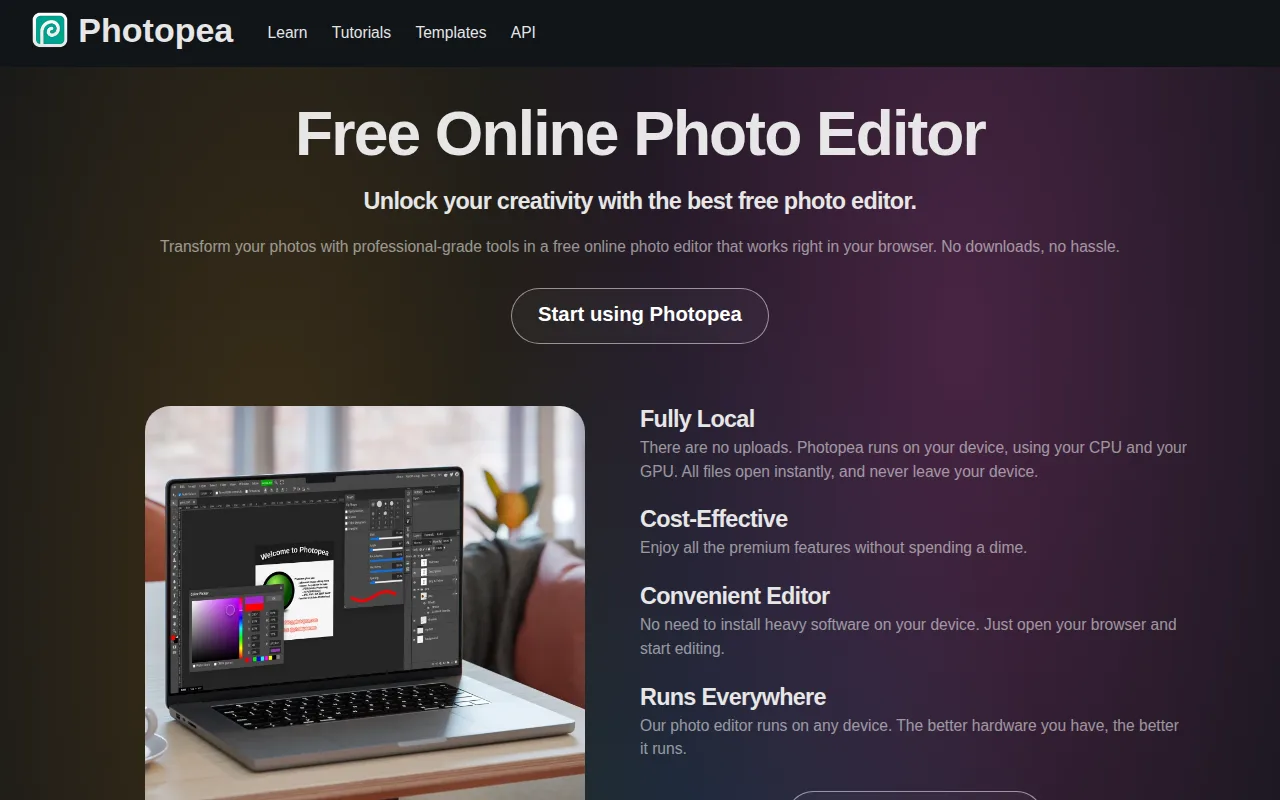
Photopea is the best Pixlr alternative for students, social media creators, and small business owners who need Photoshop-style PSD editing entirely free, rather than Pixlr's freemium, ad-supported model. Photopea costs $0 with no paid tier at all, undercutting even Pixlr's cheapest paid Plus tier at $1.99/month, and Photopea holds a 4.5/5 rating from 113 Capterra reviews, more than double Pixlr's own 53 Product Hunt reviews. Photopea opens and saves native PSD, AI, XD, Sketch, and CDR files directly in the browser with no conversion step and no file upload to a server, since editing happens locally, a native-file-compatibility feature Pixlr's listing doesn't document. Photopea's toolset mirrors Photoshop's layer-based workflow, including masking, liquify, puppet warp, and adjustment layers, alongside AI-powered background removal. Pixlr remains the better choice for users who specifically want generative AI features like text-to-image and text-to-video generation, or native mobile apps: Photopea is built and maintained largely by a single developer, so support channels are more limited than Pixlr's commercial backing, and Photopea has no dedicated iOS or Android app, unlike Pixlr's native mobile apps on both platforms.
Compared to Pixlr: entirely free with no paid tier vs Pixlr's $1.99-$39.99/month paid tiers, native PSD/AI/XD file support with local browser editing vs Pixlr's more general AI-photo-editing toolset, 4.5/5 rating from 113 Capterra reviews vs Pixlr's 4.9/5 from just 53 Product Hunt reviews
Wins:Entirely free with no paid tier, license fee, or AI-credit system, unlike Pixlr's $1.99-$39.99/month tiered pricing · Opens and saves native PSD, AI, and XD files with no conversion step, a file-compatibility feature Pixlr's listing doesn't document · Files are processed locally in the browser rather than uploaded to a server
Loses:No dedicated iOS or Android app, unlike Pixlr's native mobile apps on both platforms · No built-in generative AI text-to-image or text-to-video tools, a category Pixlr offers on its paid tiers · Built and maintained largely by a single developer, so support channels are more limited than Pixlr's commercial backing
Pros
- Opens and saves native PSD, AI, and XD files with no conversion step.
- Runs in any modern browser with no installation, account, or upload of files to a server required.
- Full layer-based editing toolset: masking, liquify, puppet warp, and adjustment layers.
- RAW photo format support (CR2, CR3, NEF, ARW, DNG) built in.
Cons
- No built-in cloud storage or version history across sessions.
- Editing performance on large, layer-heavy files depends on the browser and device, unlike a native desktop app.
- Built and maintained largely by a single developer, so support channels are more limited than a commercial vendor's.
- Interface closely mirrors Photoshop's, which can be dense for users who've never used Photoshop before.
Pricing: Free — $0 (entirely free, no paid tier) vs Pixlr's $1.99/month (Plus) up to $39.99/month (Ultra MAX) (verified undefined NaN, NaN)
3.GIMP — best Pixlr alternative for photographers, illustrators, and designers who want a full-featured, scriptable photo editor without paying a subscription or license fee
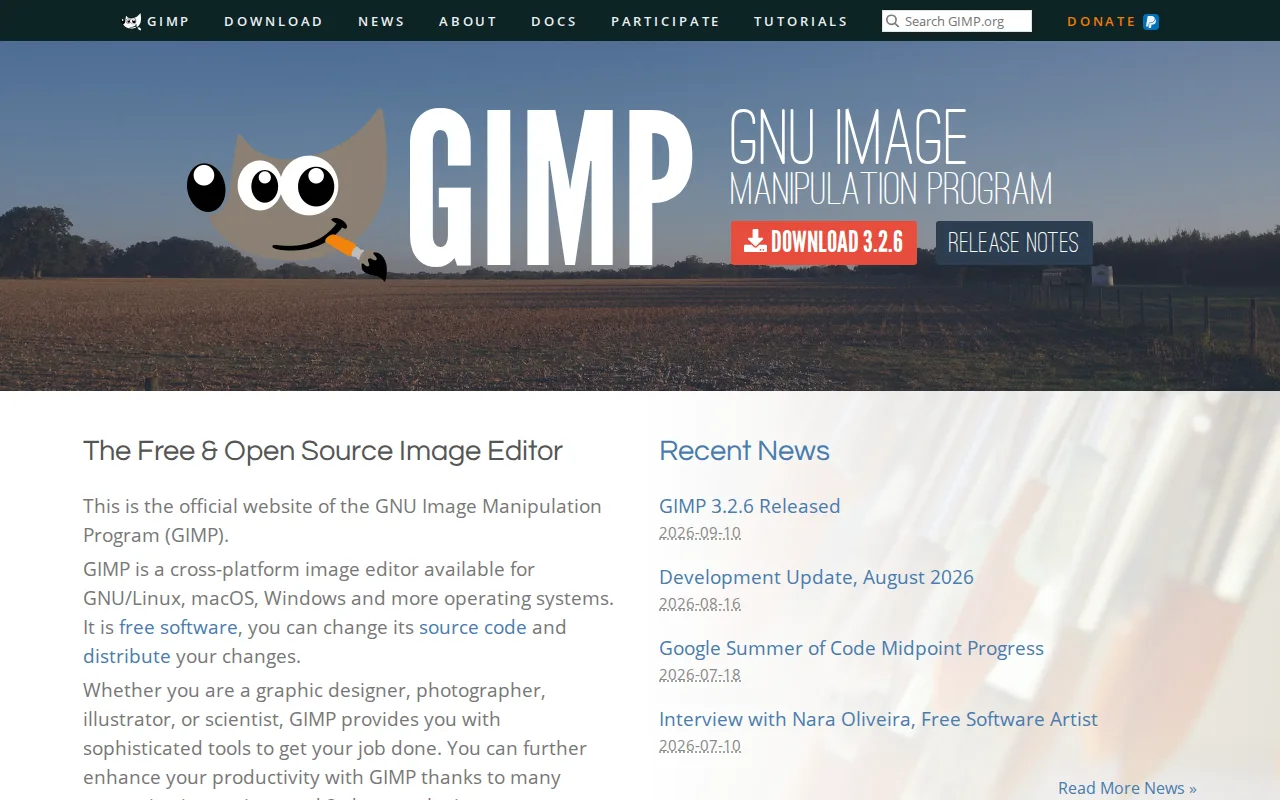
GIMP is the best Pixlr alternative for photographers, illustrators, and designers who want a full-featured, scriptable photo editor without any subscription or license fee, unlike Pixlr's freemium, credit-based AI model. GIMP costs $0 under the GPLv3 open-source license with no paid tier, license fee, or usage limits at all, a stronger free offering than Pixlr's ad-supported free tier with limited AI credits. GIMP runs natively on GNU/Linux, macOS, and Windows, while Pixlr runs in the browser plus iOS and Android, giving GIMP desktop-class performance for large, layer-heavy files that Pixlr's browser-based editor doesn't guarantee. GIMP's scripting API in Python, C, C++, and Scheme lets users automate batch processing and build custom filters, backed by a large community library of scripts, a depth of extensibility Pixlr's listing doesn't document. Pixlr remains the better choice for users who specifically want AI generative tools like fill, object removal, and face swap with no installation required: GIMP has no official vendor support or SLA, so troubleshooting relies entirely on community forums, and its interface is widely considered less approachable for beginners than Pixlr's browser-based, ad-supported editor.
Compared to Pixlr: entirely free open-source (GPLv3) with no paid tier vs Pixlr's $1.99-$39.99/month tiers, native desktop apps on Linux/macOS/Windows vs Pixlr's browser-plus-mobile-only platform list, scripting API in Python/C/C++/Scheme vs Pixlr's browser-based AI tools with no documented scripting layer
Wins:Completely free with no license fee, subscription, or AI-credit system, unlike Pixlr's $1.99-$39.99/month paid tiers · Native desktop apps on Linux, macOS, and Windows offer more consistent performance on large, layer-heavy files than a browser-based editor · Scriptable via Python, C, C++, and Scheme for custom filters and batch automation, a capability Pixlr's listing doesn't document
Loses:No official vendor support or SLA; help comes only from community forums and documentation, unlike Pixlr's commercially-backed support · No built-in generative AI features like text-to-image, face swap, or generative fill, a category central to Pixlr's product · Interface and non-destructive editing workflow are less approachable for beginners than Pixlr's browser-based editor
Pros
- Completely free with no license fee, subscription, or feature paywall.
- Fully cross-platform on Linux, macOS, and Windows with the same feature set on each.
- Scriptable via Python, C, C++, and Scheme for custom filters and batch automation.
- Open-source license means the software can be audited, modified, and redistributed without restriction.
Cons
- No official vendor support or SLA; help comes only from community forums and documentation.
- Interface and non-destructive editing workflow are less approachable for beginners than Photoshop or Affinity Photo.
- Native file compatibility with Photoshop's .psd format is imperfect for complex layered files.
- Smaller plugin and brush ecosystem than commercial competitors, despite community contributions.
Pricing: Free — $0 (entirely free, open-source, no paid tier) vs Pixlr's $1.99/month (Plus) up to $39.99/month (Ultra MAX) (verified undefined NaN, NaN)
4.Adobe Photoshop — best Pixlr alternative for photographers and designers who need pixel-level compositing, retouching, or AI-generated image edits beyond what non-destructive editors offer
Adobe Photoshop is the best Pixlr alternative for photographers and designers who need pixel-level compositing, retouching, or AI-generated image edits beyond what Pixlr's browser-based editor offers. Photoshop holds a 4.8/5 rating from 2,466 Capterra reviews, the highest rating and largest review base of any product in this entire comparison, well above Pixlr's own 4.9/5 rating from just 53 Product Hunt reviews. Photoshop's single-app plan costs $22.99/month, or $19.99/month bundled with Lightroom, considerably more than Pixlr's most comparable Premium tier at $7.99/month, but it includes Generative Fill and Generative Expand powered by Adobe Firefly and partner models, plus a free, credit-card-free web version for basic generative editing without installing the desktop app. Photoshop runs on Windows, macOS, iPad, and a limited web version, while Pixlr adds native iOS and Android apps that Photoshop's platform list doesn't fully match. Pixlr remains the better choice for casual creators and social media managers who want quick AI-assisted edits without a Creative Cloud subscription: Photoshop is subscription-only with no perpetual license, has a steep learning curve for anyone unfamiliar with layers and masks, and is demanding enough on hardware that even high-end machines can slow on large multi-layer files, unlike Pixlr's lighter, browser-first editing experience.
Compared to Pixlr: 4.8/5 rating from 2,466 Capterra reviews vs Pixlr's 4.9/5 from just 53 Product Hunt reviews, single-app plan at $22.99/month vs Pixlr's $7.99/month Premium tier, industry-standard layer-based pixel editing vs Pixlr's browser-first AI-tools approach
Wins:4.8/5 rating from 2,466 Capterra reviews, the largest and highest-rated review base among all products in this comparison · Layer-based, pixel-level editing that remains the industry benchmark for compositing and retouching, beyond Pixlr's browser-tool feature set · Generative Fill and Remove tool, powered by Firefly and partner AI models, cut hours off object removal and background work
Loses:Subscription-only with no perpetual license, and considerably pricier at $22.99/month than Pixlr's $7.99/month Premium tier · Steep learning curve for users unfamiliar with layers, masks, and blend modes, versus Pixlr's more approachable browser-based editor · Demanding on hardware; large multi-layer files can slow even high-end machines, unlike Pixlr's lighter browser-first editing
Pros
- Layer-based, pixel-level editing that remains the industry benchmark for compositing and retouching.
- Generative Fill and Remove tool cut hours off object removal and background work.
- Deep Creative Cloud integration shares fonts, assets, and files with Illustrator and Lightroom.
- Free web-based Firefly editor lets anyone try generative editing without a subscription.
Cons
- No perpetual license; access ends when the subscription lapses.
- Steep learning curve for users unfamiliar with layers, masks, and blend modes.
- Demanding on hardware; large multi-layer files can slow even high-end machines.
- Cancelling an annual-billed-monthly plan within the first year can trigger an early termination fee.
Pricing: Free tier · paid from $19.99/mo — $22.99/month (single-app Photoshop) or $19.99/month (Photography plan with Lightroom) vs Pixlr's $7.99/month (Premium, 1,000 monthly AI credits) (verified undefined NaN, NaN)
5.Fotor — best Pixlr alternative for individuals and small businesses who want browser-based photo editing with AI background/object removal and image generation, without a Photoshop-level learning curve
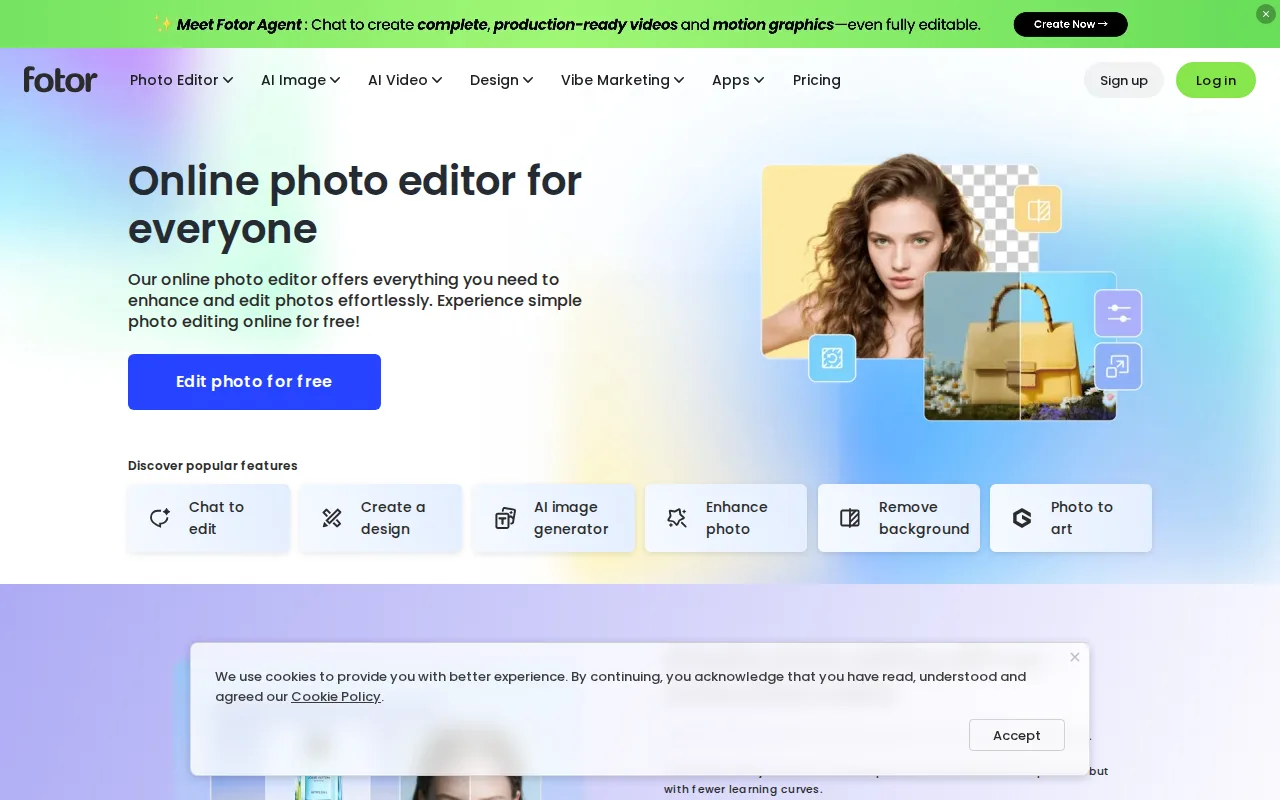
Fotor is the best Pixlr alternative for individuals and small businesses who want browser-based AI photo editing with a choice of multiple generative models (Flux, Gemini, Nano Banana), a broader model selection than Pixlr's own AI tooling documents. Fotor's free Basic plan allows unlimited watermark-free exports, matching Pixlr's ad-supported free tier, though Fotor's free plan caps cloud storage at 512MB versus Pixlr's free tier which doesn't document a storage cap at all. Fotor Pro costs $8.99/month (or $39.99/year billed annually), close to Pixlr's Premium tier at $7.99/month, and raises limits to 10 concurrent generations, 1,000 AI Agent chats, and 100+ premium editing tools. Fotor's AI Agent chat interface for guided editing and basic AI-assisted video editing extend beyond Pixlr's documented feature set, which centers on generative fill, background removal, and upscaling. Pixlr remains the better choice for users who specifically want a no-signup, ad-supported free tier with real AI tools included from the start: Fotor's Pro tier's 10 concurrent generations and 1,000 AI Agent chats/month can feel restrictive for heavy AI users, and its 512MB free-tier storage cap is smaller than what Pixlr's free tier appears to offer based on its own no-signup-required positioning.
Compared to Pixlr: multiple AI generation models (Flux, Gemini, Nano Banana) vs Pixlr's more limited documented model set, unlimited watermark-free exports on the free plan matching Pixlr's free tier, Pro tier at $8.99/month close to Pixlr's $7.99/month Premium but with a 512MB free-tier storage cap
Wins:Combines multiple generative AI models (Flux, Gemini, Nano Banana) for text-to-image generation in one editor, a broader model choice than Pixlr documents · Free plan allows unlimited exports with no watermarks, matching Pixlr's own ad-supported, watermark-free free tier · AI Agent chat interface for guided editing and basic AI video editing extend beyond Pixlr's documented AI feature set
Loses:Free plan caps cloud storage at 512MB, a limit Pixlr's free tier doesn't appear to document as explicitly · Pro tier's 10 concurrent generations and 1,000 AI Agent chats/month can feel restrictive for heavy AI users, similar to Pixlr's own credit-limited Plus tier · AI Headshot and API/developer pricing are separate from the core Pro/Pro+ tiers, adding pricing-page complexity Pixlr's simpler tier structure avoids
Pros
- Free plan allows unlimited exports with no watermarks, unusual among competing photo editors.
- AI background removal, object removal, and text-to-image generation built into the same editor as traditional tools.
- Native apps across web, Windows, macOS, iOS, and Android.
- Pro+ tier bundles over 1 million stock photos and multiple brand kits for teams doing recurring design work.
Cons
- Free plan caps cloud storage at 512MB and limits AI generation credits and concurrency.
- Pro tier's 10 concurrent generations and 1,000 AI Agent chats/month can feel restrictive for heavy AI users.
- AI Headshot and API/developer pricing are separate from the core Pro/Pro+ tiers, adding complexity to the pricing page.
- Less mature layer-based editing than Photoshop for users doing complex, multi-layer composites.
Pricing: Free tier · paid from $8.99/mo — $8.99/month (Fotor Pro, or $39.99/year annually) vs Pixlr's $7.99/month (Premium, 1,000 monthly AI credits); both offer a genuine free tier
6.BeFunky — best Pixlr alternative for solo creators and small businesses who need quick browser-based photo touch-ups, collages, and templated graphics (banners, flyers, social posts) without learning Photoshop or Illustrator.
BeFunky is listed as a Pixlr alternative here, but we have not yet published pricing or feature detail for BeFunky: the product's name and website URL (befunky.com) are on file, while tagline, description, pricing, platforms, license, ratings, and pros/cons are all null. That means no honest comparison against Pixlr's own documented free tier and paid Plus ($1.99/month) through Ultra MAX ($39.99/month) tiers can be made on price, feature depth, or user sentiment without inventing facts this listing doesn't support. What's independently verifiable is that BeFunky is a real, named product with its own domain, distinct from a placeholder or defunct listing, and it's commonly grouped alongside Canva, Fotor, and Pixlr as a browser-based photo editing and collage tool in industry discussion, not because any pricing or feature claim here has been confirmed. Pixlr remains the documented, verifiable choice in this pairing: it's confirmed freemium with a free ad-supported tier and paid tiers from $1.99 to $39.99/user/month, runs on web, iOS, and Android, and holds a 4.9/5 rating from 53 Product Hunt reviews, facts BeFunky's empty listing cannot currently match or refute.
Compared to Pixlr: no pricing, platform, or rating data published yet, so no verifiable feature or price comparison can be made beyond Pixlr's own confirmed $0-$39.99/month freemium tiers
Loses:No pricing, platform, or license data on file, unlike Pixlr's fully documented freemium, $0-$39.99/month, web/iOS/Android listing · No pros/cons or standout-feature data recorded, so no verifiable strength can be cited against Pixlr's documented free AI tools and 20+ editing features
Pros
- Combines a photo editor, collage maker, and graphic designer with templates in one browser-based platform
- AI tools cover background removal, object erasing, photo enhancement, upscaling, sky replacement, deblurring, and old-photo restoration
- Free tier lets users try or use many tools before paying anything
- Billing can be switched between monthly and annual, and plans can be upgraded or downgraded anytime from the account page
Cons
- Exact subscription prices for Plus and Pro are not shown as plain text on the pricing page; they load dynamically, so shoppers must click through to see cost
- Batch AI editing and background removal in the Pro plan consume monthly credits that don't roll over, and heavier use requires buying top-up credits
- Many effects, filters, overlays, frames, and templates in the Free plan are explicitly labeled 'Limited', so free users hit paywalls quickly
- No dedicated offline desktop app; BeFunky runs in the browser plus a mobile app, unlike desktop editors such as Photoshop or Affinity Photo
Pricing: Free