WordPress — A free, open-source content management system under the GPLv2 license, self-hosted on any web server and extended through a library of themes and plugins.

By Noahlast updated pricing verified
WordPress screenshots & video
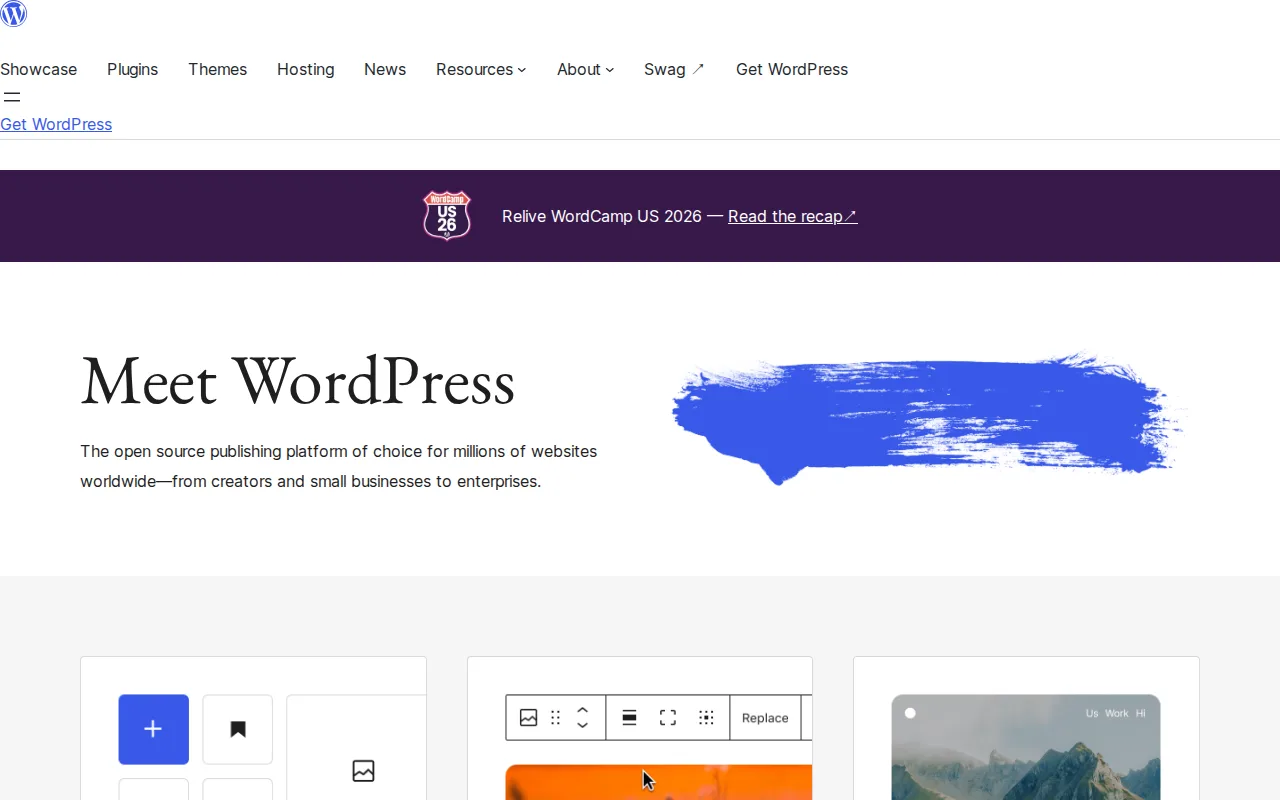
WordPress in 20 seconds
Best for: site owners and developers who want full control over hosting and code and are comfortable managing their own server
Pricing: Free, open-source software under GPLv2; total cost depends entirely on hosting and any premium plugins or themes chosen.
- WordPress software is free under the GPLv2 (or later) open-source license.
- It is self-hosted; total site cost depends on hosting, domain, and any premium themes or plugins chosen.
- The plugin ecosystem includes WooCommerce for e-commerce and Yoast for SEO among tens of thousands of options.
- Official mobile apps exist for iOS and Android, and a desktop app exists for Windows, macOS, and Linux.
- WordPress holds a 4.7/5 rating from 42 reviews on Product Hunt.
Limitations: Site owners are fully responsible for hosting performance, security updates, and backups.; Plugin quality varies widely and can introduce security or compatibility issues.; Total cost is unpredictable compared to fixed-tier hosted builders.; Requires more technical setup than fully hosted builders like Squarespace or Wix.
Top alternatives: Wix, Squarespace, Ghost, Webflow — full list
What is WordPress?
WordPress is open-source content management system software: users download it free under the GPLv2 (or later) license, install it on their own web hosting, and build a site using the block-based editor, themes for design, and plugins for added functionality. Because the software is free and self-hosted, there is no vendor-set pricing tier; a site's total cost is whatever the owner pays for web hosting, a domain, and any premium (non-free) themes or plugins from the WordPress.org directory or third-party marketplaces. This openness is also WordPress's main practical challenge: site owners are responsible for their own hosting performance, security updates, and backups, unlike hosted builders that manage all of that automatically. The plugin ecosystem is WordPress's core strength, WooCommerce for e-commerce, Yoast for SEO, and thousands of others let a base install take on nearly any site type, but plugin quality varies widely and a poorly maintained plugin can be a security or performance liability.
WordPress (WordPress.org) is an open-source content management system that powers a large share of websites on the internet, from personal blogs to large publications and online stores. The software itself is free to download and self-host under the GPLv2 (or later) license; costs come from hosting, a domain name, and any premium themes or plugins a site owner chooses to buy, so total cost varies widely by host and add-ons rather than following a fixed pricing table. WordPress differentiates on its plugin ecosystem, which lets a base install add e-commerce (WooCommerce), SEO tools, forms, and page-building without custom development. It is distinct from WordPress.com, a hosted service built on the same software but sold as a separate subscription product; WordPress.org is the self-hosted, license-free core that this listing covers.
Standout feature: A plugin ecosystem with tens of thousands of free and premium plugins (WooCommerce for e-commerce, Yoast for SEO, and more) that lets a self-hosted install take on nearly any site type without custom development.
Biggest weakness: Because it is self-hosted, the site owner is fully responsible for hosting performance, security patching, and backups; a poorly chosen host or an unmaintained plugin is a common source of slow sites, hacked installs, and update conflicts that hosted builders like Squarespace and Wix eliminate entirely.
Pros
- Free software under GPLv2, no licensing fee regardless of site size or traffic.
- Plugin ecosystem covers e-commerce, SEO, forms, and page-building without custom code for most common needs.
- Full ownership and portability: a self-hosted WordPress site can move to any host without vendor lock-in.
- Massive community documentation, forums, and third-party tutorials for nearly any configuration question.
Cons
- Self-hosting means the site owner is responsible for security updates, backups, and server performance, with no built-in vendor safety net.
- Plugin quality varies widely; poorly maintained plugins are a common source of security vulnerabilities and site breakage after core updates.
- Total cost is unpredictable compared to fixed-tier builders, since hosting, premium themes, and premium plugins are all separate purchases.
- The learning curve for a properly configured, secure, fast site is steeper than fully hosted builders like Squarespace or Wix.
WordPress pricing
Free · verified from the vendor's pricing page
| Plan | Price | Notes |
|---|---|---|
| WordPress software | Free | Free to download, install, and modify under the GPLv2 (or later) license; no vendor-imposed pricing tiers. |
What reviewers say
Scores belong to their platforms; we display them with attribution and never fold them into our own ratings.