UXPin — A code-backed UI design and prototyping tool that builds interfaces from real React components instead of static vector shapes, exporting production-ready code.

By Noahlast updated pricing verified
UXPin screenshots & video
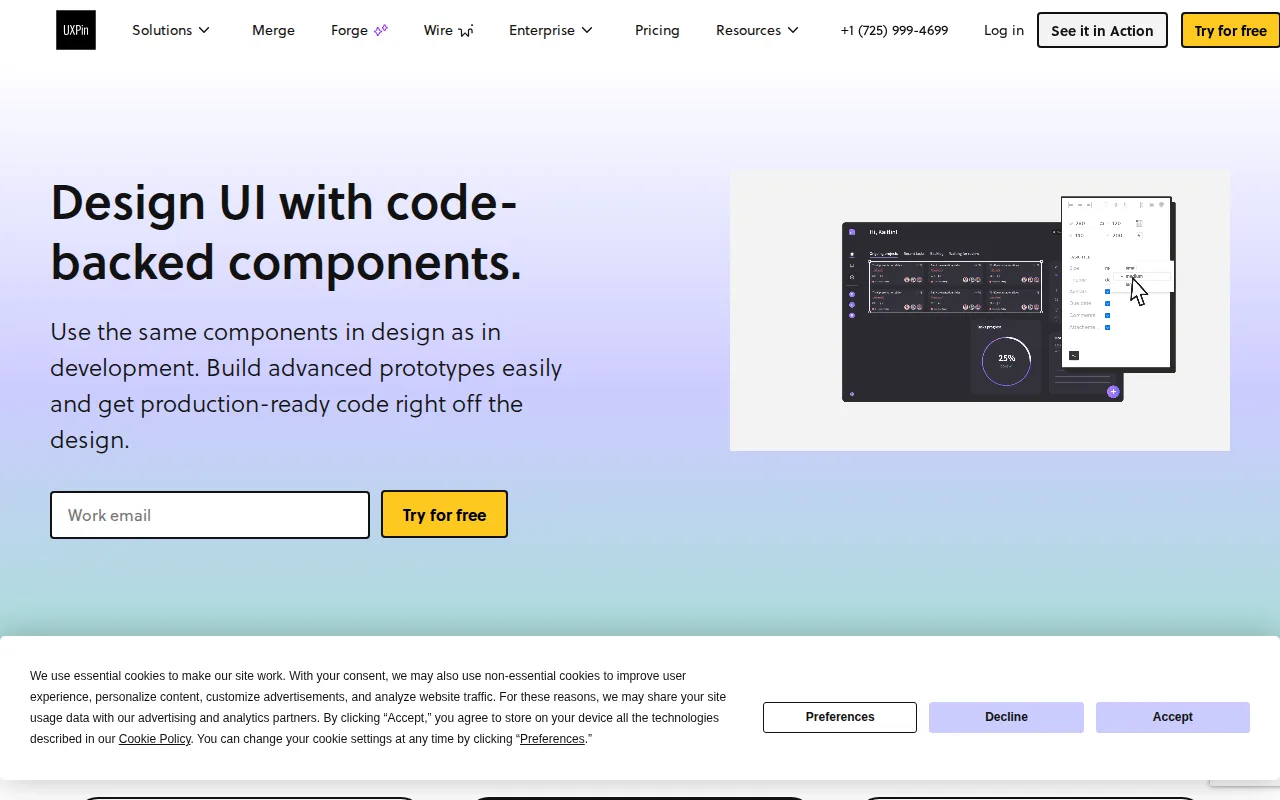
UXPin in 20 seconds
Best for: product design teams building on a custom React component library who need prototypes matching production code
Pricing: From $29/seat/month billed annually (Core); Growth $40/seat/month annually; Enterprise custom. Limited free plan after a 14-day trial.
- UXPin builds prototypes from real code components (MUI, Tailwind UI, Ant Design, or a team's own synced React library) rather than static vector shapes.
- Core plan costs $29/seat/month billed annually ($49/seat/month monthly); Growth costs $40/seat/month billed annually ($69/seat/month monthly); Enterprise is custom.
- UXPin offers a 14-day free trial with no credit card, plus a limited free plan (2 prototypes, 50 AI credits) after the trial.
- UXPin holds a 4.3/5 rating from 26 reviews on Capterra and a 5.0/5 rating from 9 reviews on Product Hunt.
- Designs can export directly to production-ready React code with dependencies.
Limitations: Steeper learning curve than static design tools like Figma or Sketch.; AI credits are metered per plan and can run out for heavy users on lower tiers.; Git integration and dedicated support require Enterprise, custom-priced access.
Top alternatives: Adobe XD, Penpot, Figma, Sketch, Framer — full list
What is UXPin?
UXPin is a UI design and prototyping tool built around code-backed components rather than static vector shapes, so what a designer builds behaves like the real interface instead of a visual approximation of it. Designers can drag in components from libraries like MUI, Tailwind UI, or Ant Design, or sync a team's own custom React component repository through Git, so prototypes reflect the actual building blocks engineering will use. Prototypes support logic, variables, conditional flows, and dynamic states beyond simple click-through mockups, and finished designs can export directly to production-ready React code with dependencies. UXPin's AI Component Creator generates layouts from text prompts using OpenAI or Claude models, and Storybook integration on the Growth plan connects design components to an existing engineering component library. The product runs as a web app with desktop apps for macOS and Windows on paid plans, plus mobile Mirror apps for previewing prototypes on iOS and Android devices.
UXPin is a UX/UI design and prototyping platform that uses actual code components — from libraries like MUI, Tailwind UI, and Ant Design, or a team's own React component repository — instead of static vector shapes, so prototypes behave like real software and designs can export as production-ready React code. Plans run Core at $49/seat/month ($29/seat/month billed annually), Growth at $69/seat/month ($40/seat/month billed annually), and custom Enterprise pricing, with a 14-day free trial requiring no credit card and a limited free plan (50 AI credits, 2 prototypes, 7-day version history) after the trial ends. UXPin's AI Component Creator generates layouts from text prompts using OpenAI or Claude models, and its Git integration syncs custom component libraries for teams building on Forge (UXPin's own React-based framework) or Wire. Because prototypes are built from functioning code components with logic, variables, and conditional flows, UXPin has a steeper learning curve than static design tools like Figma or Sketch, and its differentiation depends on teams actually maintaining a synced component library rather than working from generic templates.
Standout feature: Code-backed components (MUI, Tailwind UI, Ant Design, or a team's own synced React library via Git) that let prototypes carry real logic, variables, and conditional flows, then export directly to production-ready React code.
Biggest weakness: Steeper learning curve and setup overhead than static design tools like Figma or Sketch, since the code-backed workflow only pays off when a team actually syncs and maintains a real component library rather than using generic templates.
Pros
- Prototypes use real code components with logic and variables, so they behave closer to the finished product than static mockups.
- Direct export to production-ready React code with dependencies shortens design-to-development handoff.
- Git integration syncs a team's own custom component repository into the design tool.
- AI Component Creator generates layouts from text prompts using OpenAI or Claude models.
Cons
- Steeper learning curve than static vector tools like Figma, especially for teams not already working with React component libraries.
- AI credits are metered per plan (50/200/500 monthly) and can run out for heavy AI users on lower tiers.
- Git integration and dedicated support are Enterprise-only, gating advanced workflows behind custom pricing.
- Free plan after trial is limited to 2 prototypes and 7-day version history, too restrictive for ongoing project use.
UXPin pricing
Free tier · paid from $29/mo · verified from the vendor's pricing page
| Plan | Price | Notes |
|---|---|---|
| Free | Free | Available after the 14-day trial ends: 50 AI credits, 2-prototype limit, 7-day version history. |
| Core | $29/mo | Per seat, billed annually ($49/seat/month billed monthly). 200 monthly AI credits, basic AI models, unlimited prototypes, built-in coded libraries, conditional logic, variables, custom fonts, 7-day version history. |
| Growth | $40/mo | Per seat, billed annually ($69/seat/month billed monthly); most popular. 500 monthly AI credits, advanced AI models, patterns, roles and permissions, design systems, Storybook integration, SSO and 2FA, 30-day version history. |
| Enterprise | Custom | Custom pricing. Custom AI credit allocation, custom library AI integration, Git integration, dedicated support, training and onboarding, security review, unlimited version history. |
What reviewers say
Scores belong to their platforms; we display them with attribution and never fold them into our own ratings.