5 Best Alternatives to Stable Diffusion for Web in 2026
By Noahlast updated
All 5 Stable Diffusion alternatives
Compared: Stable Diffusion alternatives that run on Web
| Alternative | Best for | Standout | Biggest weakness | Learning curve | Price |
|---|---|---|---|---|---|
| Stable Diffusionreference | developers and enterprises wanting a self-hostable, fine-tunable image generation model that's free under the Community License for small-scale or non-commercial use, rather than a closed API-only image generator | Open model weights that can be downloaded, self-hosted, and fine-tuned at no cost under the Community License for eligible users, with a hosted Platform API and Brand Studio available for teams that want managed infrastructure instead. | The free Community License only applies below a $1M annual revenue threshold, above which organizations need a separately negotiated Enterprise License, and per-image Platform API costs vary by model version and resolution in ways that aren't transparently listed on the marketing site. | Steep | Free |
| Midjourney | designers, illustrators, and marketers who want stylized, painterly AI-generated imagery for concept art and creative content rather than strictly photorealistic output | A distinctive, painterly house visual style with strong compositional coherence that's widely cited as recognizably different from more photorealistic AI image generators, plus commercial usage rights on every paid plan. | There's no free tier, so evaluating the product requires an immediate $10+/month commitment, and refunds are only granted if a user's lifetime (not monthly) GPU usage is under 20 minutes, which reviewers say catches people off guard; access is also Discord- or web-prompt-based rather than a conventional desktop app, and customer support responsiveness is a frequent complaint. | Moderate | From $10/mo |
| Leonardo AI | game artists and concept artists who need multiple fine-tuned AI models plus in-app editing (inpainting, upscaling) rather than a single-model prompt-only workflow | A large library of selectable fine-tuned image models (including community-trained, style-specific checkpoints) combined with a real-time editing canvas for inpainting and upscaling in the same workspace. | Generation is metered by token credits that are consumed quickly at higher resolutions or with iterative editing, so heavy users can burn through a plan's monthly allowance well before the billing period resets; pricing details were also not independently verifiable on-site due to the site blocking automated fetches. | Moderate | Free |
| Ideogram | designers and marketers who need AI-generated images with accurate, legible text inside them, like posters, logos, and social graphics | Renders legible, correctly spelled text inside generated images, a capability most competing generators like Midjourney and Stable Diffusion still struggle with. | Free-tier generations are public by default and only available with limited weekly credits, and unused monthly subscription credits expire at the end of each billing period rather than rolling over (only purchased top-up credits carry over). | Low | Free tier · paid from $15/mo |
| Adobe Firefly | designers and marketing teams already in the Adobe ecosystem who need commercially licensed generative AI (image, video, audio) integrated directly into Photoshop and Express | Access to 30+ AI models, including licensed third-party video models like Veo and Kling, through one credit pool and one commercial-use license, rather than subscribing to each model vendor separately. | The generative-credit system makes cost unpredictable across use cases: video generation burns credits far faster than images, so heavy video users can exhaust a Standard or Pro plan's monthly allotment quickly and need to jump to the $199.99/month Premium tier. | Low | Free tier · paid from $9.99/mo |
| OpenAI (ChatGPT/DALL-E) | individuals and teams who want a general-purpose AI assistant for writing, coding, research, and image generation, from casual free use up to seat-based enterprise deployment | A single assistant covering conversation, coding, file/image analysis, web browsing, and image generation, now on the GPT Image models that replaced DALL-E with higher resolution and more reliable in-image text. | DALL-E, the product this listing was originally built around, is fully retired — the API shut down May 12, 2026 — so any integration or workflow still calling the DALL-E API breaks and must be migrated to GPT Image; free and Go-tier ChatGPT users also face materially lower usage limits than Plus or Pro. | Low | Free tier · paid from $8/mo |
 Stable Diffusion
 Midjourney
 Leonardo AI
 Ideogram
 Adobe Firefly
 OpenAI (ChatGPT/DALL-E)
1.Midjourney — best Stable Diffusion alternative for designers, illustrators, and marketers who want stylized, painterly AI-generated imagery for concept art and creative content rather than strictly photorealistic output
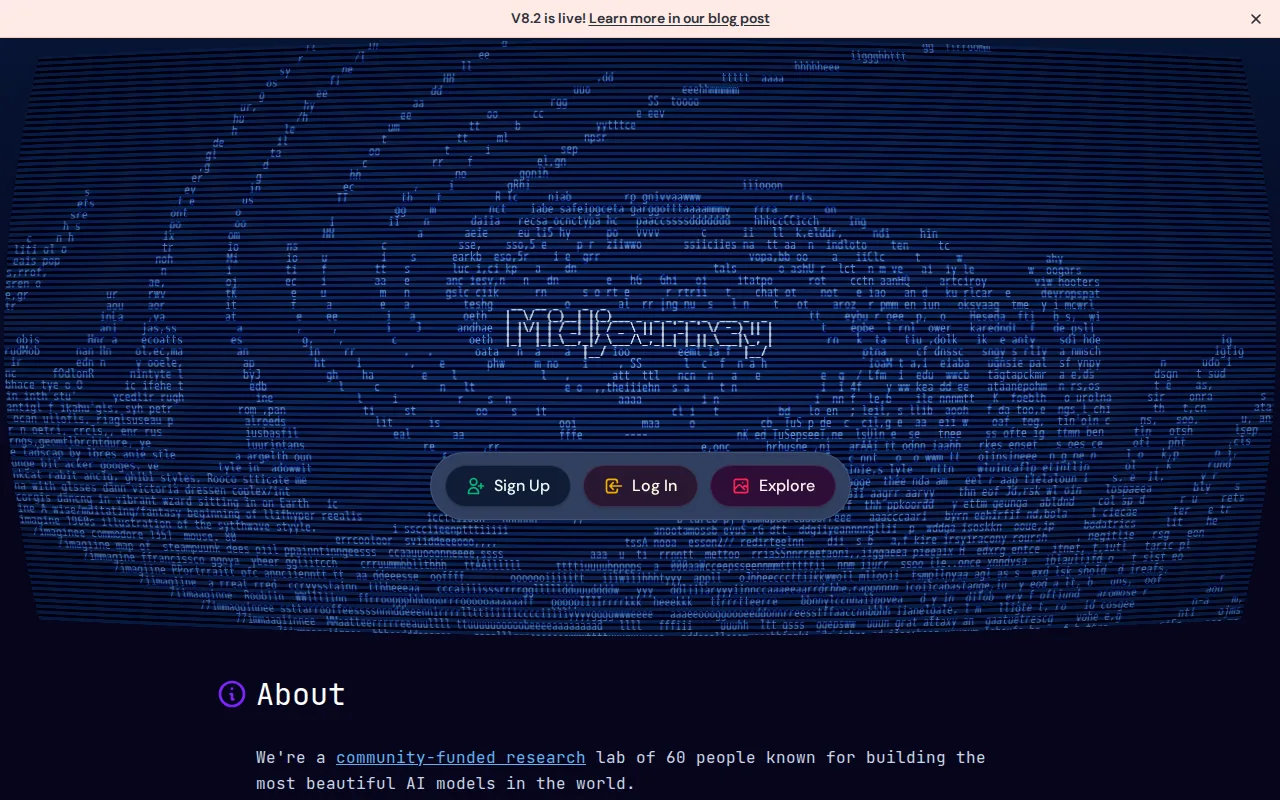
Midjourney is the best Stable Diffusion alternative for users who want a recognizable, artistic house style without setting up GPU infrastructure to self-host a model. Where Stable Diffusion requires downloading and running open model weights (free under the Community License, but demanding real ML tooling knowledge), Midjourney runs entirely on Midjourney's own servers, accessed through Discord or a web app, with cinematic lighting and strong compositional coherence that many users specifically seek out. Midjourney holds a 4.7/5 rating from 81 Product Hunt reviews, more third-party validation than Stable Diffusion's own 9 Product Hunt reviews. All four Midjourney paid tiers include general commercial usage rights, and the Basic plan's 3.3 fast GPU hours for $10/month requires no infrastructure setup at all, unlike self-hosting Stable Diffusion. Stable Diffusion is still the better choice for developers who specifically want to fine-tune a model on custom data or run generation offline: Midjourney has no free tier or trial of any kind, so evaluating it requires an immediate $10+/month commitment, and refunds are only granted if lifetime GPU usage is under 20 minutes, a stricter policy than Stable Diffusion's free-to-self-host model for eligible users.
Compared to Stable Diffusion: no self-hosting or GPU setup required, 4.7/5 from 81 Product Hunt reviews, but no free tier and $10/month minimum commitment
Wins:Runs entirely on Midjourney's servers with no GPU infrastructure or ML tooling knowledge required, unlike self-hosting Stable Diffusion · 4.7/5 rating from 81 Product Hunt reviews, more third-party validation than Stable Diffusion's 9 · Distinctive, painterly house style with strong compositional coherence widely cited as best-in-class for artistic output
Loses:No free tier or trial at all; new users must pay before testing the product, unlike Stable Diffusion's free Community License · Refund eligibility requires under 20 minutes of lifetime GPU usage, a stricter policy than self-hosting Stable Diffusion for free · No downloadable model weights to fine-tune or run offline, unlike Stable Diffusion's open-weight model
Pros
- Produces distinctive, high-quality stylized imagery frequently cited as best-in-class for artistic output.
- All paid plans include general commercial usage rights, with users owning generated images.
- Four tiers scale fast-GPU-hour allotments from casual (3.3 hrs) to heavy production use (60 hrs).
- Extra fast-GPU hours ($4 each) don't expire once purchased.
Cons
- No free tier or trial; new users must pay before testing the product.
- Refund eligibility requires under 20 minutes of lifetime GPU usage, not monthly usage, which surprises users.
- Access is prompt-based via Discord or the web app rather than a conventional app interface.
- Reviewers report weak, slow customer support responsiveness.
Pricing: From $10/mo — $10/month Basic (3.3 fast GPU hours) vs Stable Diffusion's $0 self-hosted Community License
2.Leonardo AI — best Stable Diffusion alternative for game artists and concept artists who need multiple fine-tuned AI models plus in-app editing (inpainting, upscaling) rather than a single-model prompt-only workflow
Leonardo AI is the best Stable Diffusion alternative for users who want to try several fine-tuned image models side by side without setting up any self-hosting infrastructure, since its free tier includes a limited daily token allowance to test its own Phoenix and Lucid models plus community-trained checkpoints. Where Stable Diffusion is a single family of open-weight models a developer runs and fine-tunes themselves, Leonardo AI adds a built-in real-time canvas for inpainting, outpainting, background removal, and upscaling, letting users refine an image after generation without separate tooling. Leonardo AI was acquired by Canva in 2024, giving it backing and creative-suite integrations Stable Diffusion's standalone project doesn't have. Stable Diffusion is still the better choice for developers who need to self-host, fine-tune on custom data, or avoid a metered credit system entirely: Leonardo AI's generation is billed through token credits that heavy users can exhaust quickly, and Leonardo AI's current paid-tier pricing could not be verified because its site blocked automated fetches, a transparency gap Stable Diffusion's published $0 Community License and Enterprise License path don't have.
Compared to Stable Diffusion: built-in canvas for inpainting and upscaling with no self-hosting needed, backed by Canva since 2024, but paid-tier pricing isn't independently verifiable
Wins:Real-time canvas editor for inpainting, outpainting, and upscaling built into the same workspace as generation · Free tier lets new users test multiple fine-tuned models before committing to a paid plan · Backed by Canva's resources and creative-suite integrations following the 2024 acquisition
Loses:Token-based credit system means heavy generation and editing use can exhaust a monthly plan quickly · Paid-tier pricing could not be independently verified because leonardo.ai blocked automated fetches · No downloadable model weights; generation only happens through Leonardo AI's hosted browser app, unlike Stable Diffusion's self-hostable weights
Pros
- Wide selection of fine-tuned and community models instead of being locked to one house style.
- Built-in canvas editor supports inpainting, outpainting, and upscaling without leaving the app.
- Free tier lets new users test multiple models before committing to a paid plan.
- Backed by Canva's resources following the 2024 acquisition, which has expanded its creative-suite integrations.
Cons
- Token-based credit system means heavy generation and editing use can exhaust a monthly plan quickly.
- Model quality and prompt behavior vary across the many available checkpoints, requiring experimentation to find a reliable one.
- No native desktop or mobile app; browser-only workflow.
- Current pricing was not independently verifiable because leonardo.ai blocked automated page fetches.
Pricing: Free
3.Ideogram — best Stable Diffusion alternative for designers and marketers who need AI-generated images with accurate, legible text inside them, like posters, logos, and social graphics
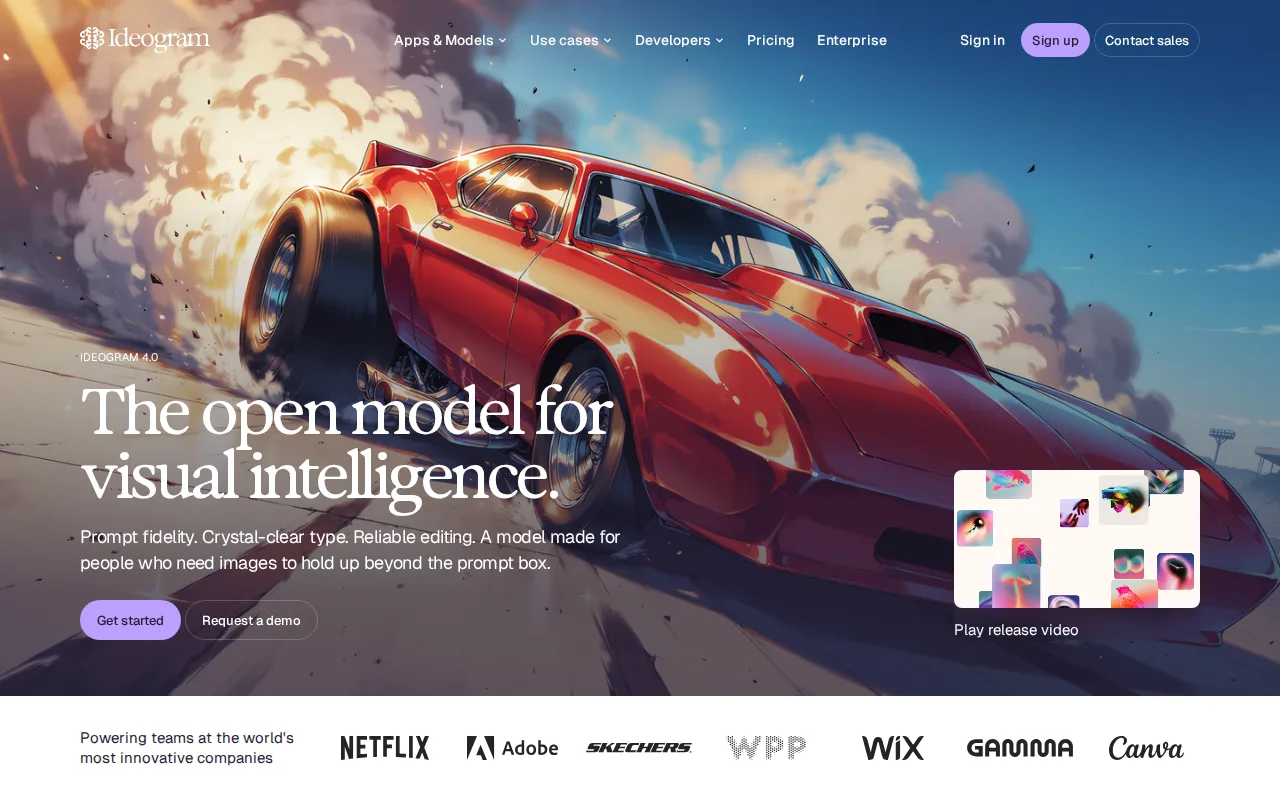
Ideogram is the best Stable Diffusion alternative for designers who need legible, correctly spelled text inside generated images, a capability Stable Diffusion's underlying diffusion architecture has historically struggled with. Ideogram's Free plan offers limited weekly credits at $0, matching Stable Diffusion's own free Community License entry point, though Ideogram's Plus tier at $15/month billed annually adds private generations and character consistency across a series of images, features not built into Stable Diffusion's raw model weights. Ideogram supports multiple model versions (1.0 through 4.0) with selectable Turbo, Balanced, or Quality rendering speed, giving users a tuning dial Stable Diffusion's self-hosted setup requires manual configuration to replicate. Stable Diffusion is still the better choice for developers who want to self-host, fine-tune on proprietary data, or avoid Ideogram's credit-expiration model: Ideogram's free-tier images are public by default, unused monthly subscription credits expire at the end of each billing period, and Ideogram's Enterprise pricing for private custom models is not published, requiring a sales conversation, unlike Stable Diffusion's published $0 Community License threshold at $1M in annual revenue.
Compared to Stable Diffusion: reliable in-image text rendering and character consistency, free tier matches Stable Diffusion's $0 entry, but free images are public and credits expire monthly
Wins:Text rendering inside images is meaningfully more reliable than Stable Diffusion and most competing generators · Character consistency lets users generate the same subject across multiple images without manual fine-tuning · Multiple model versions (1.0-4.0) with selectable Turbo/Balanced/Quality speed, a built-in tuning dial
Loses:Free-tier images are public by default; privacy requires a paid plan, unlike a private self-hosted Stable Diffusion setup · Monthly subscription credits expire unused at the end of each billing cycle · No downloadable model weights; Enterprise custom-model access requires a sales conversation with unpublished pricing
Pros
- Text rendering inside images is meaningfully more reliable than most competing AI image generators.
- Character consistency lets users generate the same subject across multiple images.
- Multiple model versions and rendering-speed settings (Turbo/Balanced/Quality) let users trade credits for quality.
- Team plan adds centralized billing for organizations generating at volume.
Cons
- Free-tier images are public by default; privacy requires a paid plan.
- Monthly subscription credits expire unused at the end of each billing cycle.
- No desktop or mobile app; web and API only.
- Enterprise pricing is not published and requires a sales conversation.
Pricing: Free tier · paid from $15/mo — Free tier at $0 matches Stable Diffusion's Community License; Plus is $15/month billed annually ($20/month monthly) (verified undefined NaN, NaN)
4.Adobe Firefly — best Stable Diffusion alternative for designers and marketing teams already in the Adobe ecosystem who need commercially licensed generative AI (image, video, audio) integrated directly into Photoshop and Express
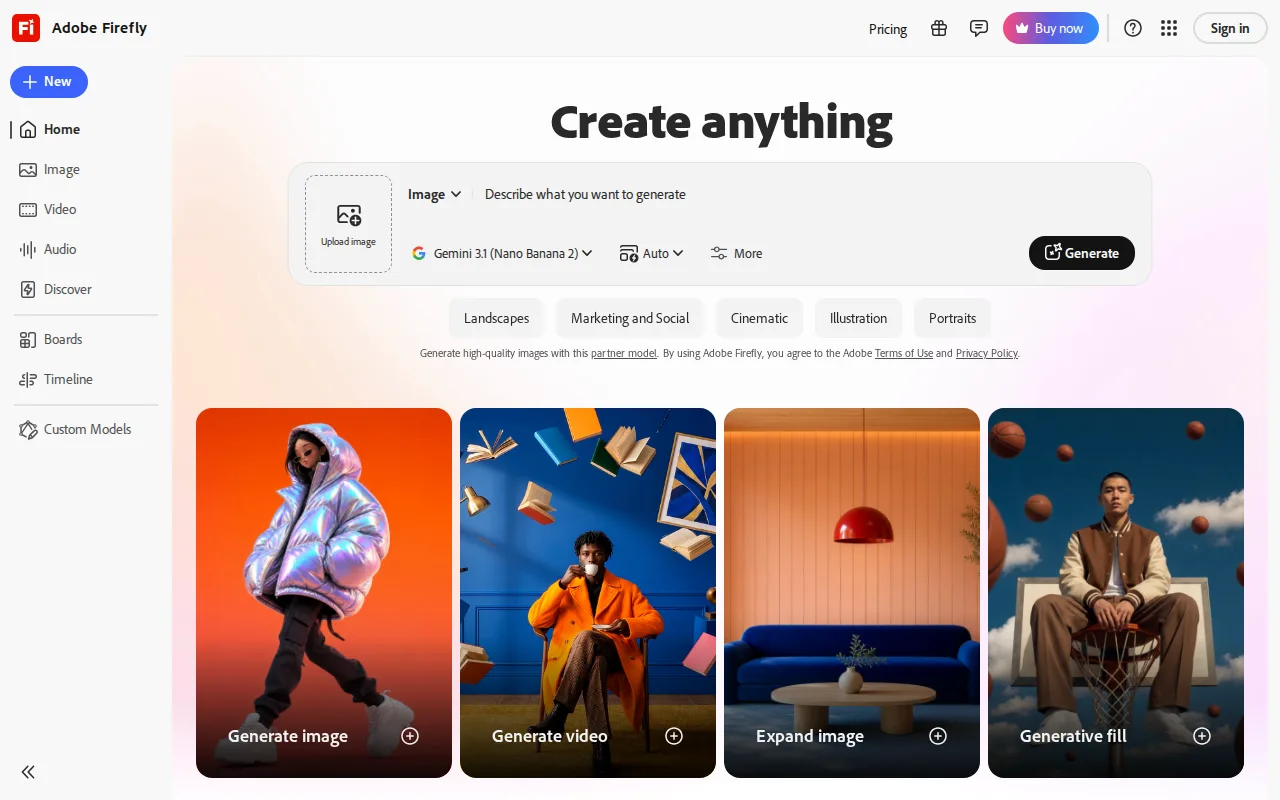
Adobe Firefly is the best Stable Diffusion alternative for commercial teams that need generation trained on licensed content rather than the broader web-scraped or mixed-provenance data debates surrounding open models like Stable Diffusion. Adobe trains its own Firefly models on licensed Adobe Stock images, openly licensed content, and public-domain material, backed by an IP-indemnification commitment for enterprise customers, a legal safety net Stable Diffusion's open-weight, self-hosted model doesn't provide. Firefly gives paid subscribers access to more than 30 AI models, including third-party video models like Veo and Kling, all metered through one credit pool starting at $9.99/month for 2,000 generative credits, and it holds a 4.5/5 rating from 19 Capterra reviews. Firefly is also built directly into Photoshop and Adobe Express, unlike Stable Diffusion, which requires separate tooling to integrate into a design workflow. Stable Diffusion is still the better choice for developers who need to self-host, fine-tune on custom or proprietary data, or avoid Firefly's credit system: generative credits are consumed unevenly across image, video, and audio, making monthly cost hard to predict, and unlimited access to the newest video models requires the $199.99/month Premium tier, both real constraints against Stable Diffusion's free self-hosted Community License.
Compared to Stable Diffusion: licensed training data with IP indemnification, built into Photoshop and Adobe Express, but credit-metered pricing starting at $9.99/month
Wins:Trained on licensed Adobe Stock and public-domain content, with IP indemnification for enterprise use, unlike Stable Diffusion's open-weight model · Access to 30+ models, including third-party video models like Veo and Kling, in one interface · Deep integration with Photoshop (Generative Fill/Expand) and Adobe Express, no separate tooling required
Loses:Generative credits are consumed unevenly across image, video, and audio, making monthly cost hard to predict · Unlimited access to the newest video models requires the $199.99/month Premium tier · No downloadable model weights to self-host or fine-tune, unlike Stable Diffusion's Community License
Pros
- Trained on licensed Adobe Stock and public-domain content, with IP indemnification for enterprise use.
- Access to 30+ models, including third-party video models like Veo and Kling, in one interface.
- Deep integration with Photoshop (Generative Fill/Expand) and Adobe Express.
- Free tier available for testing before committing to a paid plan.
Cons
- Generative credits are consumed unevenly across image, video, and audio, making monthly cost hard to predict.
- Premium tier needed for unlimited access to the newest video models, at $199.99/month before discounts.
- Output quality on Firefly's own image model has lagged behind Midjourney and some third-party models in independent comparisons.
- Full value requires an existing or new Adobe subscription relationship, adding friction for non-Adobe users.
Pricing: Free tier · paid from $9.99/mo — $9.99/month Standard (2,000 credits) vs Stable Diffusion's $0 self-hosted Community License (verified undefined NaN, NaN)
5.OpenAI (ChatGPT/DALL-E) — best Stable Diffusion alternative for individuals and teams who want a general-purpose AI assistant for writing, coding, research, and image generation, from casual free use up to seat-based enterprise deployment
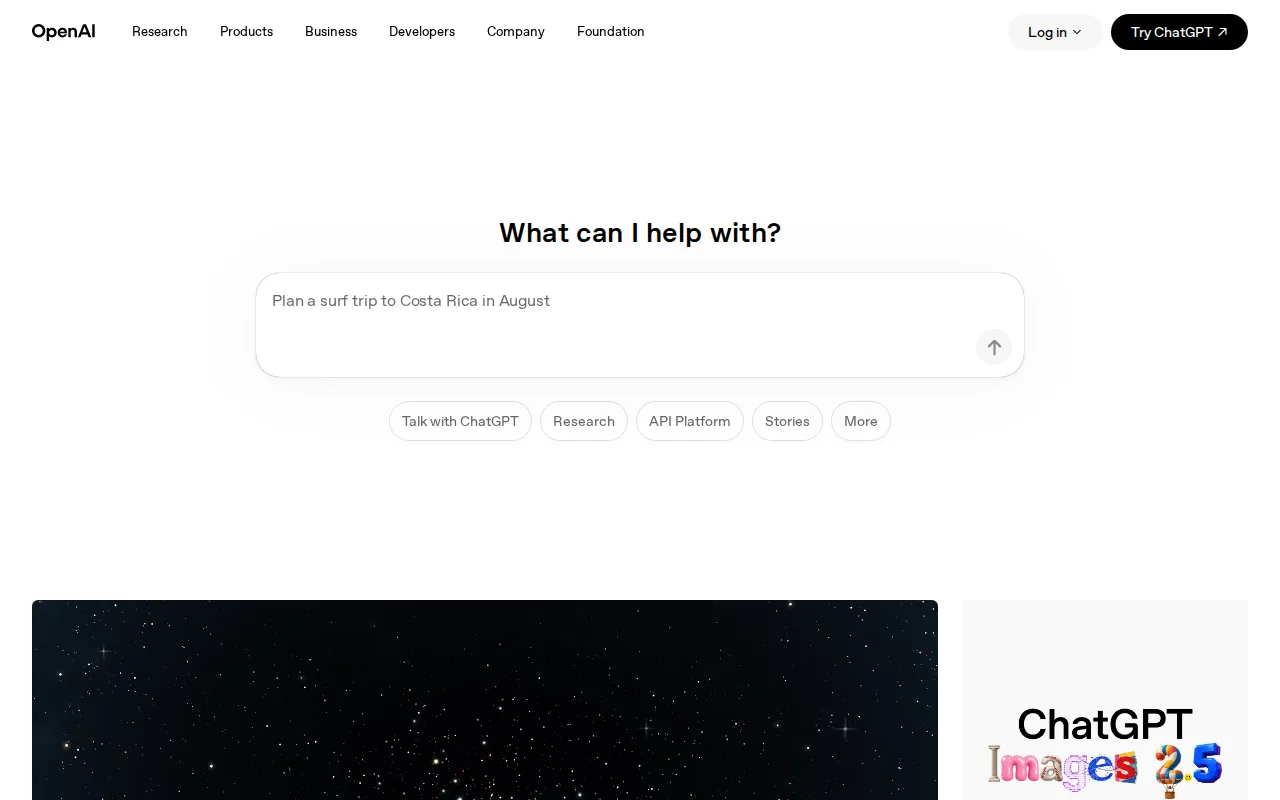
OpenAI's ChatGPT is the best Stable Diffusion alternative for people who want to generate images without running a model, in the same assistant they already use for writing, coding, and file analysis. ChatGPT's image generation runs on the GPT Image models (marketed to consumers as ChatGPT Images 2.0), which replaced the retired DALL-E and generate at native 2K resolution with more reliable in-image text, while Stable Diffusion expects a user to download weights and supply GPU infrastructure and ML tooling, a setup its own listing rates as a steep learning curve. ChatGPT starts free with usage limits and publishes flat pricing at $8/month (Go), $20/month (Plus), and $200/month (Pro), where Stable Diffusion's Platform API per-image credit rates are not published at all. ChatGPT also runs on iOS and Android in addition to web, Windows, and macOS, and holds 4.4/5 from 389 Capterra reviews and 4.8/5 from 704 Product Hunt reviews, a combined 1,093 against Stable Diffusion's 9 Product Hunt reviews at 5.0/5. Stable Diffusion is still the better choice for anyone who needs to fine-tune on proprietary data, generate offline, or outlast a vendor's product decisions: its weights are free to download and run under the Community License below $1M in annual revenue, and a downloaded model keeps working whatever the vendor retires. DALL-E's API shutdown on May 12, 2026 broke every integration built on it.
Compared to Stable Diffusion: hosted image generation with no GPU setup or ML tooling, published flat pricing from $0 to $200/month against unpublished Platform API per-image rates, but no downloadable model weights to fine-tune or run offline
Wins:Generates images with no GPU infrastructure or ML tooling, against Stable Diffusion's self-hosting setup and steep learning curve · Published flat pricing (free tier, $8/month Go, $20/month Plus, $200/month Pro) where Stable Diffusion's Platform API per-image credit rates are not published · 4.4/5 from 389 Capterra reviews and 4.8/5 from 704 Product Hunt reviews, a combined 1,093 against Stable Diffusion's 9 Product Hunt reviews
Loses:No downloadable model weights to fine-tune on proprietary data or run offline, unlike Stable Diffusion's Community License weights · Image generation depends on OpenAI keeping the model available: DALL-E was retired and its API shut down on May 12, 2026, while a downloaded Stable Diffusion checkpoint keeps running regardless · Free and Go-tier usage limits are materially lower than Plus or Pro, pushing regular generation toward the $20/month plan, where self-hosted Stable Diffusion has no per-image cap
Pros
- Free tier requires no payment to start using ChatGPT for chat, file analysis, and limited image generation.
- Native desktop and mobile apps exist for Windows, macOS, iOS, and Android in addition to the web.
- Business and Enterprise tiers add SSO, admin controls, and compliance certifications (SOC 2 Type 2, ISO 27001) for organizational deployment.
- GPT Image generation (replacing DALL-E) produces higher resolution output with more reliable text rendering.
Cons
- DALL-E is fully discontinued — the API shut down May 12, 2026 — breaking any workflow still built on it.
- Enterprise pricing is not published; it requires a sales conversation and a roughly 150-seat minimum with annual commitment.
- Free and Go-tier usage limits are materially lower than Plus or Pro, pushing regular users toward the $20/month plan.
- Pro tier at $200/month is a steep jump for individual users who only occasionally need its highest-tier model access.
Pricing: Free tier · paid from $8/mo — Free tier with usage limits, then $8/month Go or $20/month Plus, vs Stable Diffusion's $0 self-hosted Community License for organizations under $1M in annual revenue