Seafile — An open-source file sync and share platform with a free self-hosted Community Edition and paid Pro/cloud tiers adding office editing, SSO, and audit logs.

By Noahlast updated pricing verified
Seafile screenshots & video
Seafile in 20 seconds
Best for: small IT teams and privacy-focused organizations that want to self-host Dropbox-style file sync with granular permissions
Pricing: Free self-hosted Community Edition; Pro Edition from $48/user/year (self-hosted); cloud Plus/Team plan $8/user/month for 3+ users.
- Seafile's Community Edition is free and open source, self-hosted, under github.com/haiwen/seafile.
- Seafile Pro Edition starts at $48/user/year for 10-249 users, dropping to $35/user/year above 750 users.
- Seafile's cloud Plus/Team plan costs $8/user/month for 3+ users with 500GB expandable storage.
- Seafile ships native clients for Windows, macOS, Linux, iOS, and Android plus a web interface.
- Cloud Plus plan includes 3 months of version history and built-in document collaboration via SeaDoc.
Limitations: Cloud Plus plan version history is capped at 3 months.; Pro Edition licensing scales per user per year, costly at larger seat counts.; SSO, LDAP/AD, and audit logs require the paid Pro or Plus tier.
Top alternatives: Nextcloud, ownCloud, Dropbox, pCloud, Syncthing — full list
What is Seafile?
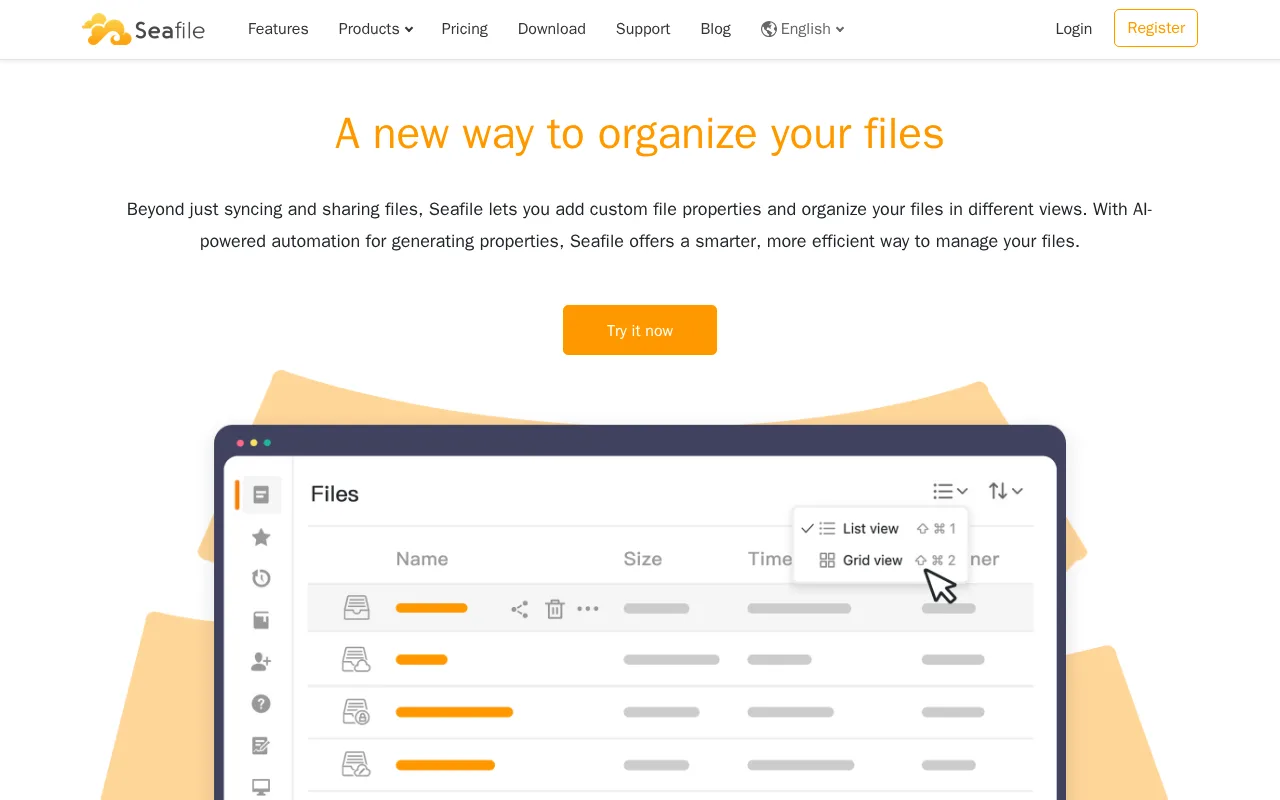
Seafile is an open-source file synchronization and sharing platform, similar in concept to Nextcloud or Dropbox, that businesses and individuals can self-host for free or run on Seafile's managed cloud. The free Community Edition covers core file sync, versioning, public share links, and mobile/desktop clients across Windows, macOS, Linux, iOS, and Android. Paying customers on the Pro Edition (self-hosted) or Plus Edition (cloud-hosted) get office document editing, file locking, fine-grained folder permissions, full-text search, LDAP/AD and SSO authentication, and audit logging, plus newer additions like custom file properties, multiple organizational views (table, gallery, kanban, map), AI-generated file metadata, and a built-in team wiki. Seafile is developed by Seafile Ltd. and distributed under an open-core model: the core engine is open source on GitHub, while Pro and cloud tiers are commercial add-ons. It runs as native sync clients on Windows, macOS, and Linux, mobile apps for iOS and Android, and a web interface for the server.
Seafile is a file synchronization and collaboration platform developed by Seafile Ltd. that ships as a free, open-source Community Edition for self-hosting alongside paid Pro (on-premises) and Plus (cloud) editions. The Community Edition covers multi-platform sync clients, mobile apps, version control, public links, and WebDAV at no cost; Pro Edition adds office file editing, file locking, fine-grained folder permissions, full-text search, LDAP/AD authentication, SSO, and audit logs starting around $48/user/year for 10-249 users, dropping to $35/user/year above 750 seats, with a free tier for teams of 3 or fewer. The cloud-hosted Plus/Team plan costs $8/user/month for 3 or more users with 500GB of expandable storage, cross-platform sync, three months of version history, and built-in document collaboration via SeaDoc. Seafile's source is on GitHub under github.com/haiwen/seafile, and the company also sells education pricing at roughly half the standard per-user Pro rate.
Standout feature: Open-core model lets teams self-host the full sync engine for free under an open-source license, then add Pro features like SSO, audit logs, and office editing without switching platforms.
Biggest weakness: Version history on the cloud Plus plan is limited to 3 months, and self-hosted Pro pricing scales per user per year, which gets expensive for large teams compared to flat-rate self-hosted competitors like Nextcloud.
Pros
- Free, open-source Community Edition can be self-hosted with no per-user cost.
- Native sync clients and mobile apps across Windows, macOS, Linux, iOS, and Android.
- Pro tier adds SSO, LDAP/AD, 2FA, and audit logs for organizations with compliance needs.
- Cloud Plus plan includes built-in document collaboration (SeaDoc) and full-text search.
Cons
- Cloud Plus plan caps version history at 3 months, shorter than some competitors.
- Pro Edition licensing is per-user-per-year, which scales up quickly for larger teams.
- Advanced features like SSO and audit logs are locked behind paid Pro/Plus tiers, not available in Community Edition.
- Self-hosting the Pro Edition still requires ongoing server administration, unlike fully managed alternatives.
Seafile pricing
Free tier · paid from $8/mo · verified from the vendor's pricing page
| Plan | Price | Notes |
|---|---|---|
| Community Edition | Free | Free, open source, self-hosted. Multi-platform file sync, mobile clients, version control, public links, basic user management, WebDAV. |
| Pro Edition (10-249 users) | $48/yr | Per user per year, self-hosted; adds office file editing, file locking, folder permissions, full-text search, LDAP/AD, SSO, 2FA, and audit logs. Educational pricing roughly half rate. |
| Pro Edition (750-999 users) | $35/yr | Per user per year, self-hosted, volume discount tier; same Pro feature set as smaller tiers. |
| Plus/Team (Cloud) | $8/mo | Per user per month for 3+ users, cloud-hosted, 500GB expandable storage; cross-platform sync, 3 months version history, office editing, full-text search, document collaboration. |
What reviewers say
No third-party review scores on file yet.