2 Best Open-Source Alternatives to Roam Research in 2026
By Noahlast updated
All 4 Roam Research alternatives
Compared: open-source alternatives to Roam Research
| Alternative | Best for | Standout | Biggest weakness | Learning curve | Price |
|---|---|---|---|---|---|
| Roam Researchreference | researchers, writers, and knowledge workers who want to build a browsable graph of cross-linked notes around a daily-notes workflow, rather than filing notes into folders | Automatic linked references on every page, showing every other note that mentions it, built around a daily-notes-first workflow rather than a folder hierarchy. | No permanent free plan exists, unlike open-source alternatives such as Obsidian and Logseq that offer the same bidirectional-linking model at no cost; the app is also fully client-rendered JavaScript, which makes it slower to load and harder to search or reference externally than a static-content tool. | Steep | From $15/mo |
| Logseq | individuals who want a local-first, privacy-respecting outliner that stores notes as portable plain-text files instead of locking them into a proprietary cloud database | Notes are stored as local plain-text Markdown or Org-mode files rather than a proprietary database, so users can version them with Git, sync through any cloud provider they choose, or work entirely offline. | Real-time collaboration and multi-device sync are still in alpha testing and require opt-in signup, so teams that need reliable built-in sync today must rely on third-party file-sync tools, and Android support remains in development while iOS is already available. | Moderate | Free |
| Anytype | privacy-conscious individuals and small teams who want a Notion-style flexible workspace that works fully offline and doesn't require trusting a third party with unencrypted data | Local-first, end-to-end encrypted storage with optional peer-to-peer sync, so the app is fully functional offline and data isn't dependent on a company's cloud servers by default. | The client is released under a source-available license, not a standard OSI-approved open-source license, so it doesn't carry the same community-audit and fork guarantees as fully open-source competitors like Logseq; the product is also younger and less mature than Notion or Obsidian, with a smaller plugin and integration ecosystem. | Moderate | Free |
 Roam Research
 Logseq
 Anytype
1.Logseq — best Roam Research alternative for individuals who want a local-first, privacy-respecting outliner that stores notes as portable plain-text files instead of locking them into a proprietary cloud database
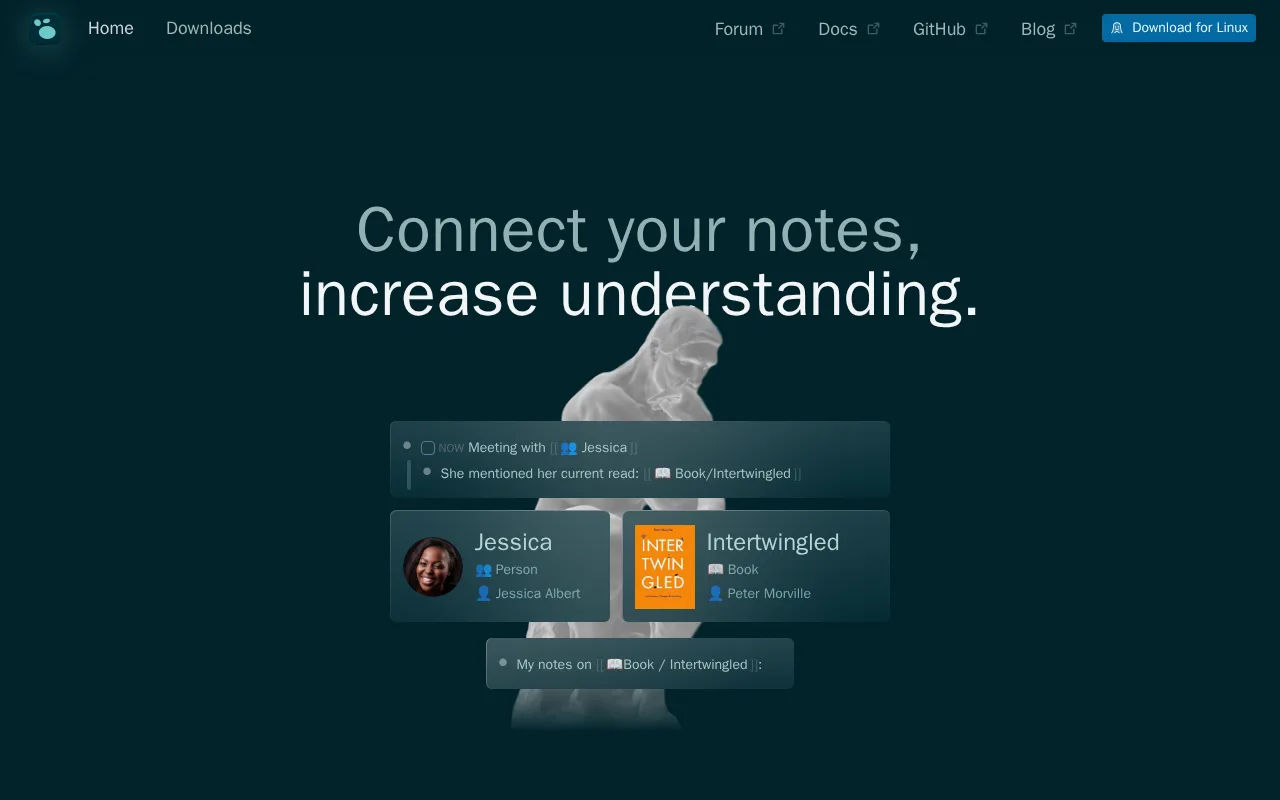
Logseq is the best Roam Research alternative for individuals who want a completely free, open-source outliner instead of paying Roam Research's $15/month subscription for the same bidirectional-linking model. Logseq is licensed under AGPLv3 with 44,500+ GitHub stars and has no paid tier at all, while Roam Research is closed-source and has no permanent free plan, starting at $15/month for Pro. Logseq holds a 4.9/5 rating from 65 Product Hunt reviews, verified 2026-08-21, edging out Roam Research's own 4.8/5 score from just 8 reviews. Like Roam Research, Logseq centers on a daily-journal-first workflow with bidirectional linking between blocks and pages, so the core interaction model transfers directly; it also stores notes as local plain-text Markdown or Org-mode files rather than a proprietary database, letting users version them with Git or sync through any cloud provider they choose. Roam Research remains the better choice for teams that need reliable, mature real-time collaboration today: Logseq's real-time collaboration and sync feature (RTC) is still in alpha testing and requires opt-in signup, not yet a production-ready feature, while Roam Research supports real-time multiplayer collaboration on shared graphs as a standard capability.
Compared to Roam Research: 4.9/5 rating from 65 Product Hunt reviews vs Roam's 4.8/5 from just 8 reviews, completely free with no paid tier vs Roam's $15/month Pro plan, local plain-text Markdown/Org-mode files vs Roam's closed-source, proprietary graph format
Wins:4.9/5 rating from 65 Product Hunt reviews, a larger sample than Roam's 8 reviews · Completely free and open source (AGPLv3) with no paid tier at all, versus Roam's $15/month Pro subscription and no permanent free plan · Notes stored as local plain-text Markdown or Org-mode files, letting users version with Git or sync through any cloud provider, unlike Roam's closed-source, proprietary format
Loses:Real-time collaboration and sync (RTC) are still in alpha testing and require opt-in signup, not yet a reliable production feature, unlike Roam Research's standard real-time multiplayer collaboration · No official Android app yet (in development), while Roam Research ships an iOS companion app but neither has a confirmed Android release in this data
Pros
- Completely free and open source (AGPL-3.0) with no paid tier or feature gating.
- Local-first plain-text storage (Markdown or Org-mode) keeps notes portable and outside vendor lock-in.
- Bidirectional linking and a daily-journal workflow suit outliner-style thinking better than document-first note apps.
- Plugin ecosystem and native PDF annotation extend the app without needing a separate tool.
Cons
- Built-in real-time collaboration and sync (RTC) are still in alpha and require opt-in, not yet a reliable production feature.
- Android app is still in development, while competitors offer mobile apps on both platforms already.
- Outliner-based, block-structured notes have a learning curve for users coming from document-style editors like Notion.
- As a volunteer/community-driven open-source project, there is no paid support tier or SLA to fall back on.
Pricing: Free — $0, completely free with no paid tier, vs Roam Research's $15/month Pro plan (verified undefined NaN, NaN)
2.Anytype — best Roam Research alternative for privacy-conscious individuals and small teams who want a Notion-style flexible workspace that works fully offline and doesn't require trusting a third party with unencrypted data
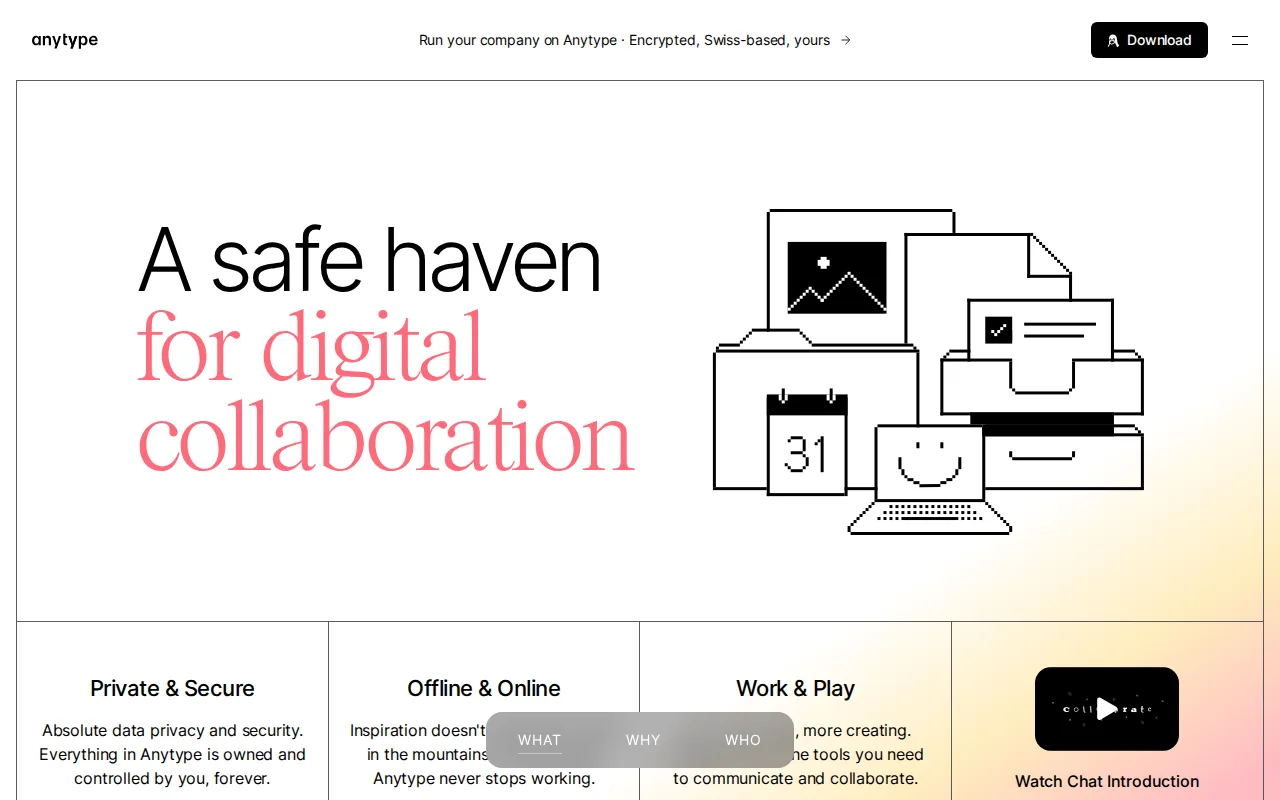
Anytype is the best Roam Research alternative for privacy-conscious individuals who want a local-first, end-to-end encrypted personal knowledge base instead of trusting Roam Research's closed-source, Firebase-backed cloud service with unencrypted content. Anytype holds a 4.9/5 rating from 104 Product Hunt reviews, including a 2023 Golden Kitty Award, far outpacing Roam Research's single 4.8/5 score from just 8 reviews. Anytype's desktop and mobile clients are free with core offline features fully usable with no feature paywall, while Roam Research has no permanent free plan and starts at $15/month for Pro. Data in Anytype lives primarily on the user's own device with zero-knowledge encryption and optional peer-to-peer sync, giving it a privacy guarantee Roam Research's cloud-hosted, unencrypted model doesn't offer. Anytype's GitHub repository for the desktop client has 8.7k stars, evidence of open development Roam Research's fully closed-source codebase carries none of. Roam Research remains the better choice for researchers who specifically want a mature, battle-tested product: Anytype uses a source-available license rather than a standard OSI-approved open-source license, is younger and less mature with a smaller plugin ecosystem, and its paid Any-Sync Network membership pricing for expanded cloud sync isn't clearly published, unlike Roam Research's single, if unverified, $15/month Pro price point.
Compared to Roam Research: 4.9/5 rating from 104 Product Hunt reviews (plus a 2023 Golden Kitty Award) vs Roam's 4.8/5 from just 8 reviews, free desktop and mobile apps with no feature paywall vs Roam's $15/month Pro plan, local-first zero-knowledge encryption vs Roam's cloud-hosted, unencrypted Firebase backend
Wins:4.9/5 rating from 104 Product Hunt reviews plus a 2023 Golden Kitty Award, versus Roam's 4.8/5 from just 8 reviews · Free desktop and mobile apps with no feature paywall on core offline functionality, versus Roam's $15/month Pro plan with no permanent free tier · Local-first architecture with end-to-end, zero-knowledge encryption, a privacy guarantee not present in Roam's cloud-hosted, unencrypted Firebase backend
Loses:Uses a source-available license rather than a standard OSI-approved open-source license, and is a younger, less battle-tested product with a smaller plugin ecosystem than long-established competitors · Any-Sync Network membership pricing for expanded cloud storage and sync isn't clearly published, unlike Roam Research's single (if unverified) $15/month Pro price point
Pros
- Local-first architecture means the app works fully offline with data stored on-device.
- End-to-end, zero-knowledge encryption for any data that does sync.
- Free desktop and mobile apps with no feature paywall on core offline functionality.
- Composable block system (databases, kanban, calendar) offers Notion-like flexibility.
Cons
- Uses a source-available license rather than a standard OSI-approved open-source license.
- Smaller plugin and third-party integration ecosystem than Notion or Obsidian.
- Paid Any-Sync Network membership pricing is not clearly published, making cost planning harder.
- Younger, less battle-tested product than long-established note-taking competitors.
Pricing: Free — $0 (free local-first client); Any-Sync Network paid tiers for cloud sync are unpublished, vs Roam Research's $15/month Pro plan