3 Best Alternatives to Stoat (formerly Revolt) in 2026
By Noahlast updated

From our data: All four alternatives to Stoat — Discord, Element, Rocket.Chat, and Mattermost — list a free tier, matching Stoat's own fully free plan, but only 3 of the 4 (Discord at 4.6/5, Rocket.Chat at 4.3/5, and Mattermost at 5/5) carry an external rating on record, while Element and Stoat itself have none at all.
 Discord
 Rocket.Chat
 Mattermost
How we picked
- External ratings exist for three of the four alternatives compared here: Discord holds 4.6/5 across 540 Capterra reviews, Rocket.Chat holds 4.3/5 across 156 Capterra reviews, and Mattermost holds a 5/5 Product Hunt score built from just 1 review, all fetched 2026-08-21; Element carries no external rating on file at all.
- Pricing for every paid tier across Element, Rocket.Chat, and Mattermost was verified 2026-08-21, but none of the three publishes a flat dollar figure for its paid tiers, each routes buyers to a sales quote instead, so Discord's Nitro Basic ($2.99/month) and Nitro ($9.99/month) tiers are the only priced paid tiers in this comparison.
- Stoat (formerly Revolt) itself shows zero likes and zero uses recorded in our listing data, the same baseline as every alternative here, so on-platform engagement signals could not distinguish the list; the comparison instead relies on the pricing tiers, license models, and external ratings actually documented for each product.
- All four alternatives and Stoat itself run natively on the same six platforms — web, Windows, macOS, Linux, iOS, and Android — so platform coverage was not a differentiator in how this list was assembled.
Paid placement never alters editorial rank — read the full methodology.
Stoat (formerly Revolt) alternatives at a glance
| Alternative | Best for | Standout | Biggest weakness | Learning curve | Price |
|---|---|---|---|---|---|
| Stoat (formerly Revolt)reference | communities and friend groups who want a Discord-style chat app that is open source, self-hostable, and free of a paid subscription tier | Fully open-source and self-hostable Discord alternative (AGPL-3.0) that offers custom emoji and animated avatars to every user with no subscription required. | The 2026 rebrand from Revolt to Stoat means links, bookmarks, and search results still pointing to revolt.chat or the old revoltchat GitHub org can confuse users mid-transition, and the client apps and self-hosted community are smaller than Discord's, so third-party bots and integrations are far more limited. | Low | Free |
| Discord | gaming and hobbyist communities that want an always-on voice hangout with unlimited free members, rather than a scheduled-meeting or formal workplace chat tool | Persistent voice channels that anyone in a server can drop into without scheduling a call or sending an invite link, combined with a free tier that has no cap on members or message history. | Discord is not built for business use: reviewers note it lacks enterprise features like SSO/compliance controls, granular admin auditing, and threaded formal workflows that tools like Slack or Microsoft Teams provide, and server moderation still depends heavily on volunteer admins and third-party bots. | Moderate | Free tier · paid from $2.99/mo |
| Rocket.Chat | regulated and security-conscious organizations (government, defense, healthcare, financial services) that need a self-hostable or air-gapped team chat platform, plus teams wanting a free, open-source Slack alternative | A fully open-source (MIT-licensed), self-hosted Community Edition with no user limit, alongside government and defense deployment options authorized up to DoD Impact Level 6 for classified environments. | None of the paid tiers publish list pricing — Commercial, Government, and Defense plans all require contacting sales for a quote, making it hard to budget or compare costs against competitors like Slack or Mattermost without a sales call. | Moderate | Free |
| Mattermost | regulated, government, or defense organizations that need self-hosted, air-gapped, or sovereign-cloud team chat with compliance controls a SaaS-only tool like Slack can't provide | Deployment flexibility for compliance-sensitive organizations: the same platform can run fully air-gapped or in a sovereign cloud with FIPS 140-3/STIG-hardened compliance options, not available from mainstream SaaS chat tools. | No paid tier publishes flat per-user pricing; Professional, Enterprise, and Enterprise Advanced all require a sales conversation and prepaid annual seat commitment, making it harder to budget or compare cost against competitors up front, and self-hosting the free core requires ongoing server maintenance. | Moderate | Free |
 Stoat (formerly Revolt)
1.Discord — best Stoat (formerly Revolt) alternative for gaming and hobbyist communities that want an always-on voice hangout with unlimited free members, rather than a scheduled-meeting or formal workplace chat tool
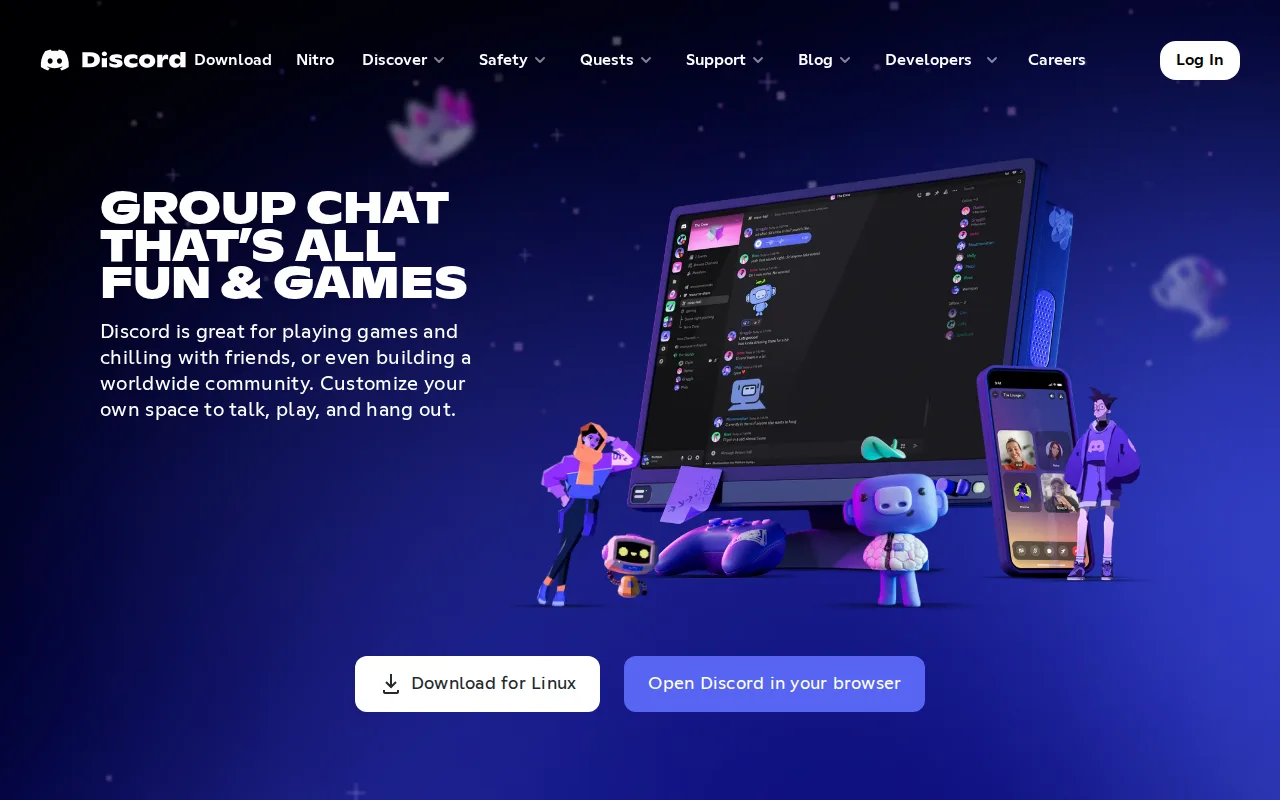
Discord is the best Stoat alternative for gaming and hobbyist communities that want an always-on voice hangout with unlimited free servers and members. Discord holds a 4.6/5 rating from 540 Capterra reviews, a track record Stoat (formerly Revolt) does not have since Stoat carries no external ratings on file at all. Discord's free tier already includes unlimited servers, unlimited members, and unlimited message history alongside voice, video, and text channels, matching the breadth of Stoat's own free plan without requiring self-hosting. Where Discord charges is its optional Nitro subscription: Nitro Basic starts at $2.99/month for custom emoji anywhere and 50MB file uploads, while the $9.99/month Nitro tier adds HD video streaming and server boosts, features Stoat gives every user for free with no subscription tier at all. Discord's deep gaming integrations, including rich presence, direct game invites, and low-latency streaming, go beyond anything documented in Stoat's own listing. Stoat remains the better choice for anyone who specifically wants a fully open-source, self-hostable chat platform with no proprietary backend: Discord is closed-source and offers no self-hosting option at all, while Stoat's entire codebase, including every official client, is open under AGPL-3.0 and deployable via a published Docker Compose configuration.
Compared to Stoat: 4.6/5 rating from 540 Capterra reviews vs Stoat's none on file, custom emoji and animated avatars gated behind a $2.99-$9.99/month Nitro subscription while Stoat includes both free, closed-source with no self-hosting option unlike Stoat's open-source AGPL-3.0 codebase
Wins:4.6/5 rating from 540 Capterra reviews, evidence Stoat has none of on file · Unlimited free servers, members, and message history on the free tier alone, plus deep gaming integrations like rich presence and direct game invites
Loses:Closed-source and not self-hostable, unlike Stoat's fully open-source AGPL-3.0 codebase deployable via Docker Compose · Custom emoji and animated avatars require a paid Nitro subscription starting at $2.99/month, while Stoat gives both to every user for free
Pros
- Free tier has unlimited servers, members, and message history with no time-limited voice calls.
- Persistent voice channels let people join and leave communication casually, without scheduling.
- Deep gaming integrations (rich presence, direct game invites, low-latency streaming).
- Highly customizable via roles, permissions, and a large ecosystem of third-party bots.
Cons
- Not designed for professional/business communication; lacks the compliance, SSO, and formal admin auditing of workplace chat tools.
- Server moderation quality varies widely since it depends on volunteer admins and bots rather than built-in enterprise controls.
- Nitro pricing and perks (server boosts, file limits) can be confusing to new users trying to understand what's actually included.
- Anyone with a username can attempt to message or find users by default, raising privacy concerns some reviewers flag.
Pricing: Free tier · paid from $2.99/mo — $2.99/month (Nitro Basic) to $9.99/month (Nitro) vs Stoat's fully free $0 plan with no paid tier at all (verified undefined NaN, NaN)
2.Rocket.Chat — best Stoat (formerly Revolt) alternative for regulated and security-conscious organizations (government, defense, healthcare, financial services) that need a self-hostable or air-gapped team chat platform, plus teams wanting a free, open-source Slack alternative
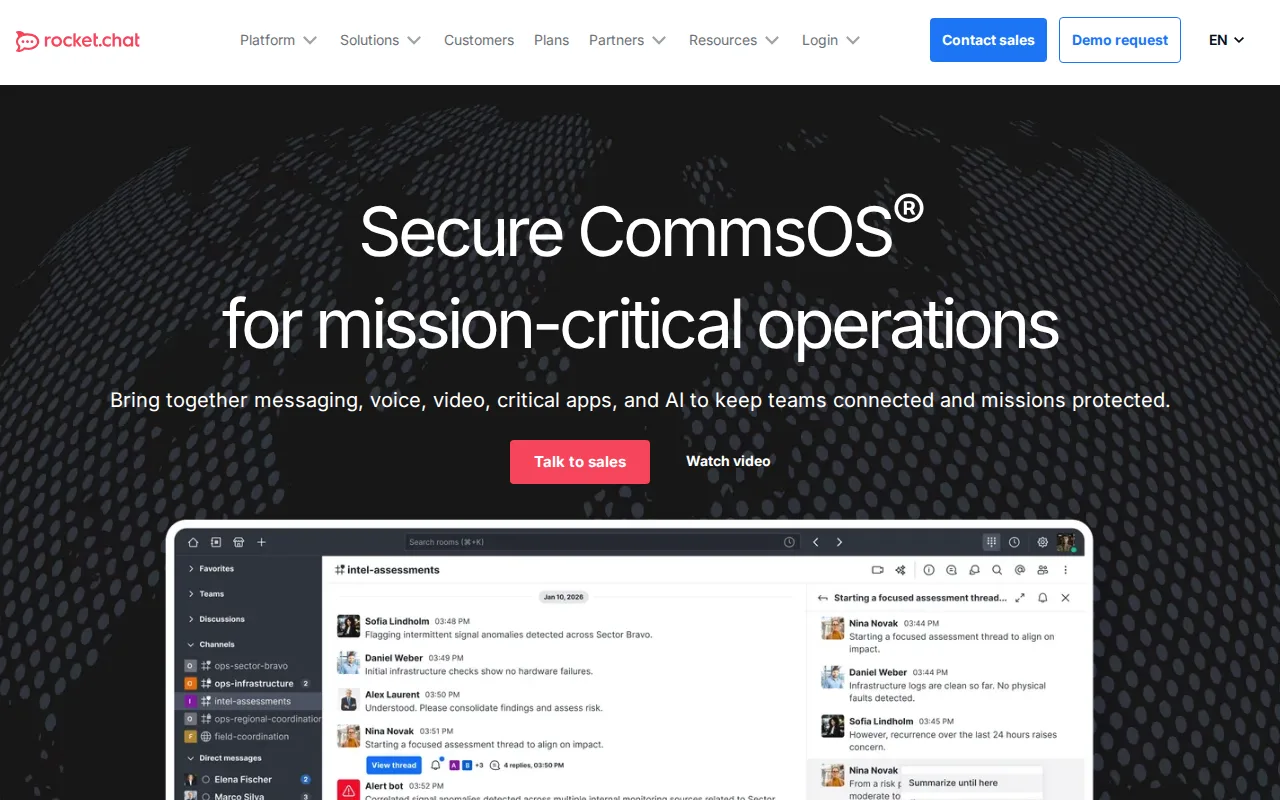
Rocket.Chat is the best Stoat alternative for regulated and security-conscious organizations, government agencies, defense contractors, and healthcare operators, that need a self-hostable team chat platform with compliance and air-gapped deployment options. Rocket.Chat's Community Edition is free, MIT-licensed, and has no user limit, comparable to Stoat's own fully free AGPL-3.0 plan, and it has earned a track record Stoat lacks: a 4.3/5 rating from 156 Capterra reviews versus Stoat's zero external ratings on file. Rocket.Chat's GitHub project carries over 46,000 stars, a scale of open-source adoption not documented for Stoat. Where Rocket.Chat separates itself from Stoat is its Defense tier, which supports air-gapped deployment authorized up to DoD Impact Level 6 with FIPS 140-3 cryptography, a compliance depth Stoat's community-focused listing doesn't address. Stoat remains the better choice for communities and friend groups that want to avoid a sales conversation entirely: none of Rocket.Chat's Commercial, Government, or Defense tiers publish list pricing, all three require contacting sales for a quote, while Stoat's entire feature set, custom emoji and animated avatars included, stays free with zero tiers to negotiate.
Compared to Stoat: 4.3/5 rating from 156 Capterra reviews vs Stoat's none on file, Defense tier authorized up to DoD Impact Level 6 with FIPS 140-3 cryptography unlike anything in Stoat's listing, Commercial/Government/Defense tiers are quote-only with no published pricing unlike Stoat's fully free $0 plan
Wins:4.3/5 rating from 156 Capterra reviews, evidence Stoat has none of on file · Defense tier supports air-gapped deployment authorized up to DoD Impact Level 6 with FIPS 140-3 cryptography, a compliance depth not documented in Stoat's listing
Loses:None of the Commercial, Government, or Defense tiers publish list pricing, all three require contacting sales, unlike Stoat's fully free plan with zero tiers to negotiate · Moderate learning curve per its own listing, versus Stoat's low learning curve
Pros
- Community Edition is free, open-source (MIT license), and self-hostable with no user limit.
- Deployment options span standard cloud hosting to fully air-gapped, classified environments.
- Federated communications let separate Rocket.Chat deployments message across organizational boundaries.
- Extensible via custom and pre-built apps, plus native voice, video, and screen sharing.
Cons
- No published list pricing for any paid tier; every quote requires a sales conversation.
- Self-hosting the Community Edition adds administration and infrastructure overhead compared to SaaS competitors.
- Government/Defense-specific features add complexity that most mainstream business customers won't need.
Pricing: Free — Community edition free ($0), matching Stoat's plan; Commercial/Government/Defense tiers are quote-only with no published dollar figure, while Stoat has no paid tier to compare (verified undefined NaN, NaN)
3.Mattermost — best Stoat (formerly Revolt) alternative for regulated, government, or defense organizations that need self-hosted, air-gapped, or sovereign-cloud team chat with compliance controls a SaaS-only tool like Slack can't provide
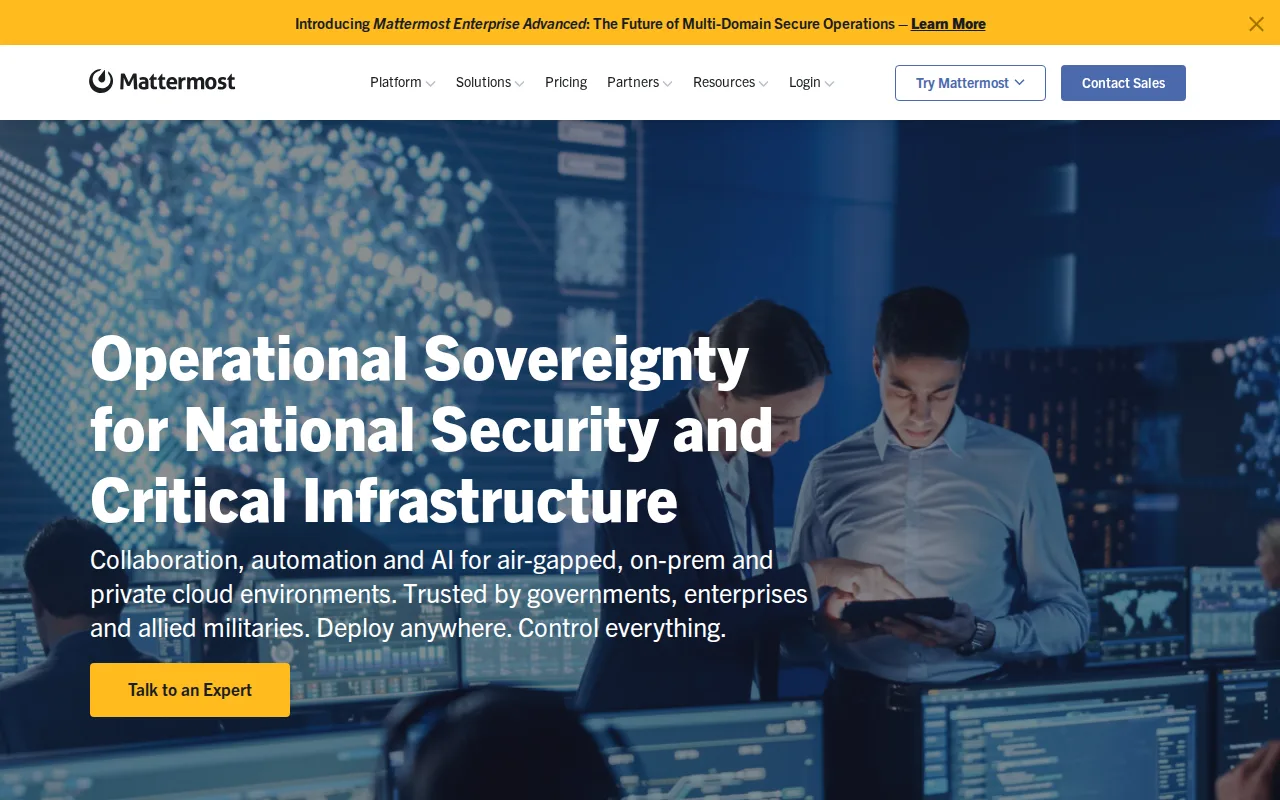
Mattermost is the best Stoat alternative for regulated, government, or defense organizations that need self-hosted, air-gapped, or sovereign-cloud team chat with compliance controls Stoat's community-focused platform doesn't document. Mattermost's free core is MIT-licensed and self-hostable with no user limit, the same no-cost baseline as Stoat's AGPL-3.0 plan, and it's used by organizations including the U.S. Air Force, NASA, and Samsung, adoption evidence Stoat's listing has nothing comparable to. Mattermost holds a 5/5 rating on Product Hunt, though that score is built from just 1 review, still a rating Stoat's own listing has none of at all. Its Enterprise Advanced tier supports up to 200,000 concurrent users with mobile biometrics, data-at-rest encryption, and burn-on-read messages, a scale and feature depth well beyond Stoat's single free tier. Stoat remains the better choice for anyone who wants to avoid a prepaid annual seat commitment: Professional, Enterprise, and Enterprise Advanced are all sold as prepaid annual subscriptions with no published flat pricing, every quote requires a sales conversation, while Stoat's entire feature set, including custom emoji and animated avatars, stays free for every user with no subscription tier at all.
Compared to Stoat: used by the U.S. Air Force, NASA, and Samsung, adoption evidence not documented in Stoat's listing, Enterprise Advanced tier supports up to 200,000 concurrent users with mobile biometrics and data-at-rest encryption far beyond Stoat's single free tier, Professional/Enterprise/Enterprise Advanced require a prepaid annual sales conversation with no published pricing unlike Stoat's fully free $0 plan
Wins:Used by organizations including the U.S. Air Force, NASA, and Samsung, adoption evidence not documented in Stoat's listing · Enterprise Advanced tier supports up to 200,000 concurrent users with mobile biometrics, data-at-rest encryption, and burn-on-read messages, well beyond Stoat's single free tier
Loses:Professional, Enterprise, and Enterprise Advanced are all sold as prepaid annual seat-based subscriptions with no published flat pricing, and every quote requires a sales conversation, unlike Stoat's fully free plan with zero tiers to negotiate
Pros
- Self-hosted core is free (MIT-licensed) with no user limit, avoiding SaaS vendor lock-in.
- Deployment options (on-premise, private cloud, air-gapped) support compliance needs that pure-SaaS chat tools can't meet.
- Native apps across web, Windows, macOS, Linux, iOS, and Android.
- Open-core model means the underlying chat engine's code is auditable even though advanced features are commercially licensed.
Cons
- No published flat pricing for any paid tier; all require contacting sales and a prepaid annual commitment.
- Self-hosting the free core requires ongoing server maintenance, scaling, and upgrades.
- Advanced features (sovereign AI, high availability, air-gapped support) sit behind the commercial Enterprise license, not the open-source core.
- Smaller third-party app/integration ecosystem than Slack, which has a much larger app marketplace.
Pricing: Free — Free core self-hosted ($0) matching Stoat's plan; Professional/Enterprise/Enterprise Advanced are prepaid annual subscriptions with no published flat price, while Stoat has no paid tier to compare (verified undefined NaN, NaN)
Which one is right for you?
- You run a gaming or hobbyist community and want unlimited free voice channels without any self-hosting setup.Discord
- You're evaluating fully air-gapped deployment for a government or defense agency and need a specific compliance certification like DoD Impact Level 6.Rocket.Chat
- You're a healthcare or financial services team that needs HIPAA, FINRA, or GDPR compliance built into a self-hosted chat platform.Rocket.Chat
- You want a chat platform with sovereign-cloud deployment already proven at organizations like NASA and the U.S. Air Force.Mattermost
- You need mobile biometrics and burn-on-read messages for a large-scale, security-sensitive deployment.Mattermost
- You want to see exact dollar pricing without a sales call and are fine paying a small monthly fee for premium perks.Discord
Frequently asked questions
Is there a free alternative to Discord?
- Yes, Stoat (formerly Revolt) is a free, open-source, AGPL-3.0-licensed alternative to Discord with no subscription tier at all, offering servers, text and voice channels, custom emoji, and animated avatars to every user at no cost. It's self-hostable via a published Docker Compose configuration for teams that want full control over their data.
What is the closest open-source alternative to Discord?
- Stoat (formerly Revolt), Element, Rocket.Chat, and Mattermost are all open-source Discord-style chat platforms with self-hosting options. Stoat and Element are AGPL-3.0-licensed end to end, while Rocket.Chat and Mattermost are open-core, with their free community editions under MIT and their advanced compliance features sold separately.
Can Discord replace Stoat?
- Discord can replace Stoat for casual gaming and hobbyist communities that just want unlimited free voice channels, since Discord's free tier already covers unlimited servers, members, and message history. It can't replace Stoat for anyone who specifically wants an open-source, self-hostable codebase, since Discord is closed-source with no self-hosting option at all.
Why did Revolt change its name to Stoat?
- The reason behind the 2026 rebrand isn't documented here, only that it happened: the website at revolt.chat now redirects to stoat.chat, and the GitHub organization moved from revoltchat to stoatchat.
Is Rocket.Chat or Mattermost better for government and defense use?
- Both are built for regulated and defense organizations, but they emphasize different certifications: Rocket.Chat's Defense tier is authorized up to DoD Impact Level 6 with FIPS 140-3 cryptography, while Mattermost's Enterprise Advanced tier adds mobile biometrics, data-at-rest encryption, and burn-on-read messages for up to 200,000 concurrent users. Neither publishes flat pricing, both require contacting sales for a quote.
Does Element cost money?
- Element's Community edition is free and AGPL-3.0-licensed for self-hosting, the same no-cost model as Stoat's own free plan. Its Enterprise tier (from a 100-user minimum) and Sovereign tier for air-gapped government deployments both require contacting sales, since neither publishes per-seat pricing.