Notepad++ — A free, open-source, Windows-only source code editor built in C++ on the Scintilla component, designed as a lightweight Notepad replacement with syntax highlighting for many languages.
By Noahlast updated pricing verified
Notepad++ screenshots & video
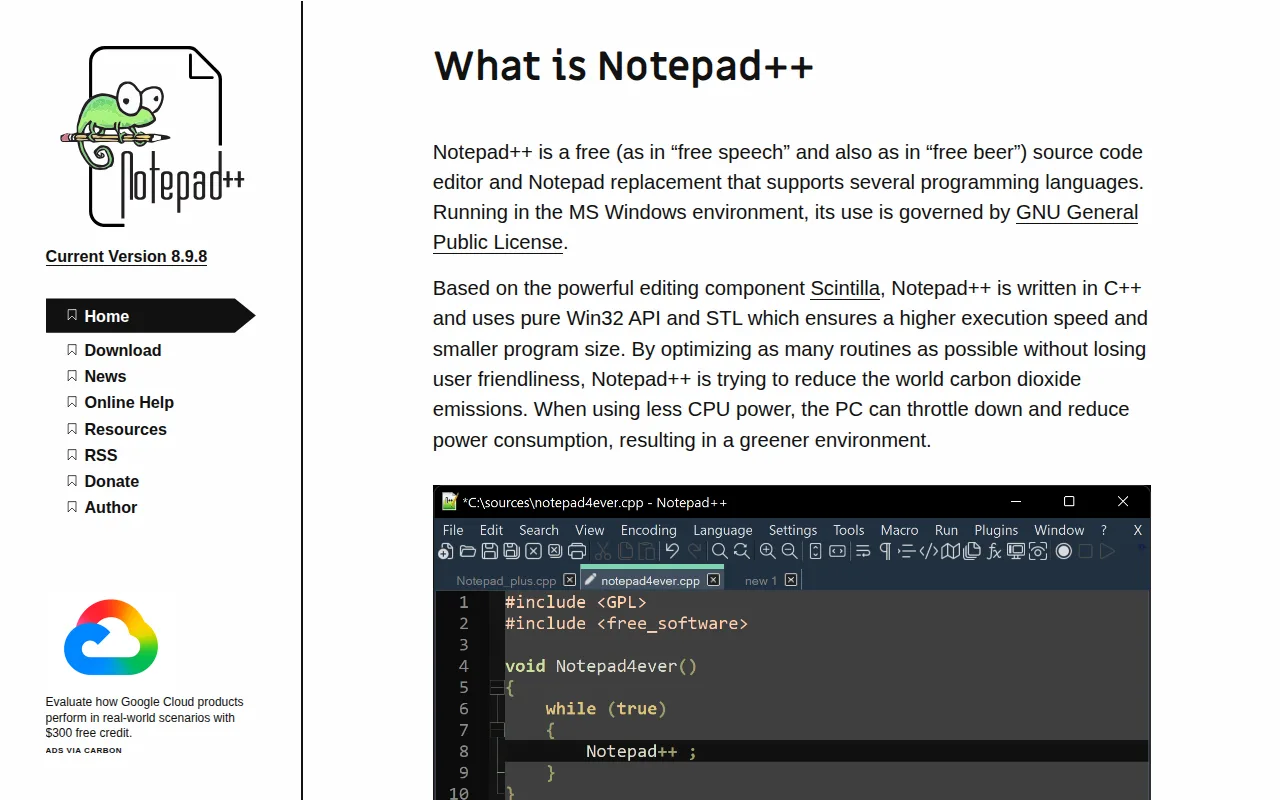
Notepad++ in 20 seconds
Best for: Windows users who want a fast, lightweight code/text editor without the overhead of a full IDE
Pricing: Free and open source under GPLv2, with no paid tier.
- Notepad++ is free and open source under the GNU General Public License v2.0.
- Notepad++ runs only on Microsoft Windows, with no official macOS or Linux build.
- Notepad++ is built in C++ on the Scintilla editing component.
- Notepad++'s GitHub repository has roughly 29.1k stars.
- Notepad++ holds a 5.0/5 rating from 2 reviews on Product Hunt.
Limitations: Windows-only; no official macOS or Linux build.; No built-in language-server autocomplete, integrated terminal, or Git client without plugins.; Community plugin quality and maintenance vary.
Top alternatives: Visual Studio Code, Sublime Text, Neovim, UltraEdit — full list
What is Notepad++?
Notepad++ is a lightweight, free source code editor for Windows: a Notepad replacement built in C++ on the Scintilla editing component, designed to open and edit files fast with minimal memory and CPU overhead. It supports syntax highlighting and folding for dozens of programming and markup languages, plugin extensibility through its plugin manager, and features aimed at quick text manipulation such as multi-view editing, macro recording, and column (block) selection. Unlike modern extensible editors such as VS Code, Notepad++ does not bundle a language-server protocol, integrated terminal, or built-in Git client; it favors speed and a small footprint over an all-in-one IDE experience. It is licensed under GPLv2, entirely free, and available only for Windows — there is no official Notepad++ build for macOS or Linux.
Notepad++ is a free source code editor for Windows, built on the Scintilla editing component in C++ to keep CPU and memory usage low. It is built for developers and power users who want a fast, no-frills text editor for quick edits, log files, and scripting across many programming languages, rather than a full IDE. Notepad++ is licensed under the GNU General Public License v2.0 and has no paid tier, no account, and no telemetry to configure. It runs only on Microsoft Windows; there is no official macOS or Linux build, so Mac and Linux users typically run it under Wine or switch to a cross-platform alternative.
Standout feature: Extremely low CPU and memory footprint compared to full IDEs, thanks to its Scintilla-based C++ core, while still supporting syntax highlighting for dozens of languages and a plugin ecosystem.
Biggest weakness: Windows-only with no official macOS or Linux build, and it lacks the language-server-based autocomplete, integrated terminal, and built-in Git integration that editors like VS Code provide out of the box.
Pros
- Free and open source under GPLv2, with no account, subscription, or telemetry.
- Very lightweight and fast compared to full IDEs, minimizing CPU and memory usage.
- Syntax highlighting and folding for dozens of programming and markup languages out of the box.
- Plugin manager extends functionality (compare files, JSON viewer, auto-complete helpers) without bloating the core app.
Cons
- Windows-only; no official macOS or Linux build, unlike cross-platform editors such as VS Code or Sublime Text.
- No built-in language-server protocol support, integrated terminal, or Git client without plugins.
- Plugin quality and maintenance vary since they're community-contributed rather than vetted by a marketplace review process.
- UI and workflow feel dated next to modern editors with integrated debugging and remote development features.
Notepad++ pricing
Free · verified from the vendor's pricing page
| Plan | Price | Notes |
|---|---|---|
| Notepad++ | Free | Free and open source under GPLv2, with no paid tier, account, or telemetry. |
What reviewers say
Scores belong to their platforms; we display them with attribution and never fold them into our own ratings.