1 Best Open-Source Alternatives to Ghost in 2026
By Noahlast updated pricing verified
Compared: open-source alternatives to Ghost
| Alternative | Best for | Standout | Biggest weakness | Learning curve | Price |
|---|---|---|---|---|---|
| Ghostreference | independent writers, podcasters, and businesses who want to run a paid newsletter or membership site without giving up a revenue cut, and who are willing to self-host or pay for managed hosting | Native email newsletter delivery and Stripe-based paid memberships are built into the core product, and Ghost is fully self-hostable under an MIT license with no forced revenue share on subscriptions. | Self-hosting requires real server administration (Node.js, MySQL, and updates), and the managed Ghost(Pro) service has no permanent free tier; the Business plan jumps to $199/month once a publication passes 1,000-10,000 members, a steep step for growing creators. | Moderate | Free tier · paid from $18/mo |
| WordPress | site owners and developers who want full control over hosting, plugins, and code, and are comfortable managing their own server, security updates, and backups in exchange for no software licensing cost | A plugin ecosystem with tens of thousands of free and premium plugins (WooCommerce for e-commerce, Yoast for SEO, and more) that lets a self-hosted install take on nearly any site type without custom development. | Because it is self-hosted, the site owner is fully responsible for hosting performance, security patching, and backups; a poorly chosen host or an unmaintained plugin is a common source of slow sites, hacked installs, and update conflicts that hosted builders like Squarespace and Wix eliminate entirely. | Moderate | Free |
 Ghost
Ghost WordPress
1.WordPress — best Ghost alternative for site owners and developers who want full control over hosting, plugins, and code, and are comfortable managing their own server, security updates, and backups in exchange for no software licensing cost
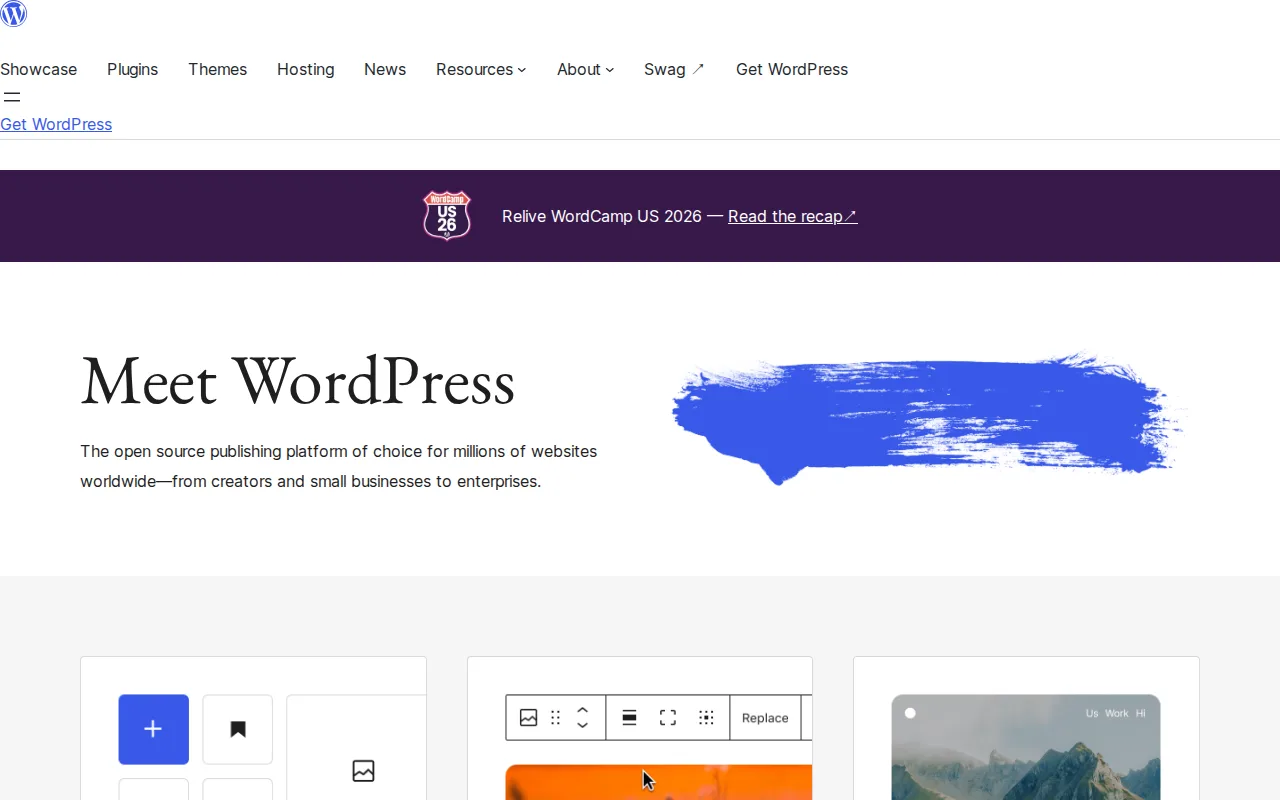
WordPress is the best Ghost alternative for site owners and developers who want full control over hosting, plugins, and code beyond Ghost's publishing-scoped feature set. Like Ghost, WordPress is free to download and self-host, WordPress under the GPLv2 (or later) license and Ghost under MIT, but WordPress's plugin ecosystem, WooCommerce for e-commerce, Yoast for SEO, and thousands more, lets a base install take on nearly any site type without custom development, a breadth Ghost's publishing-focused core doesn't match. WordPress holds a 4.7/5 rating from 42 Product Hunt reviews, edging out Ghost's own 4.4/5 from 21 reviews. Ghost is still the better choice for writers who specifically want native newsletter delivery and Stripe-based paid memberships built into the core product without plugins: WordPress requires separate plugins for comparable functionality, and because it is self-hosted, the site owner is fully responsible for security patching and backups, with a poorly maintained plugin a common source of hacked installs, a maintenance burden Ghost(Pro)'s managed hosting removes entirely for $18/month.
Compared to Ghost: same free, self-hostable open-source model (GPLv2 vs MIT), massive plugin ecosystem covers e-commerce, SEO, and page-building without custom code, slightly higher rating (4.7/5 vs 4.4/5)
Wins:Plugin ecosystem (WooCommerce, Yoast, and thousands more) covers e-commerce, SEO, and page-building, wider than Ghost's publishing-scoped core · 4.7/5 rating from 42 Product Hunt reviews vs Ghost's 4.4/5 from 21 reviews · Massive community documentation and third-party tutorials for nearly any site configuration
Loses:No native newsletter delivery or Stripe-based paid memberships built into the core, unlike Ghost's publishing-first design · Self-hosting makes the site owner fully responsible for security patching and backups, with no managed-hosting option like Ghost(Pro) · Poorly maintained plugins are a common source of security vulnerabilities and site breakage, a risk Ghost's smaller, curated core avoids
Pros
- Free software under GPLv2, no licensing fee regardless of site size or traffic.
- Plugin ecosystem covers e-commerce, SEO, forms, and page-building without custom code for most common needs.
- Full ownership and portability: a self-hosted WordPress site can move to any host without vendor lock-in.
- Massive community documentation, forums, and third-party tutorials for nearly any configuration question.
Cons
- Self-hosting means the site owner is responsible for security updates, backups, and server performance, with no built-in vendor safety net.
- Plugin quality varies widely; poorly maintained plugins are a common source of security vulnerabilities and site breakage after core updates.
- Total cost is unpredictable compared to fixed-tier builders, since hosting, premium themes, and premium plugins are all separate purchases.
- The learning curve for a properly configured, secure, fast site is steeper than fully hosted builders like Squarespace or Wix.
Pricing: Free — Both free to self-host; Ghost(Pro) managed hosting starts at $18/month, which the core WordPress project has no direct managed-hosting equivalent for (verified undefined NaN, NaN)