6 Best Alternatives to Tidal for Android in 2026
By Noahlast updated
Compared: Tidal alternatives that run on Android
| Alternative | Best for | Standout | Biggest weakness | Learning curve | Price |
|---|---|---|---|---|---|
| Tidalreference | audiophiles and lossless-audio listeners who want CD-quality or Dolby Atmos sound without needing a separate premium tier, and who don't need a free ad-supported option | Every subscriber gets lossless FLAC, Hi-Res PCM, and Dolby Atmos by default, with no cheaper, lower-fidelity tier to accidentally end up on. | No free or ad-supported tier exists at all; new listeners must either pay from day one or use the 30-day trial, unlike Spotify and Apple Music/YouTube Music, which offer ongoing free listening options. Tidal's own site also blocked automated access to its pricing pages, so exact web/Android pricing (which can differ from the Apple App Store price used here) should be double-checked at signup. | Low | From $15.49/mo |
| Spotify | listeners who want algorithmic music discovery (Discover Weekly, Daily Mix) plus a bundled podcast and audiobook catalog, and households that want to split a Premium plan across up to 6 people | Discover Weekly and Daily Mix, personalized playlists rebuilt weekly from listening history, widely credited as the strongest music-discovery engine among streaming services. | Only 15 hours/month of audiobook listening is included on Premium plans, and only the account holder gets that allowance on Duo and Family plans; going over requires buying audiobooks a la carte, and per-stream artist payouts remain a recurring complaint from the music industry. | Low | Free tier · paid from $6.99/mo |
| Apple Music | iPhone and Mac users who want streaming music integrated with their existing Apple devices and iTunes-purchased libraries | Lossless and Spatial Audio streaming included at no extra cost across every paid tier, rather than gated behind a premium add-on the way some competitors structure hi-fi audio. | No permanent free tier (only a one-month trial), and the experience on non-Apple platforms like Windows and Android is generally considered less polished than Apple's own apps or than Spotify's cross-platform experience. | Low | From $6.99/mo |
| Amazon Music | Amazon Prime members and Echo/Alexa device owners who want streaming music bundled into an ecosystem they already pay for or use daily | Native, deep Alexa voice integration across Echo speakers and Fire TV, making hands-free music control more direct than on competing streaming services. | Music discovery and personalized recommendations are widely considered weaker than Spotify's, and the tiered access model (free shuffle, Prime shuffle, paid Unlimited on-demand) is confusing compared to competitors' simpler free-vs-paid split. | Low | Free tier · paid from $10.99/mo |
| Qobuz | audiophiles and listeners who want Hi-Res or CD-quality lossless streaming plus the option to buy and permanently own downloads, without paying extra for hi-res as a separate tier | Every plan streams in Hi-Res (24-bit) or CD-quality lossless audio at no extra cost, plus a permanent download store for buying tracks and albums outright. | Qobuz's catalog and social/algorithmic discovery features trail far behind Spotify and Apple Music; its Sublime, Duo, and Family multi-user or discounted plans aren't published as static, comparable pricing on the site, so shoppers evaluating those options have to click through account-creation flows to see exact numbers. | Low | From $12.99/mo |
| YouTube Music | existing Google/YouTube users who want music streaming bundled with (or as a cheaper standalone alternative to) a YouTube Premium ad-free subscription, especially households already paying for other Google services | Catalog includes YouTube's music videos, live performances, and fan uploads alongside standard studio tracks, which pure audio streamers like Spotify and Apple Music don't offer. | Premium pricing and plan details could not be independently verified from Google's own site (its music.youtube.com pricing pages returned browser-deprecation notices and its support documentation 404'd), and Google has changed YouTube Premium/Music pricing multiple times in recent years, so subscribers should confirm the current price at signup rather than relying on any previously seen figure. | Low | Free tier · paid from $5.99/mo |
| Deezer | music listeners who want a Spotify alternative with lossless HiFi audio and real-time translated lyrics, especially outside the US where Deezer has stronger regional catalogs | HiFi lossless audio included on every paid tier (not gated behind a separate premium-of-premium plan), plus an AI-generated-content detection tool that scans playlists for AI-made tracks. | The free tier cannot play specific tracks on demand, only curated flows and playlists, and Deezer's catalog and regional licensing are generally considered weaker than Spotify's in the US market, its largest addressable audience. | Low | Free tier · paid from $5.99/mo |
 Tidal
Tidal Spotify
 Apple Music
 Amazon Music
 Qobuz
Qobuz YouTube Music
 Deezer
1.Spotify — best Tidal alternative for listeners who want algorithmic music discovery (Discover Weekly, Daily Mix) plus a bundled podcast and audiobook catalog, and households that want to split a Premium plan across up to 6 people
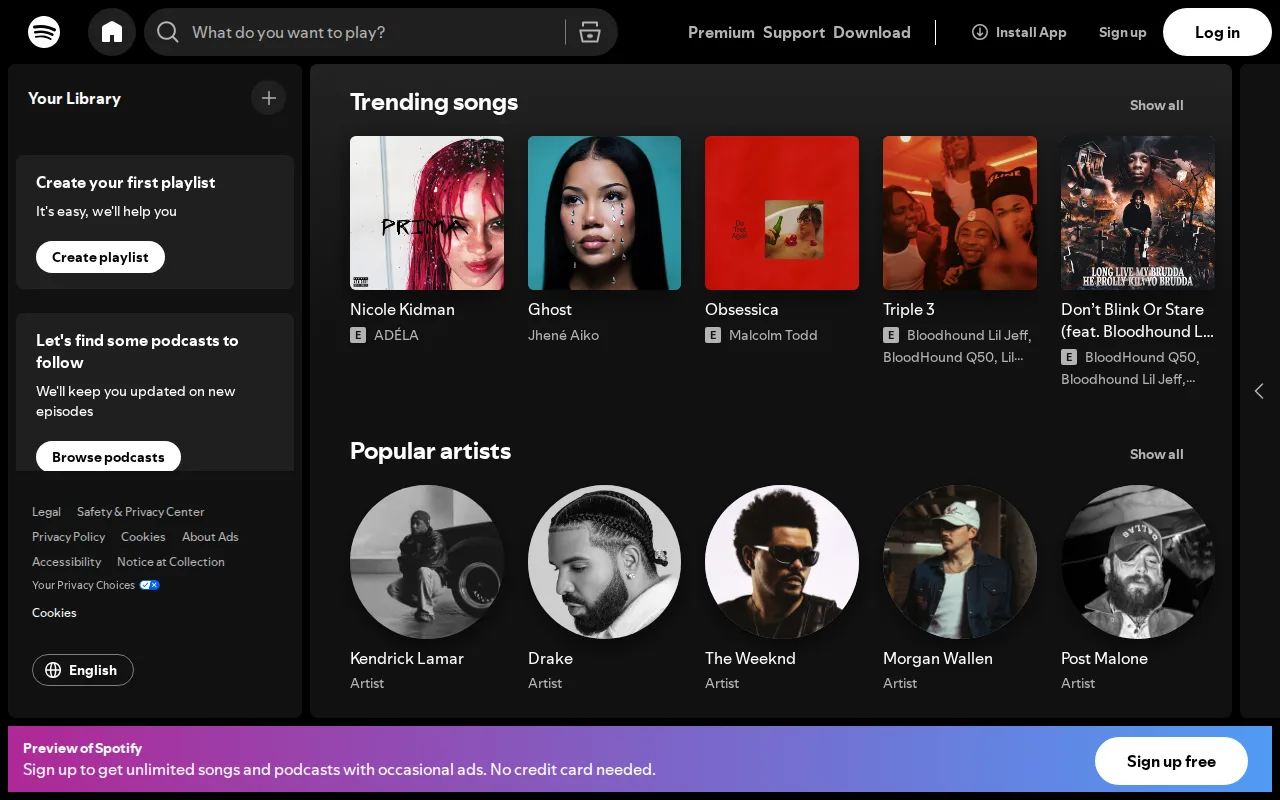
Spotify is the best Tidal alternative for listeners who want a genuine free ad-supported tier before ever paying, something Tidal doesn't offer at all since discontinuing its own free option in April 2024 — every Tidal listener pays from day one after a 30-day trial. Spotify's Discover Weekly and Daily Mix playlists are widely credited as the strongest algorithmic music-discovery engine among streaming services, a personalization layer Tidal's own catalog and interface don't match. Premium Individual costs $12.99/month, undercutting Tidal's $15.49/month Individual plan, and Premium Family covers up to 6 accounts for $21.99/month versus Tidal's $26.99/month Family plan for the same headcount. Tidal is still the better choice for anyone who specifically wants lossless or Dolby Atmos audio included by default: Spotify has no lossless or hi-res audio option at any price, unlike Tidal, which streams CD-quality FLAC and Dolby Atmos to every subscriber, and Spotify's free tier is shuffle-only on mobile, with frequent ads and no offline downloads.
Compared to Tidal: genuine free ad-supported tier, $12.99/month Premium vs Tidal's $15.49/month, but no lossless or Dolby Atmos audio at any price
Wins:Free ad-supported tier lets new listeners use the service without paying, unlike Tidal, which requires payment after a 30-day trial · Discover Weekly and Daily Mix are widely credited as the strongest algorithmic music-discovery engine among streaming services · Premium Individual costs $12.99/month vs Tidal's $15.49/month; Family covers 6 accounts for $21.99 vs Tidal's $26.99
Loses:No lossless or hi-res audio option at any price, unlike every Tidal subscriber getting FLAC and Dolby Atmos by default · Free tier on mobile is shuffle-only with frequent ads and no offline downloads · Audiobook access is capped at 15 hours/month even on paid plans
Pros
- Discover Weekly and Daily Mix surface new music based on listening habits without manual curation.
- Native apps on Windows, macOS, Linux, iOS, and Android with offline downloads on Premium.
- Family plan covers up to 6 accounts at $21.99/month, cheaper per person than most rivals' family tiers.
- Podcasts and audiobooks are bundled into the same app as music, no separate subscription needed for basic access.
Cons
- Free tier on mobile is shuffle-only with no on-demand track selection and frequent ads.
- Audiobook access is capped at 15 hours/month even on paid plans; going over requires separate purchases.
- Duo and Family plans require members to share the same address, which Spotify verifies periodically.
- No lossless or hi-res audio option, unlike Apple Music and Amazon Music at the same price point.
Pricing: Free tier · paid from $6.99/mo — $12.99/month Premium Individual vs Tidal's $15.49/month; Family $21.99 vs Tidal's $26.99 for up to 6 accounts (verified undefined NaN, NaN)
2.Apple Music — best Tidal alternative for iPhone and Mac users who want streaming music integrated with their existing Apple devices and iTunes-purchased libraries
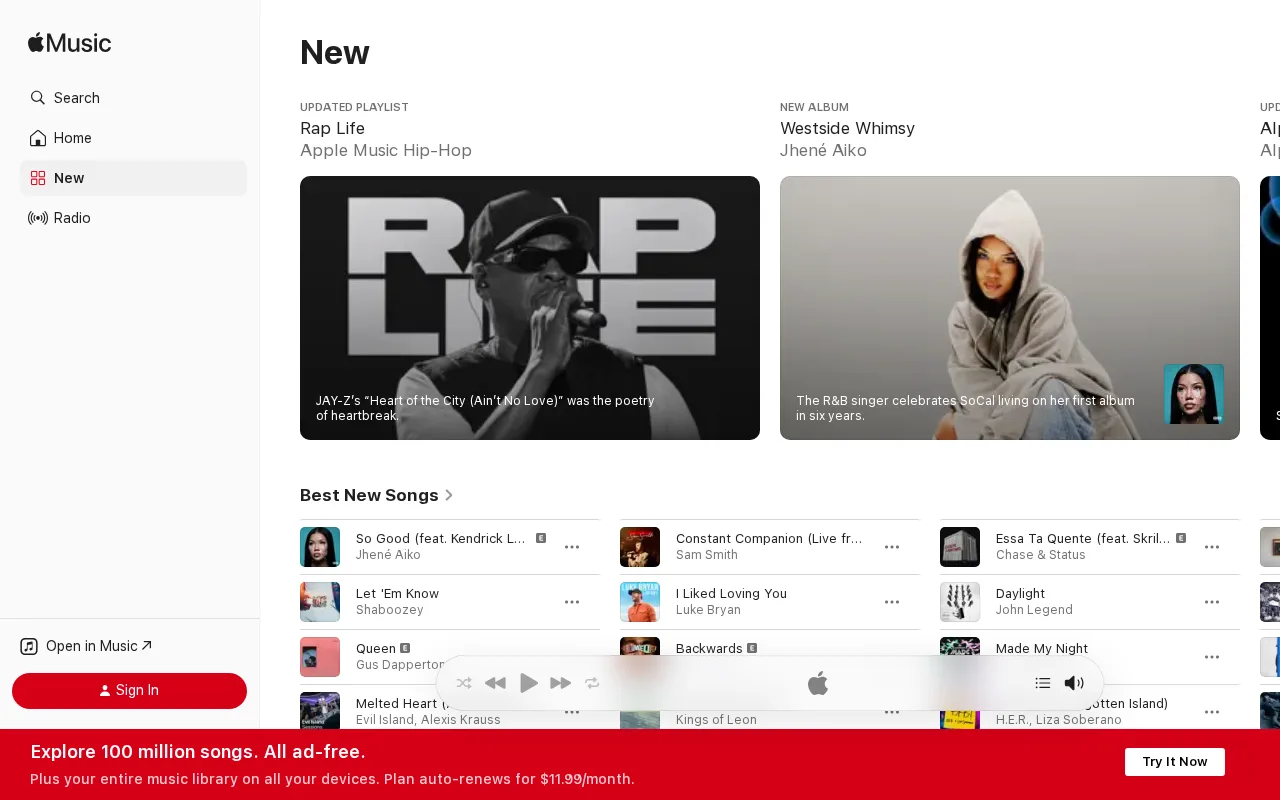
Apple Music is the best Tidal alternative for iPhone and Mac users who want lossless and Spatial Audio streaming included at no extra cost, matching Tidal's own default-lossless model but at a lower entry price. Individual plans cost $11.99/month, undercutting Tidal's $15.49/month, and Apple bundles lossless audio into every paid tier the same way Tidal does, rather than gating it behind a pricier plan the way some competitors historically did. Apple Music integrates deeply with iOS, macOS, and Apple TV, including Siri voice control and Apple Watch playback, an ecosystem tie-in Tidal's cross-platform app doesn't replicate. Apple One can bundle Apple Music with other Apple services from $19.95/month, often cheaper than subscribing separately. Tidal is still the better choice for listeners who want a platform-neutral experience and direct-to-fan royalty transparency: Apple Music's apps on Windows and Android are generally considered less polished than on Apple's own devices, unlike Tidal's more consistent cross-platform experience, and Apple Music has no permanent free tier at all, only a one-month trial, the same limitation Tidal itself carries.
Compared to Tidal: lossless and Spatial Audio included at $11.99/month vs Tidal's $15.49/month, deep Apple ecosystem integration, but less polished on Windows and Android
Wins:Individual plan costs $11.99/month vs Tidal's $15.49/month, both including lossless audio by default · Deep integration with iOS, macOS, Apple TV, Siri voice control, and Apple Watch playback · Apple One bundle can combine Apple Music with other Apple services from $19.95/month, often cheaper than separate subscriptions
Loses:Windows and Android apps are generally considered less polished than the native iOS/macOS experience, unlike Tidal's more consistent cross-platform app · No permanent free tier at all, only a one-month trial, the same limitation Tidal carries · No published direct-to-fan royalty reporting the way Tidal publishes to show subscribers how payouts are calculated
Pros
- Lossless and Spatial Audio included free on every paid plan.
- Deep integration with iOS, macOS, and Apple TV, including Siri voice control and Apple Watch playback.
- Student plan bundles Apple TV+ at no additional cost.
- Apple One bundle can be cheaper than subscribing to Apple Music and other Apple services separately.
Cons
- No permanent free, ad-supported tier; only a one-month trial for new subscribers.
- Windows and Android apps are generally considered less polished than the native iOS/macOS experience.
- Family plan requires Apple's Family Sharing setup, which can be a barrier for households not otherwise in the Apple ecosystem.
- Playlist and recommendation algorithm is viewed by many switchers as less refined than Spotify's.
Pricing: From $6.99/mo — $11.99/month Individual vs Tidal's $15.49/month; both include lossless/Spatial Audio at no extra cost (verified undefined NaN, NaN)
3.Amazon Music — best Tidal alternative for amazon Prime members and Echo/Alexa device owners who want streaming music bundled into an ecosystem they already pay for or use daily
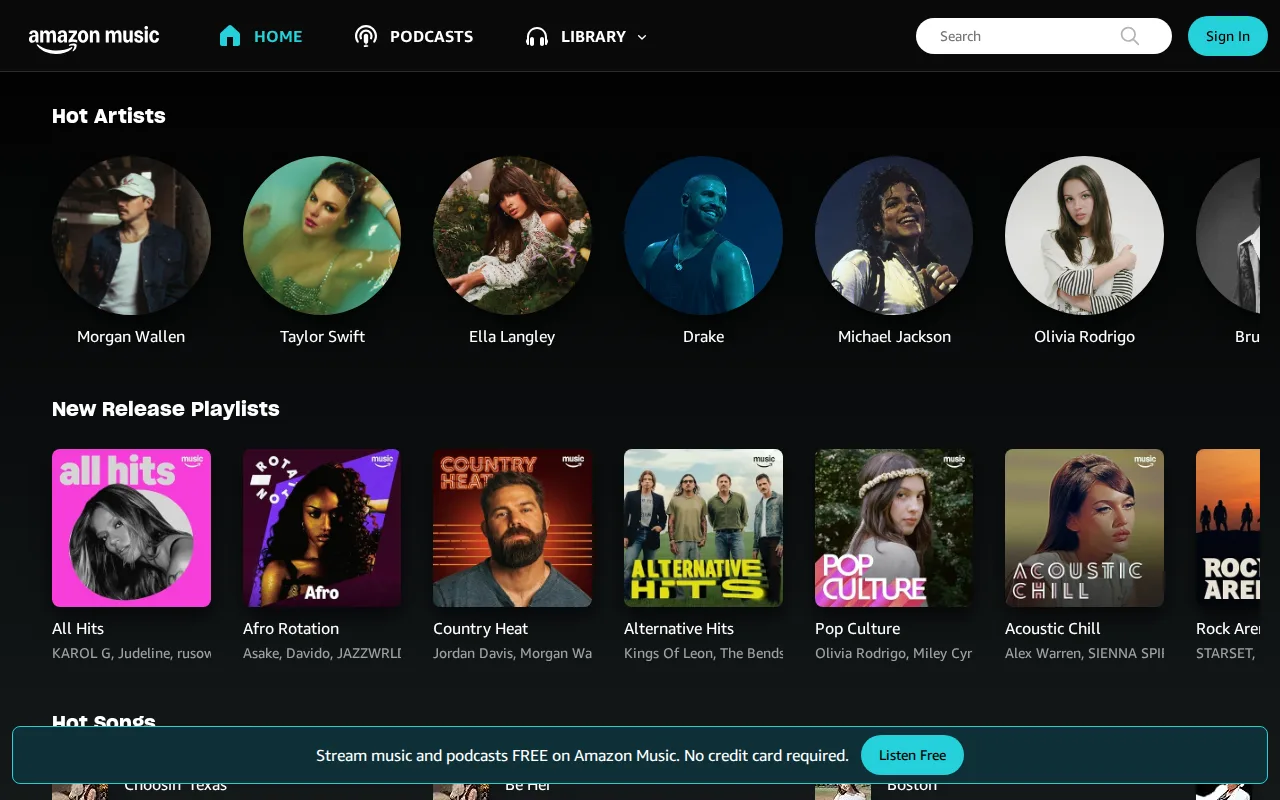
Amazon Music is the best Tidal alternative for households already paying for Amazon Prime or using Echo smart speakers daily, since Amazon Music Unlimited drops to $10.99/month for Prime members, undercutting Tidal's $15.49/month Individual plan, and its deep native Alexa integration makes hands-free playback more direct on Echo devices than Tidal's app-based control. Amazon also offers a free ad-supported shuffle tier open to anyone, plus ad-free shuffle already included with Prime membership at no extra cost, options Tidal doesn't have at all since it dropped its free tier in 2024. The catalog covers 100M+ songs on the Unlimited tier, comparable in size to Tidal's own catalog. Tidal is still the better choice for listeners who specifically want lossless or Dolby Atmos audio and stronger music discovery: Amazon Music's algorithmic recommendations are widely considered weaker than competitors', and Amazon's tiered access model (free shuffle, Prime shuffle, paid on-demand) is more confusing than Tidal's single unified plan that includes full lossless quality for every subscriber.
Compared to Tidal: $10.99/month for Prime members vs Tidal's $15.49/month, free ad-supported tier available, but weaker music discovery and no lossless audio
Wins:Unlimited costs $10.99/month for Prime members, well below Tidal's $15.49/month Individual plan · Free ad-supported tier and ad-free Prime shuffle are both available, unlike Tidal's no-free-tier model since 2024 · Deep native Alexa integration across Echo speakers and Fire TV for hands-free voice control
Loses:No lossless or hi-res audio option at any tier, unlike every Tidal subscription's default FLAC/Dolby Atmos streaming · Music discovery and algorithmic recommendations are widely considered weaker than competitors', including Tidal's curated approach · Tiered access model (free shuffle, Prime shuffle, paid on-demand) is more confusing than Tidal's single unified plan
Pros
- Free ad-supported tier available to anyone, plus ad-free shuffle already included with Prime membership.
- Deep native integration with Alexa and Echo devices for voice-controlled playback.
- Catalog of 100M+ songs on the Unlimited tier, comparable in size to Spotify and Apple Music.
- Discounted single-device plan for households that only need music on one Echo speaker.
Cons
- Music discovery and algorithmic recommendations lag behind Spotify's in most independent comparisons.
- The multi-tier access model (free shuffle, Prime shuffle, paid on-demand) is more confusing than competitors' straightforward free-vs-paid structure.
- No public API or third-party developer ecosystem comparable to Spotify's.
- Full value depends on being invested in Amazon's ecosystem (Prime, Echo); less compelling as a standalone service.
Pricing: Free tier · paid from $10.99/mo — $10.99/month Unlimited (Prime members) or $11.99/month (non-Prime) vs Tidal's $15.49/month
4.Qobuz — best Tidal alternative for audiophiles and listeners who want Hi-Res or CD-quality lossless streaming plus the option to buy and permanently own downloads, without paying extra for hi-res as a separate tier
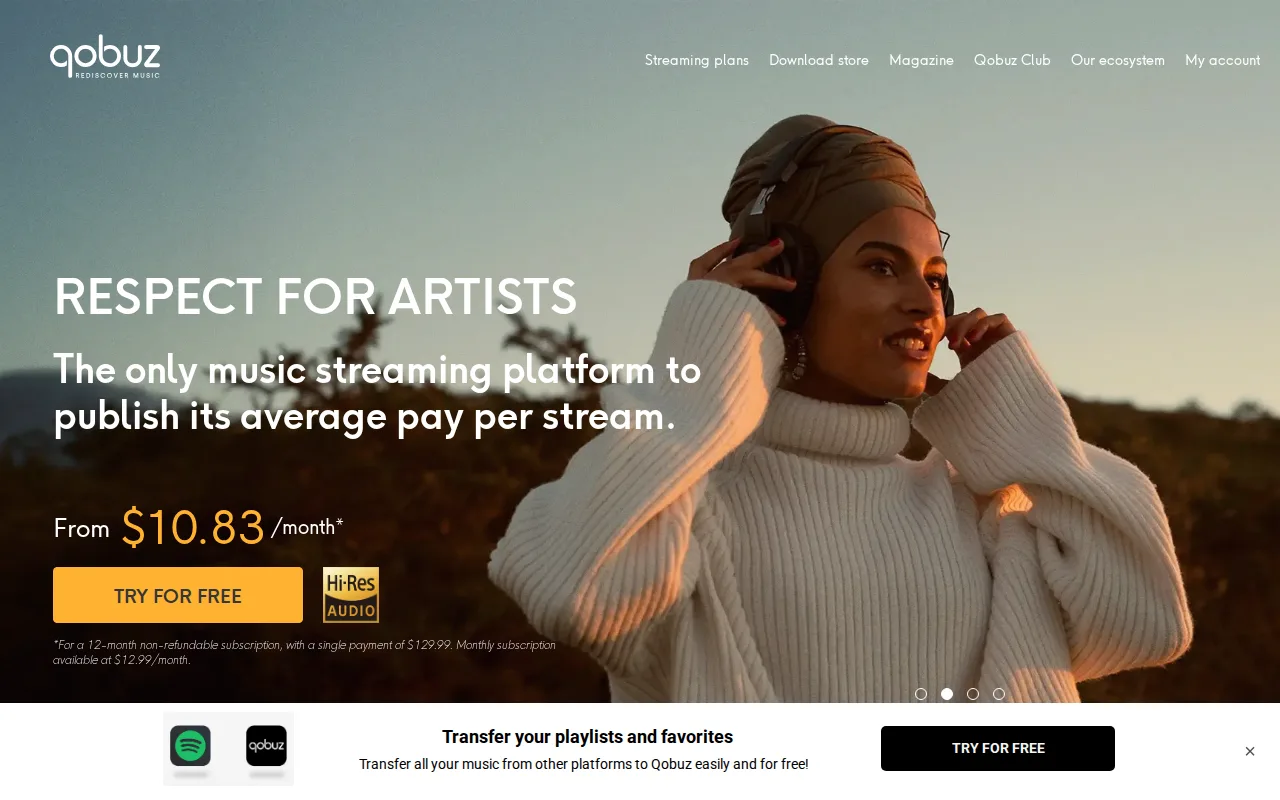
Qobuz is the best Tidal alternative for audiophiles who want the option to buy and permanently own hi-res tracks and albums, not just stream them, a download-store model Tidal doesn't offer at all. Qobuz streams every track in Hi-Res (24-bit) or CD-quality lossless audio by default, matching Tidal's own default-lossless approach, and its Studio plan costs $12.99/month, or about $10.83/month billed annually, close to Tidal's $15.49/month Individual plan but slightly cheaper. Qobuz emphasizes human-curated playlists, reviews, and editorial content over algorithmic recommendation, and it publishes its average per-stream artist payout, similar in spirit to Tidal's own direct-to-fan royalty transparency. Tidal is still the better choice for listeners who want the largest catalog and Dolby Atmos spatial audio: Qobuz's catalog is smaller than Tidal's and its social/algorithmic discovery features trail behind competitors, and Qobuz's Sublime, Duo, and Family plan prices aren't published as static, comparable numbers on its site, unlike Tidal's clearly listed Individual and Family tiers.
Compared to Tidal: permanent download store to own tracks outright, Studio at $12.99/month vs Tidal's $15.49/month, but smaller catalog and unpublished multi-user pricing
Wins:Permanent download store lets listeners buy and own tracks or albums outright, a model Tidal doesn't offer · Studio plan costs $12.99/month (about $10.83/month billed annually), slightly less than Tidal's $15.49/month · Human-curated playlists, reviews, and editorial content instead of purely algorithmic recommendations
Loses:Smaller music catalog than Tidal, and weaker social/algorithmic discovery features · No permanent free tier at all, only a 1-month trial, the same limitation Tidal carries · Sublime, Duo, and Family plan prices aren't published as static numbers, unlike Tidal's clearly listed Individual and Family tiers
Pros
- Hi-Res and CD-quality lossless streaming included on every tier, not sold as a premium upsell.
- Permanent download store lets users buy and own tracks or albums without an active subscription.
- Publishes average per-stream artist payouts as part of its artist-friendly positioning.
- Human-curated playlists, reviews, and editorial content instead of purely algorithmic recommendations.
Cons
- Smaller music catalog than Spotify or Apple Music.
- No permanent free, ad-supported tier — only a 1-month free trial.
- Weaker social features and personalized discovery than algorithm-driven competitors.
Pricing: From $12.99/mo — $12.99/month Studio (or ~$10.83/month billed annually) vs Tidal's $15.49/month Individual (verified undefined NaN, NaN)
5.YouTube Music — best Tidal alternative for existing Google/YouTube users who want music streaming bundled with (or as a cheaper standalone alternative to) a YouTube Premium ad-free subscription, especially households already paying for other Google services
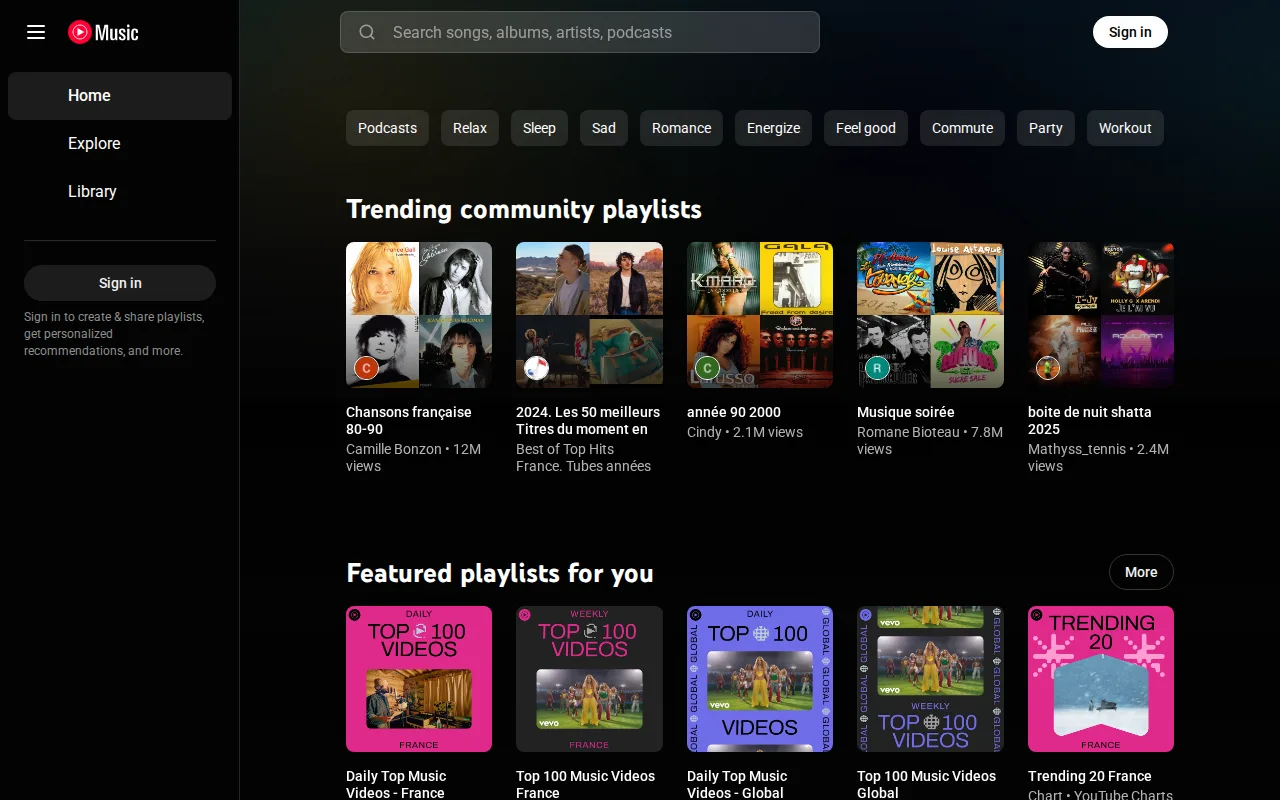
YouTube Music is the best Tidal alternative for existing YouTube or Google users who want music streaming bundled with (or cheaper than) an ad-free YouTube Premium subscription, an ecosystem tie-in Tidal has no equivalent for. YouTube Music's catalog includes YouTube-exclusive music videos, live performances, and fan uploads alongside standard studio tracks, content Tidal's pure audio-streaming catalog doesn't carry. Premium Individual runs approximately $10.99/month, below Tidal's $15.49/month, and a free ad-supported tier lets new listeners try the catalog without paying, unlike Tidal's no-free-tier-at-all model. Tidal is still the better choice for listeners who specifically want lossless or hi-res audio and more reliably confirmed pricing: YouTube Music has no lossless audio option at any tier, unlike Tidal's default FLAC and Dolby Atmos streaming, and couldn't independently verify YouTube Music's current pricing from Google's own site, since its pricing and support pages returned browser-deprecation notices, whereas Tidal's Apple App Store pricing was directly confirmed.
Compared to Tidal: bundled with YouTube Premium, free ad-supported tier available, ~$10.99/month vs Tidal's $15.49/month, but no lossless audio at any tier
Wins:Free ad-supported tier lets new listeners try the catalog without paying, unlike Tidal's no-free-tier model since 2024 · Catalog includes YouTube-exclusive music videos, live performances, and fan uploads, content Tidal's catalog doesn't carry · Premium Individual runs approximately $10.99/month, below Tidal's $15.49/month
Loses:No lossless or hi-res audio option at any tier, unlike Tidal's default FLAC and Dolby Atmos streaming for every subscriber · Pricing couldn't be independently verified from Google's own site, unlike Tidal's confirmed Apple App Store pricing · Free tier has no background playback or offline downloads, a bigger restriction than most competitors' free tiers
Pros
- Catalog includes YouTube-exclusive music videos, live performances, and fan uploads, not just studio audio.
- Bundled inside YouTube Premium for users who also want ad-free YouTube video, potentially cheaper than paying for both services separately.
- Free ad-supported tier lets new users try the catalog without a subscription.
- Broad platform support including smart speakers, wearables, and Android Auto/Tesla in-car integration.
Cons
- Free tier has no background playback or offline downloads, a bigger restriction than Spotify's free tier.
- Pricing has changed multiple times in recent years and wasn't independently verifiable from Google's own site; confirm the current price before subscribing.
- Recommendation and playlist algorithm is generally considered less refined than Spotify's for pure music discovery.
Pricing: Free tier · paid from $5.99/mo — ~$10.99/month Premium Individual (approximate, unverified) vs Tidal's confirmed $15.49/month
6.Deezer — best Tidal alternative for music listeners who want a Spotify alternative with lossless HiFi audio and real-time translated lyrics, especially outside the US where Deezer has stronger regional catalogs
Deezer is the best Tidal alternative for listeners who want lossless HiFi audio included on a standard Premium plan without paying a Tidal-level price for it, since Deezer Premium costs $11.99/month (or about $9/month billed annually) and includes HiFi lossless sound by default, undercutting Tidal's $15.49/month Individual plan for comparable audio quality. Deezer's real-time lyrics with translation and its AI-generated-content detection tool, which scans playlists and reports 99.8% accuracy at flagging AI-made tracks, are features Tidal's own app doesn't offer. Deezer also has a genuine free ad-supported tier, something Tidal dropped in 2024, and its Family plan for up to 6 accounts costs $19.99/month, cheaper than Tidal's $26.99/month Family plan. Tidal is still the better choice for listeners in the US specifically: Deezer's catalog and regional licensing are generally considered weaker in the US, its largest potential market, than Tidal's, and Deezer's free tier can't pick specific tracks on demand, only curated flows and playlists.
Compared to Tidal: HiFi lossless included at $11.99/month vs Tidal's $15.49/month, adds AI-track detection and translated lyrics, but weaker US catalog licensing
Wins:Premium costs $11.99/month (about $9/month billed annually) and includes HiFi lossless sound, undercutting Tidal's $15.49/month for comparable quality · AI-generated-content detection tool scans playlists with 99.8% reported accuracy, a feature Tidal doesn't offer · Free ad-supported tier available, unlike Tidal's no-free-tier-at-all model since 2024; Family plan is $19.99/month vs Tidal's $26.99
Loses:Catalog and label relationships are generally weaker in the US than Tidal's, Deezer's largest potential market · Free tier cannot pick specific tracks on demand, only curated flows and playlists · Discovery and recommendation algorithms are less frequently cited as a strength compared to competitors
Pros
- HiFi lossless audio is included on the standard Premium plan, not walled off as a separate higher tier.
- Real-time lyrics with translation, useful for listeners exploring music in other languages.
- An AI-generated-content detection tool flags AI-made tracks in playlists, a differentiator few competitors offer.
- A Student plan at $5.99/month undercuts most competitors' discounted tiers.
Cons
- The free tier cannot pick specific tracks on demand, only shuffle/flow-style playback.
- Catalog depth and label relationships are generally weaker in the US than Spotify's, Deezer's largest potential market.
- The Family plan tops out at 6 accounts for $19.99/month, in line with competitors but not a differentiator.
- Discovery and recommendation algorithms are less frequently cited as a strength compared to Spotify's.
Pricing: Free tier · paid from $5.99/mo — $11.99/month Premium (HiFi included) vs Tidal's $15.49/month; Family $19.99 vs Tidal's $26.99 for up to 6 accounts (verified undefined NaN, NaN)