2 Best Open-Source Alternatives to Kodi in 2026
By Noahlast updated pricing verified
Compared: open-source alternatives to Kodi
| Alternative | Best for | Standout | Biggest weakness | Learning curve | Price |
|---|---|---|---|---|---|
| Kodireference | users with an existing local or networked media library (ripped discs, downloaded files, home video) who want a customizable, remote-friendly player rather than a subscription streaming service | A fully open skinning engine and add-on ecosystem that lets users restyle the entire interface and extend functionality, run by volunteer developers with no corporate owner or paid tier. | Kodi streams nothing itself and requires the user to organize and configure their own legal media sources; its permissive add-on system has also drawn recurring piracy controversy from unofficial third-party add-ons the XBMC Foundation does not endorse, which creates reputational baggage for a project that is otherwise entirely legitimate. | Moderate | Free |
| Jellyfin | self-hosters who want to stream their own media library without paying any subscription fee or relying on a company-owned platform | There is no paid tier, premium plan, or account requirement of any kind; every feature, including live TV and DVR, is free and the project has no commercial owner. | There is no official iOS or tvOS app maintained by the core project (iOS access relies on community clients like Swiftfin), and as fully self-hosted, community-supported software, users are responsible for their own server setup, updates, and troubleshooting with no paid support option to fall back on. | Moderate | Free |
| Stremio | users who want one unified interface for discovering and playing content from many sources via community addons instead of switching between multiple streaming apps | An open addon ecosystem that lets the community build and install catalogs for different content sources into one unified browsing and playback interface, rather than being locked to a single content library. | Stremio itself does not host or license any content; its value depends entirely on third-party community addons, which vary in reliability, legality, and availability by region, and the iOS/iPadOS experience is reduced-functionality (web-based) rather than a full native app due to Apple's platform restrictions. | Moderate | Free |
 Kodi
Kodi Jellyfin
 Stremio
1.Jellyfin — best Kodi alternative for self-hosters who want to stream their own media library without paying any subscription fee or relying on a company-owned platform
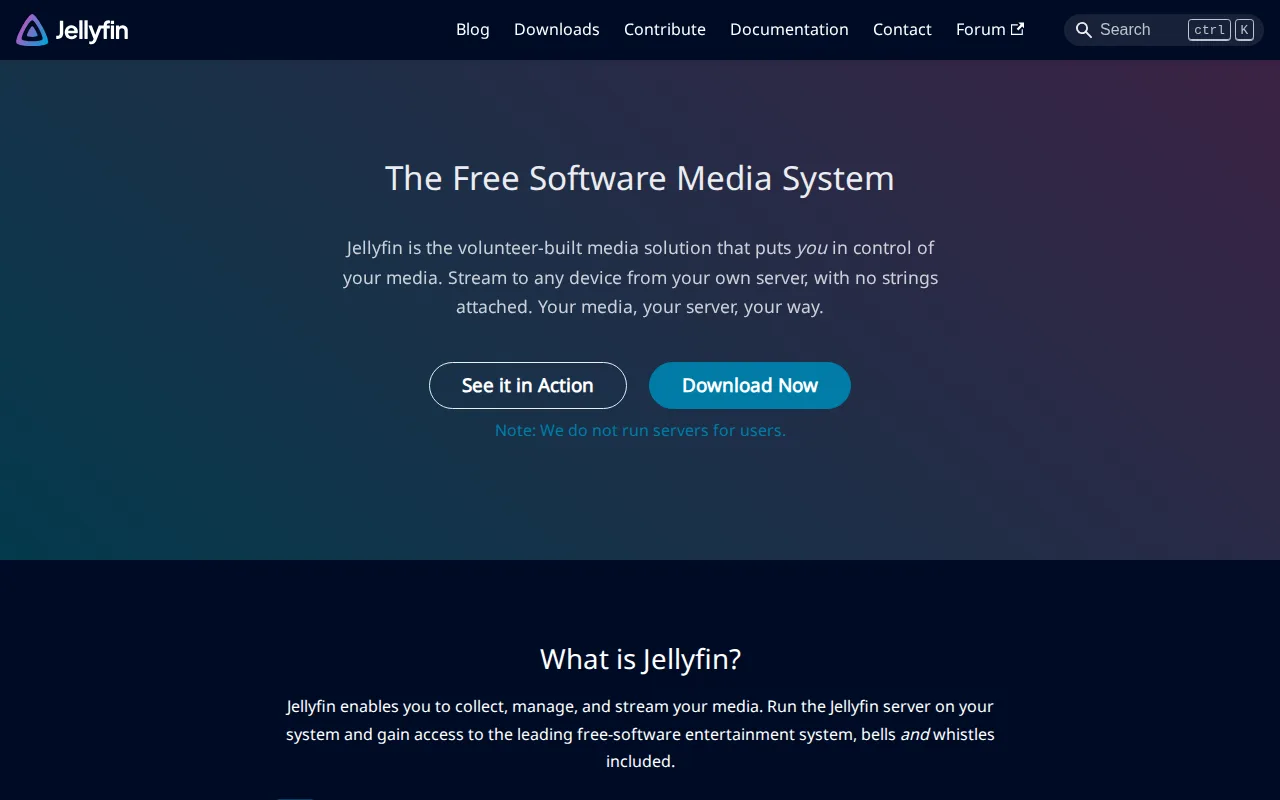
Jellyfin is the best Kodi alternative for self-hosters who want a personal streaming server rather than Kodi's local-player-and-add-on model, with zero cost at any tier. Both Jellyfin and Kodi are entirely free and open source under GPL-2.0 with no paid tier, account requirement, or corporate owner, and Jellyfin's pricing was verified on 2026-08-21, the same day as Kodi's own. Unlike Kodi, which is a local player that streams nothing itself and requires the user to configure their own media sources, Jellyfin runs as a self-hosted server that streams a personal library to client apps on other devices, including live TV with DVR recording, so it solves the multi-device access problem Kodi's single-machine model doesn't address directly. Jellyfin also runs on the same broad platform set as Kodi (web, Windows, macOS, Linux, Android, iOS) plus official Android TV support. Kodi remains the better choice for users who specifically want a customizable ten-foot interface with a full skinning engine for a single TV-connected device: Jellyfin has no official iOS or tvOS app from its core project (iOS access relies on community clients like Swiftfin), and self-hosting a Jellyfin server is a heavier setup than installing Kodi directly on one machine, with no paid support option to fall back on if something breaks.
Compared to Kodi: server-based streaming to multiple devices vs Kodi's single-machine local player, live TV and DVR support built in vs Kodi's add-on-dependent model, both fully free under GPL-2.0 with pricing verified the same day (2026-08-21)
Wins:Streams a personal library to client apps on other devices over the network, unlike Kodi's single-machine local playback model · Live TV and DVR recording are built into the core server, not dependent on third-party add-ons the way Kodi's extended functionality is · Official Android TV app alongside web, Windows, macOS, Linux, Android, and community-supported iOS clients
Loses:No official iOS or tvOS app from the core project; iOS access relies on community-maintained clients like Swiftfin · Self-hosting a server is a heavier initial setup than installing Kodi as a local application on one device · No paid support tier to fall back on, the same limitation Kodi itself carries as a volunteer-run project
Pros
- Completely free with no subscription, premium tier, or paid feature gating.
- Fully open source under GPL-2.0 with an active, transparent development community.
- No account requirement or phone-home telemetry to a third-party company.
- Supports live TV and DVR recording alongside standard on-demand media streaming.
Cons
- No official iOS/tvOS app from the core project; iOS users rely on community-maintained clients like Swiftfin.
- Self-hosting requires users to manage their own server hardware, updates, and remote-access configuration.
- No paid support tier means troubleshooting relies on community forums and documentation rather than a vendor.
- Transcoding performance depends entirely on the user's own hardware, unlike cloud-hosted competitors with managed infrastructure.
Pricing: Free — Both fully free, $0, verified 2026-08-21; no paid tier exists on either product (verified undefined NaN, NaN)
2.Stremio — best Kodi alternative for users who want one unified interface for discovering and playing content from many sources via community addons instead of switching between multiple streaming apps
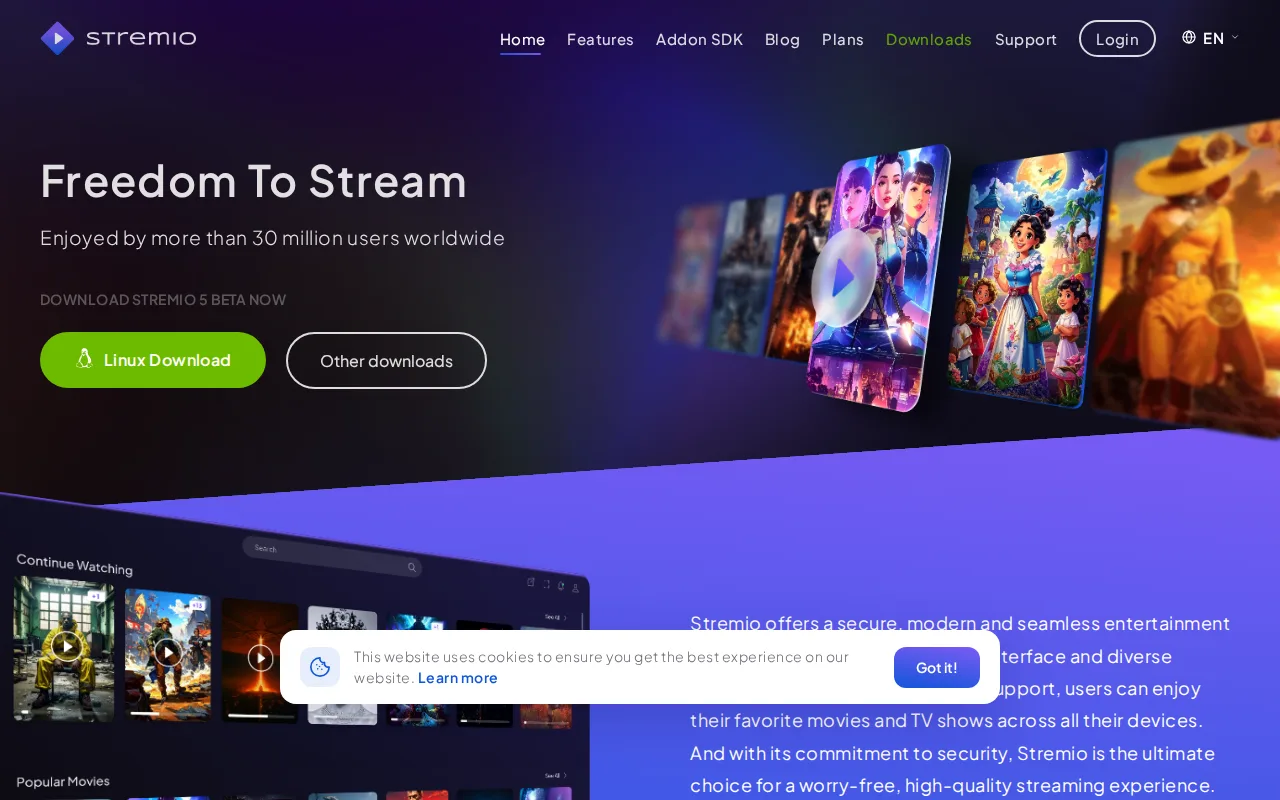
Stremio is the best Kodi alternative for users who want one unified interface for discovering and playing content from many sources via community addons, a similar model to Kodi's own add-on ecosystem but built around content discovery rather than a ten-foot local media library interface. Both Stremio and Kodi are free with no subscription required, and both are open source, though Stremio is GPL-3.0 versus Kodi's GPL-2.0. Stremio adds cross-device watch-progress sync and Guest Mode that avoids account-based data collection, features not described in Kodi's own listing. Stremio also supports HTTP links, torrent files, and magnet links for playback directly, while Kodi relies more heavily on its skinning engine and add-on system for library organization and metadata scraping rather than content aggregation itself. Kodi remains the better choice for users who specifically want a customizable ten-foot interface with a full skinning engine designed for TV remotes and their own local or networked media library: Stremio's iOS/iPadOS support is a reduced-functionality web app rather than a full native client due to Apple's platform restrictions, and its content availability and legality depend entirely on third-party community addons, which Kodi's listing flags as a similar but separately-noted piracy-controversy risk for its own unofficial add-ons.
Compared to Kodi: unified content-source aggregation via community addons vs Kodi's local library and skinning-engine focus, cross-device watch-progress sync and Guest Mode vs features not described in Kodi's listing, both free and open source (GPL-3.0 vs Kodi's GPL-2.0)
Wins:Cross-device watch-progress sync, a feature not described in Kodi's own listing · Guest Mode avoids account-based data collection, an explicit privacy feature Kodi's listing doesn't mention · Native support for HTTP links, torrent files, and magnet links for playback directly within the unified interface
Loses:iOS/iPadOS support is a reduced-functionality web app rather than a full native client, due to Apple's platform restrictions · Content availability and legality depend entirely on third-party community addons, a similar risk profile to Kodi's own unofficial add-on controversy · No dedicated ten-foot interface or skinning engine built specifically for TV-remote navigation the way Kodi's is
Pros
- Free core app with no subscription required for full addon and playback functionality.
- Unified interface for content discovery and playback across many addon-provided sources.
- Cross-device watch-progress sync and Chromecast support on desktop and mobile.
- Desktop shell and much of the codebase are open source (GPL-3.0) on GitHub.
Cons
- Content availability and legality depend entirely on third-party addons, not on Stremio itself, and quality varies widely.
- iOS/iPadOS support is a reduced-functionality web app rather than a full native client.
- No official iOS native app due to Apple platform restrictions on this kind of addon-based playback.
- Setup and addon configuration have a learning curve for users unfamiliar with the addon-based model.
Pricing: Free — Both fully free, $0, with no subscription required; Stremio's optional donation-based Supporter plan has no published price, similar to Kodi having no paid tier at all