1 Best Open-Source Alternatives to FLUX in 2026
By Noahlast updated pricing verified
Compared: open-source alternatives to FLUX
| Alternative | Best for | Standout | Biggest weakness | Learning curve | Price |
|---|---|---|---|---|---|
| FLUXreference | developers and teams who want to self-host a commercially-licensed open-weight image model (FLUX.1 [schnell]) or pay per API call for image and video generation without a subscription | FLUX.1 [schnell] is a genuinely free, Apache-2.0-licensed model that can be self-hosted and used commercially with no royalty, unlike most competing frontier image models that are API-only or non-commercial by default. | Most of the commercial licensing tiers (Builder, Platform, Professional, Enterprise) don't list actual USD prices on the pricing page, requiring a purchase flow or sales contact to learn the real cost, and the higher-quality [dev] models are non-commercial unless that separate paid license is bought. | Moderate | Free |
| Stable Diffusion | developers and enterprises wanting a self-hostable, fine-tunable image generation model that's free under the Community License for small-scale or non-commercial use, rather than a closed API-only image generator | Open model weights that can be downloaded, self-hosted, and fine-tuned at no cost under the Community License for eligible users, with a hosted Platform API and Brand Studio available for teams that want managed infrastructure instead. | The free Community License only applies below a $1M annual revenue threshold, above which organizations need a separately negotiated Enterprise License, and per-image Platform API costs vary by model version and resolution in ways that aren't transparently listed on the marketing site. | Steep | Free |
 FLUX
FLUX Stable Diffusion
1.Stable Diffusion — best FLUX alternative for developers and enterprises wanting a self-hostable, fine-tunable image generation model that's free under the Community License for small-scale or non-commercial use, rather than a closed API-only image generator
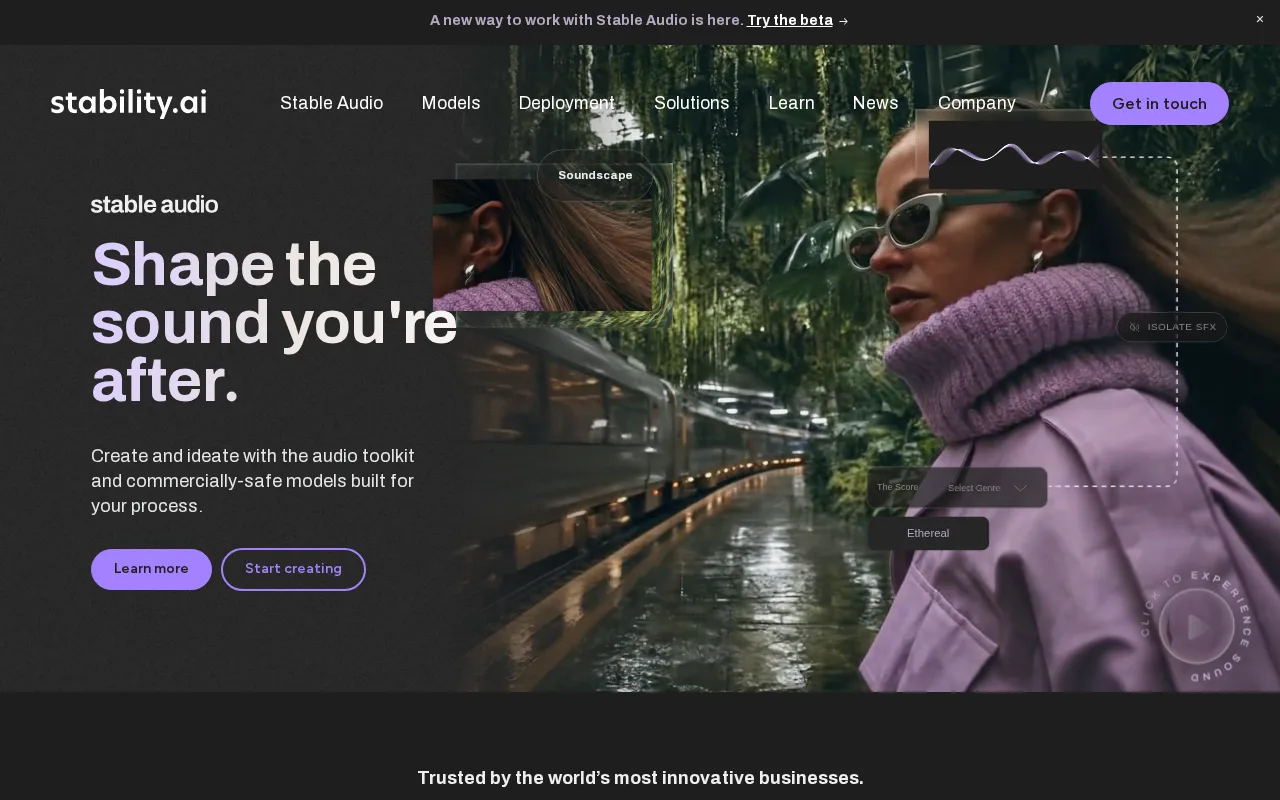
Stable Diffusion is the best FLUX alternative for developers and enterprises who want an open-weight model they can self-host and fine-tune without FLUX's split licensing between a free-but-restricted [schnell] model and a non-commercial [dev] model. Stable Diffusion's Community License is free for individuals, non-commercial use, and organizations under $1M in annual revenue, a broader free-use threshold than FLUX.1 [dev]'s non-commercial-only default, and it runs on four platforms (web, Windows, macOS, Linux) versus FLUX's web-only listing. Stability AI counts Electronic Arts, HubSpot, Mercado Libre, UMG, and Warner Music Group as named enterprise customers, evidence of production-scale adoption that FLUX's context doesn't document. FLUX is still the better choice for teams that specifically want a model licensed for unrestricted commercial use at any organization size with no revenue cap: FLUX.1 [schnell] is Apache-2.0, meaning even large commercial users can self-host it royalty-free, while Stable Diffusion's Community License requires a separately negotiated Enterprise License once an organization crosses $1M in annual revenue.
Compared to FLUX: broader free-use threshold (under $1M revenue vs FLUX.1 [dev]'s non-commercial-only default), available on four platforms vs FLUX's web-only listing, named enterprise customers documented (EA, HubSpot, UMG, Warner Music Group)
Wins:Community License is free for non-commercial use and organizations under $1M in annual revenue, broader than FLUX.1 [dev]'s non-commercial-only default license · Listed on web, Windows, macOS, and Linux, versus FLUX's web-only platform listing · Named production customers (Electronic Arts, HubSpot, Mercado Libre, UMG, Warner Music Group) document enterprise-scale use
Loses:Community License free tier ends at $1M in annual revenue, requiring a separately negotiated Enterprise License, whereas FLUX.1 [schnell] is Apache-2.0 with no revenue cap · Per-image Platform API pricing isn't transparently published, similar to FLUX's own unpublished image-API rates · Steep learning curve for self-hosting and fine-tuning, requiring GPU infrastructure and ML tooling knowledge
Pros
- Open model weights can be downloaded, self-hosted, and fine-tuned rather than accessed only through a closed API.
- Free under the Community License for individuals, non-commercial use, and organizations under $1M in annual revenue.
- Platform API and Brand Studio offer a managed path for teams that don't want to run their own GPU infrastructure.
- Named enterprise customers (Electronic Arts, HubSpot, UMG, Warner Music Group) demonstrate production-scale use.
Cons
- Self-hosting and fine-tuning require GPU infrastructure and ML tooling knowledge, a steep learning curve versus closed API tools.
- Community License free tier ends at $1M in annual revenue, after which pricing requires a sales conversation.
- Per-image Platform API and Brand Studio pricing isn't transparently published on the marketing site.
Pricing: Free