3 Best Free Alternatives to ExpressVPN in 2026
By Noahlast updated
Compared: free alternatives to ExpressVPN
| Alternative | Best for | Standout | Biggest weakness | Learning curve | Price |
|---|---|---|---|---|---|
| ExpressVPNreference | consumers who want a simple, reliable VPN that works out of the box across many device types (routers, smart TVs, browsers) without manual protocol configuration | The proprietary Lightway protocol combined with RAM-only "TrustedServer" infrastructure, so no user data is ever written to a physical disk on any server. | List price is high relative to most VPN competitors ($12.99/month for Basic billed monthly), and the low advertised per-month rates only apply on 1- or 2-year commitments with bundled bonus months, so the effective cost jumps sharply if a user doesn't pre-pay for a long term. | Low | From $2.79/mo |
| Proton VPN | privacy-conscious users and journalists who want an open-source, independently audited VPN with a genuinely unlimited-data free tier, or paid subscribers wanting 10-device coverage bundled with Proton's email and storage products | The free tier has no data cap, unlike most competitors' free plans, and VPN Accelerator claims up to a 400% speed boost over standard WireGuard on high-latency or lossy connections. | The free tier is capped at one device and a small pool of server locations, and users who only want a fast, single-purpose VPN end up paying for Mail, Drive, Pass, and Calendar features bundled into the higher-value Unlimited plan if they upgrade past VPN Plus. | Low | Free tier · paid from $4.99/mo |
| Mullvad | privacy-conscious individuals who want anonymous signup and a single flat-rate plan instead of tiered VPN pricing | Anonymous account-number signup with no email required, combined with cash or cryptocurrency payment options and a fully open-source, independently audited client. | No free tier and no long-term discount: the price is a flat €5/month whether paid monthly or in advance, so heavy multi-year commitments don't get cheaper the way many competitors' 2-3 year plans do. | Low | Custom pricing |
| IVPN | privacy-conscious users who want an open-source VPN client and are willing to pay a premium for anonymous sign-up and payment options over the cheapest VPN on the market | Apps and website are fully open source, account creation requires no email address, and payment can be made anonymously with cash or cryptocurrency. | Smaller server network than mass-market VPNs like NordVPN or ExpressVPN, no free tier or ad-supported option, and current subscription pricing could not be verified because IVPN's pricing page loads its numbers via JavaScript rather than static HTML. | Moderate | Custom pricing |
 ExpressVPN
 Proton VPN
 Mullvad
 IVPN
IVPN1.Proton VPN — best ExpressVPN alternative for privacy-conscious users and journalists who want an open-source, independently audited VPN with a genuinely unlimited-data free tier, or paid subscribers wanting 10-device coverage bundled with Proton's email and storage products
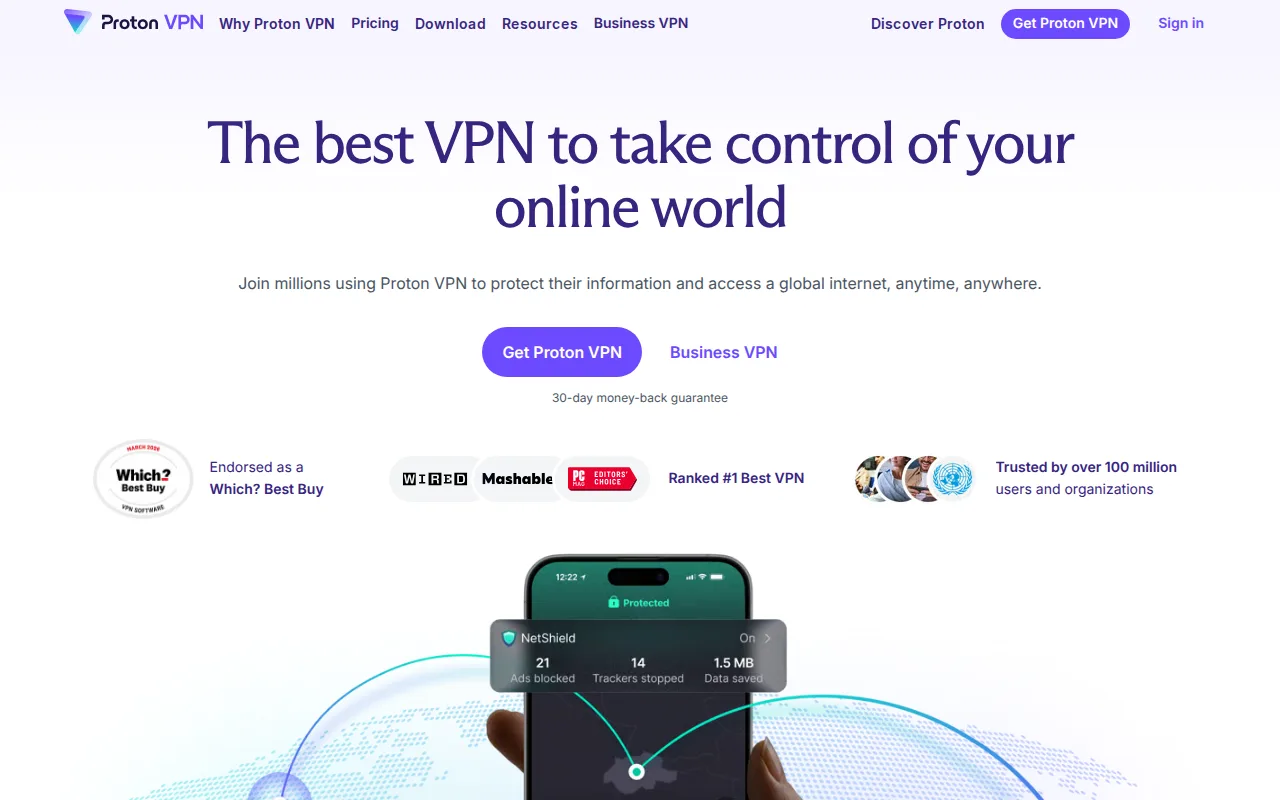
Proton VPN and ExpressVPN both offer apps across major platforms with a kill switch, but Proton VPN has a free tier with no data cap at all, unlike ExpressVPN which has no free tier whatsoever and requires payment upfront even for a trial (refundable within 30 days). Proton VPN's paid VPN Plus tier is $4.99/month billed annually, well under ExpressVPN Basic's cheapest 2-year rate of $2.79/month is actually lower, but VPN Plus unlocks 10 simultaneous devices versus ExpressVPN Pro's 14-device cap at a much higher $19.99/month monthly price. Proton VPN's client apps are open source and independently audited, and its VPN Accelerator claims up to a 400% throughput boost over standard WireGuard on lossy connections. Where ExpressVPN still wins: it has a much larger, more diversified server count with 3,000+ servers across 105 countries, versus Proton VPN's roughly 2,000+ servers in 140+ countries on paid plans, and ExpressVPN's proprietary Lightway protocol is a more specific speed claim than Proton's general VPN Accelerator, so users needing ExpressVPN's broadest server footprint for geo-unblocking should stay put.
Compared to ExpressVPN: a free tier with no data cap at all vs ExpressVPN's complete lack of a free tier, open-source and independently audited client apps, and VPN Plus at $4.99/month vs ExpressVPN Pro at $19.99/month monthly for comparable device counts.
Wins:Free tier has no data cap at all, unlike ExpressVPN which offers no free tier whatsoever · Open-source, independently audited client apps across all major platforms · VPN Plus at $4.99/month is far cheaper than ExpressVPN Pro's $19.99/month monthly rate
Loses:Fewer total servers (2,000+ in 140+ countries) than ExpressVPN's 3,000+ servers in 105 countries · Free tier is limited to one device and a small pool of server locations · No documented equivalent to ExpressVPN's proprietary Lightway protocol
Pros
- Free tier has no data cap, unusual among competitors' free plans.
- Open-source, independently audited apps across Windows, macOS, Linux, iOS, and Android.
- VPN Plus unlocks 2,000+ servers in 140+ countries with streaming-service unblocking.
- Built-in ad and malware blocker plus a kill switch on paid plans.
Cons
- Free tier limits users to one device and a small set of server locations.
- Proton Unlimited bundles Mail, Drive, Pass, and Calendar, raising cost for users who want VPN only.
- Fewer total server count than the largest competitors like NordVPN or ExpressVPN.
Pricing: Free tier · paid from $4.99/mo — Proton VPN Plus is $4.99/month billed annually vs ExpressVPN Basic at $2.79/month on a 2-year plan or $19.99/month for ExpressVPN Pro
2.Mullvad — best ExpressVPN alternative for privacy-conscious individuals who want anonymous signup and a single flat-rate plan instead of tiered VPN pricing
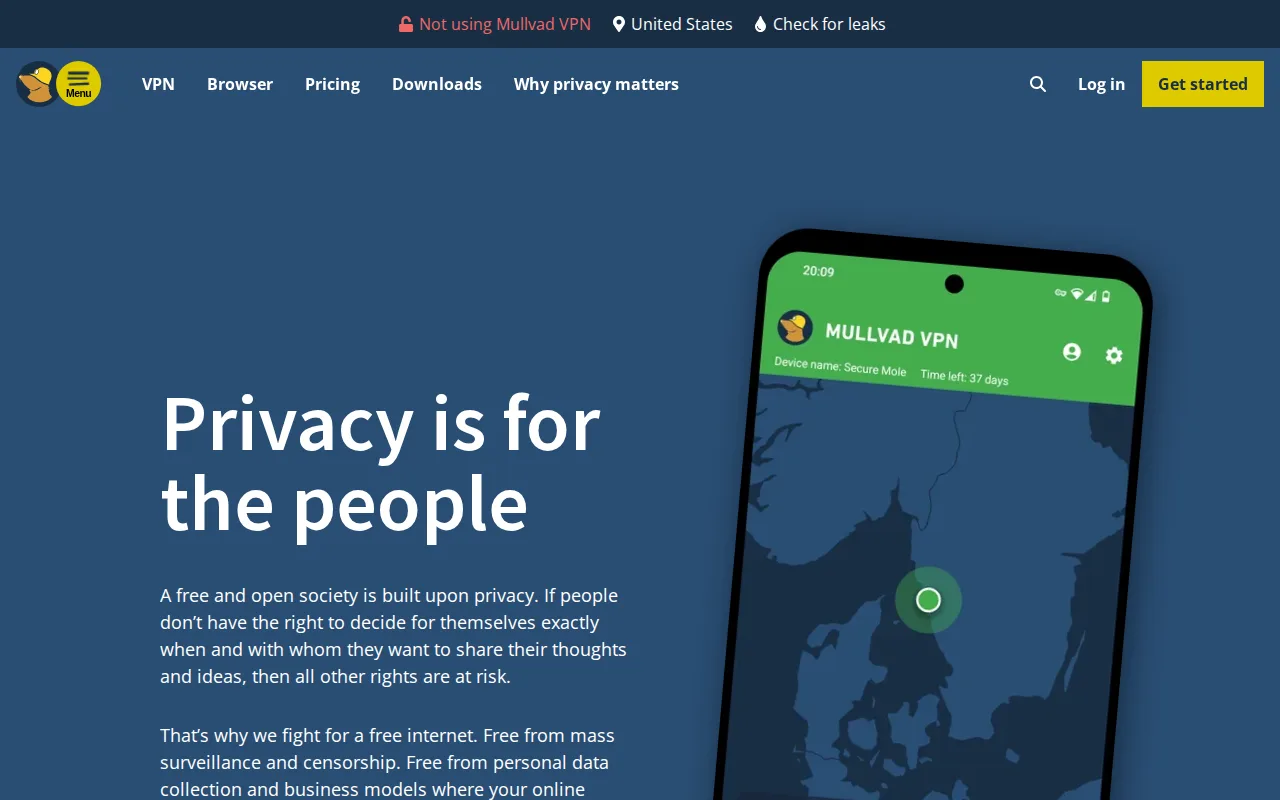
Mullvad and ExpressVPN both encrypt traffic across major desktop and mobile platforms, but Mullvad requires no email address or personal information to sign up at all — it generates a random account number, and users can pay in cash or cryptocurrency for full anonymity, a privacy model ExpressVPN's account-based signup doesn't offer. Mullvad charges a single flat rate of €5/month regardless of plan length, versus ExpressVPN's tiered structure where the advertised low rate ($2.79/month) only applies on a 2-year commitment and jumps to $12.99/month billed monthly. Mullvad's client apps are fully open source under GPL-3.0 and published on GitHub, with regular independent security audits. Where ExpressVPN still wins: it has a much larger server network across 105 countries versus Mullvad's smaller footprint, which matters for streaming geo-unblocking, and ExpressVPN offers a discount for paying multiple years in advance while Mullvad's flat €5/month never gets cheaper with a longer commitment, so bargain-hunters willing to prepay 2 years should compare both rates directly.
Compared to ExpressVPN: no email or personal information required to sign up, cash and cryptocurrency payment options for full anonymity, and a single flat €5/month rate with no long-term discount versus ExpressVPN's tiered 1-month/1-year/2-year pricing.
Wins:No email or personal information required to sign up, unlike ExpressVPN · Cash and cryptocurrency payment options support full anonymity · Client apps are open source (GPL-3.0) and published on GitHub, with regular independent audits
Loses:Smaller server network than ExpressVPN's 3,000+ servers in 105 countries, which can matter for streaming · No discount for paying annually or multi-year in advance, unlike ExpressVPN's 2-year rate · No bundled extras (password manager, identity protection) that ExpressVPN's Pro tier adds
Pros
- Anonymous signup with a random account number; no email or personal information required.
- Cash and cryptocurrency payment options for users who want to avoid linking a card to the account.
- Client apps are open source (GPL-3.0) and published on GitHub, with regular independent security audits.
- DAITA traffic-analysis defense and quantum-resistant tunnel options beyond standard WireGuard.
Cons
- No free tier; every user pays the same flat €5/month with no trial beyond the money-back guarantee window.
- No discount for paying annually or multi-year in advance, unlike competitors that cut price sharply on longer commitments.
- Smaller server network than large competitors like NordVPN or ExpressVPN, which can matter for streaming geo-unblocking.
- No bundled extras (password manager, ad blocker as a separate product, antivirus) that some competitors include in higher tiers.
Pricing: Custom pricing — Mullvad is a flat €5/month with no long-term discount vs ExpressVPN's lowest rate of $2.79/month on a 2-year plan (verified undefined NaN, NaN)
3.IVPN — best ExpressVPN alternative for privacy-conscious users who want an open-source VPN client and are willing to pay a premium for anonymous sign-up and payment options over the cheapest VPN on the market
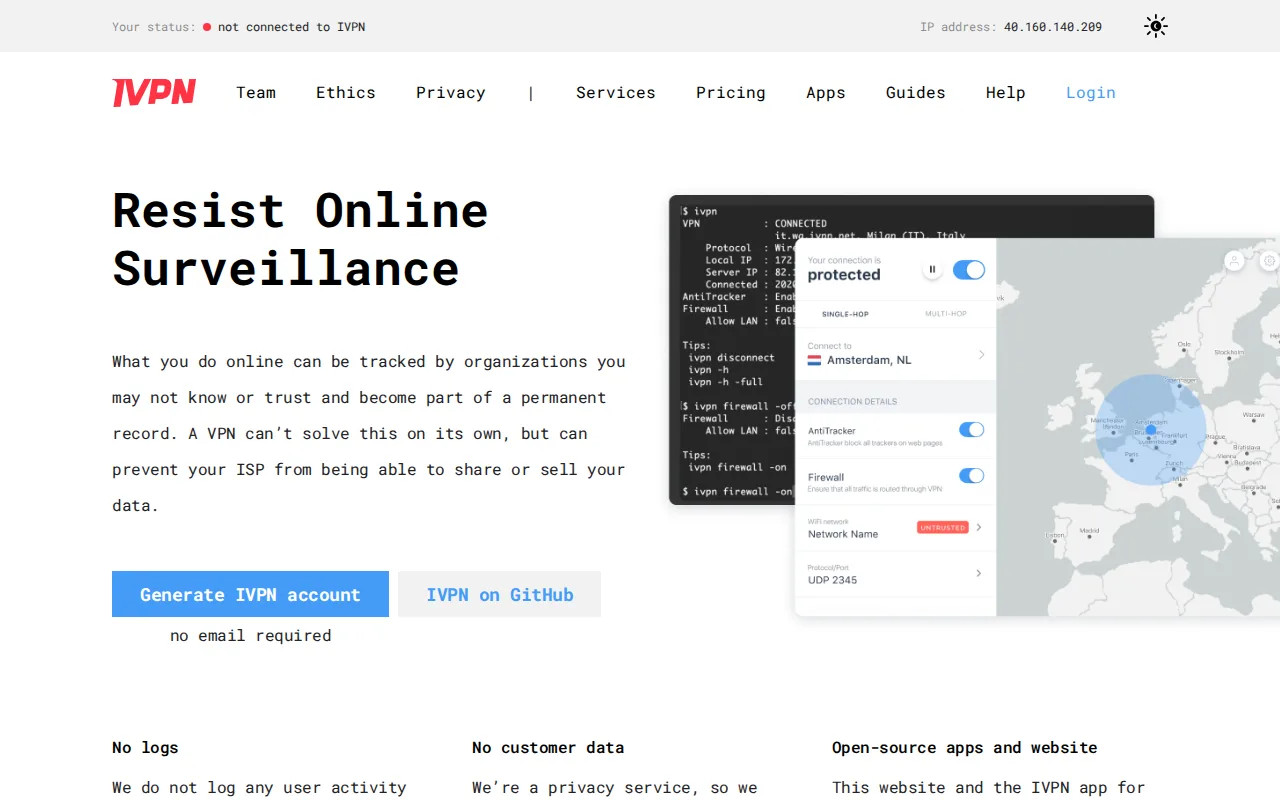
IVPN and ExpressVPN both support WireGuard, OpenVPN, and a kill switch across Windows, macOS, Linux, iOS, and Android, but IVPN's apps and its own website are open source, a transparency level ExpressVPN's closed-source apps don't match. IVPN requires no email address to create an account and accepts cash and cryptocurrency (Bitcoin, Monero) payments alongside cards, a privacy-first signup model ExpressVPN's account system doesn't offer. IVPN's WireGuard implementation is configured with quantum-resistant key exchange by default, and its V2Ray obfuscation mode and multi-hop routing handle censored-network use cases ExpressVPN's data doesn't specifically address. Where ExpressVPN still wins: IVPN's current subscription pricing could not be verified because its pricing page renders numbers via JavaScript, whereas ExpressVPN's pricing ($2.79-$19.99/month depending on tier and term) is clearly published, and IVPN's server network is smaller than ExpressVPN's 3,000+ servers in 105 countries, a real gap for users prioritizing broad streaming geo-unblocking.
Compared to ExpressVPN: apps and the website are fully open source and published on GitHub, no email required to create an account with cash or cryptocurrency payment options, and current subscription pricing could not be verified versus ExpressVPN's clearly published rates.
Wins:Apps and website are open source and published on GitHub, unusual for a VPN provider · No email required to create an account; cash and cryptocurrency payment options support anonymous sign-up · WireGuard configured with quantum-resistant key exchange by default
Loses:Current subscription pricing was not captured, since IVPN's pricing page renders numbers via JavaScript · Smaller server network than ExpressVPN's 3,000+ servers across 105 countries · No free tier or trial beyond standard money-back guarantees, similar to ExpressVPN's lack of a free tier
Pros
- Apps and the website are open source and published on GitHub, unusual for a VPN provider.
- No email required to create an account; cash and cryptocurrency payment options support anonymous sign-up.
- V2Ray obfuscation and multi-hop routing handle censored-network and higher-privacy use cases most consumer VPNs skip.
- WireGuard is configured with quantum-resistant key exchange by default.
Cons
- Smaller server network than large consumer VPNs like NordVPN, ExpressVPN, or Surfshark.
- No free tier; every plan requires payment from the start.
- Two-tier plan structure (Standard/Pro) is less feature-rich out of the box than competitors bundling multi-hop and obfuscation into a single plan.
- Streaming-service unblocking is not a stated priority the way it is for mainstream VPN marketing.
Pricing: Custom pricing — IVPN's exact subscription price was not independently verified vs ExpressVPN's published $2.79-$19.99/month range