6 Best Alternatives to DuckDuckGo for Android in 2026
By Noahlast updated
Compared: DuckDuckGo alternatives that run on Android
| Alternative | Best for | Standout | Biggest weakness | Learning curve | Price |
|---|---|---|---|---|---|
| DuckDuckGoreference | privacy-conscious users who want tracker blocking and non-personalized search by default without paying, plus an optional bundle of VPN and identity protection for those who want it | Search results and ads are not built from a stored personal profile, and the browser blocks third-party trackers by default without requiring separate extensions or configuration. | Search result relevance and freshness can lag Google for niche, local, or highly current queries, since DuckDuckGo relies partly on licensed results from Bing and other sources rather than its own comprehensive index. | Low | Free tier · paid from $9.99/mo |
| Google Meet | individuals and teams already using Gmail, Calendar, and Google Workspace who want video calls that launch directly from a calendar invite with no separate app install | Gemini-powered automatic note-taking, live meeting summaries, and real-time translation are built into paid tiers, generated directly inside the call rather than through a separate transcription add-on. | The free tier caps group calls at 60 minutes with no recording, and Google Workspace's plan-comparison page does not display exact per-user dollar prices without going through a purchase or sign-in flow, making cost comparison against Zoom or Microsoft Teams harder upfront. | Low | Free |
| Brave | privacy-conscious users who want built-in ad and tracker blocking plus an optional device-wide VPN without installing separate browser extensions | Ships with ad and tracker blocking, script blocking, and fingerprint randomization built in and on by default, with no extensions needed to match what competitors require several add-ons to replicate. | Brave Rewards' opt-in BAT-token ad program has drawn criticism from users who find its ad-serving and crypto-wallet defaults confusing to disable, and the VPN/Firewall add-on requires a separate $9.99/month subscription rather than being bundled free. | Low | Free tier · paid from $9.99/mo |
| Startpage | privacy-conscious users who want Google-quality search results without personalized ad tracking or search history logging | Delivers Google's own search results while stripping trackers and not storing IP addresses or search history, plus an Anonymous View proxy for opening results without revealing your identity to the destination site. | Startpage is not open source and its privacy claims cannot be independently audited the way an open-source alternative's can, and since 2019 majority ownership by adtech company System1 has drawn scrutiny from privacy advocates who question how the contextual-advertising business model is implemented behind the scenes. | Low | Free |
| Ecosia | privacy-conscious users who want a default search engine that funds reforestation instead of paying for search | Search-ad profits fund tree planting and climate projects directly, with Ecosia reporting over 230 million trees funded as of 2025 and publishing its financial results. | Search results are delivered through a Bing/Microsoft Advertising partnership rather than an independent index, so result quality and coverage track Bing's rather than a purpose-built search index, and Ecosia does not publish a per-query breakdown of how much of any given search funds tree planting. | Low | Free |
| Bing | users who want Microsoft's Copilot AI assistant integrated directly into search results, or who are already inside the Windows/Edge ecosystem | Copilot is built directly into the search results page, letting users ask follow-up questions and get AI-generated answers alongside traditional links without leaving Bing. | Bing holds a small fraction of Google's global search market share, so many location-specific and long-tail queries return thinner or less locally relevant results, and most publishers optimize their content for Google first. | Low | Free |
| Google Search | anyone doing general web search who wants the broadest, most current index along with integrated Maps, Shopping, and AI Overviews, without paying anything | The largest and most frequently updated web index of any search engine, combined with Maps, Shopping, Flights, and AI-generated Overviews built directly into the results page. | Results pages are increasingly dominated by ads and AI Overviews above organic links, and search history is linked to a signed-in Google account for ad personalization by default unless a user opts into Incognito mode or disables activity tracking. | Low | Free |
 DuckDuckGo
 Google Meet
 Brave
Brave Startpage
 Ecosia
 Bing
Bing Google Search
1.Google Meet — best DuckDuckGo alternative for individuals and teams already using Gmail, Calendar, and Google Workspace who want video calls that launch directly from a calendar invite with no separate app install
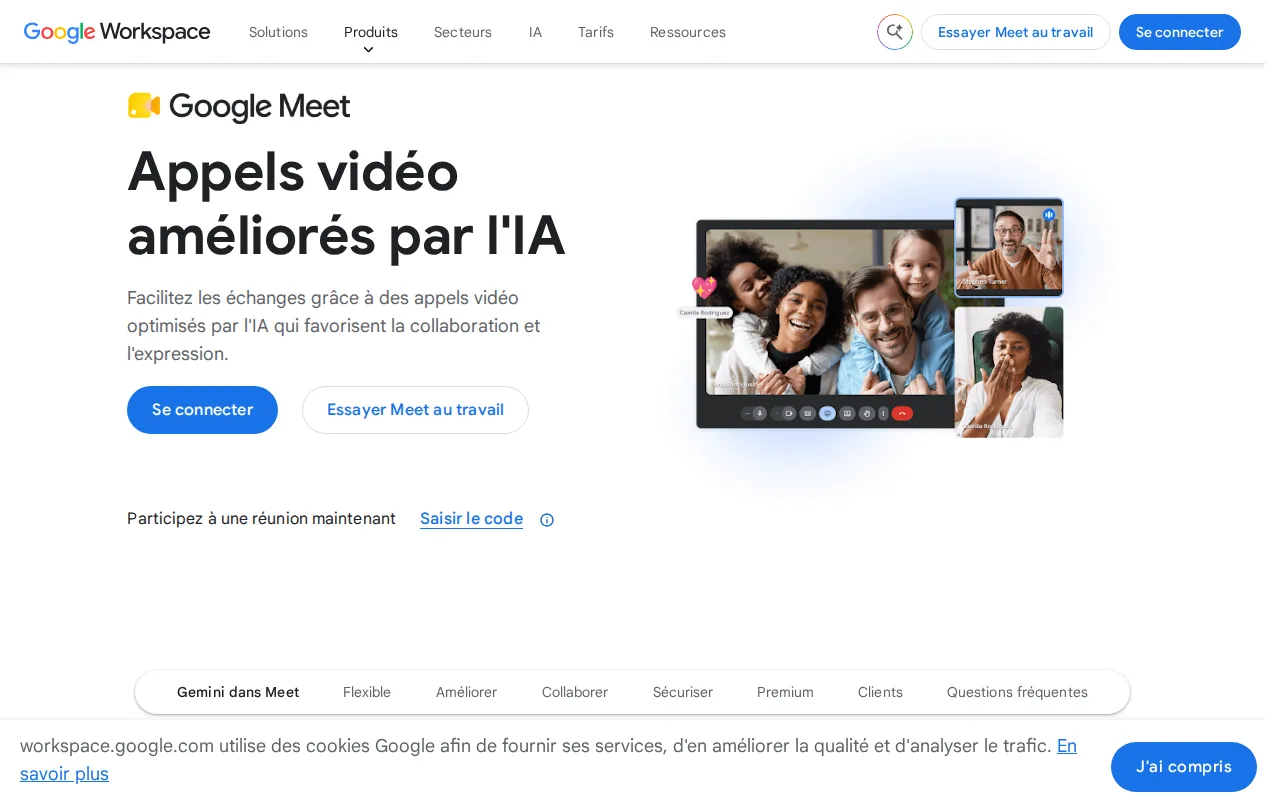
Google Meet is the best DuckDuckGo alternative for a specific adjacent use case: users already inside Gmail and Calendar who want video calls launching directly from a calendar invite, a product category DuckDuckGo's search-and-browser focus doesn't cover at all. Google Meet's free tier supports up to 100 participants and 60-minute group calls at $0, the same free baseline as DuckDuckGo's own core product, and Gemini-powered features generate live captions, real-time translation, and automatic meeting notes on paid tiers, capabilities entirely outside DuckDuckGo's search-and-privacy-tools scope. Meetings require no separate software install on desktop, launching straight from a Google Calendar invite or direct link. DuckDuckGo remains the far more relevant choice for anyone whose actual need is private, non-tracked web search rather than video conferencing: Google Meet ties usage to a Google account and, on paid Workspace tiers, doesn't display exact per-user dollar prices without a purchase or sign-in flow, a pricing-transparency gap DuckDuckGo's own free core search and optional flat-rate $9.99/month Privacy Pro subscription avoid entirely. Google Meet also has no native Windows or macOS desktop app, running only through the browser or mobile apps. For anyone who actually needs video conferencing tied to Google Workspace, though, Google Meet fills a gap DuckDuckGo's product doesn't attempt to address.
Compared to DuckDuckGo: video conferencing with Calendar integration and Gemini AI features vs DuckDuckGo's search-and-browser-only scope, free tier for 100 participants/60 minutes vs DuckDuckGo's free non-tracked search, paid Workspace tiers with undisclosed per-user pricing vs DuckDuckGo's flat $9.99/month Privacy Pro
Wins:Meetings launch directly from a Google Calendar invite with no separate app download required on desktop · Gemini-powered live captions, real-time translation, and automatic meeting notes on paid tiers, a category DuckDuckGo's product doesn't address · Free tier supports up to 100 participants, generous enough for most casual or small-team video calls
Loses:Not a search or privacy tool at all; it serves an entirely different use case than DuckDuckGo's core search-and-browser product · Exact per-user pricing for paid Workspace tiers isn't shown without a purchase or sign-in flow, unlike DuckDuckGo's flat, published $9.99/month Privacy Pro price · No native Windows or macOS desktop app, unlike DuckDuckGo's browser, which runs natively on Windows, macOS, Linux, iOS, and Android
Pros
- Meetings launch directly from a Google Calendar invite with no separate app download required on desktop.
- Gemini features generate live captions, real-time translation, and automatic meeting notes on paid tiers.
- Free tier supports up to 100 participants, generous enough for most small-team or casual calls.
- Tight integration with Google Docs, Sheets, and Slides for in-meeting collaboration.
Cons
- Free tier caps group calls at 60 minutes and includes no recording option.
- No native Windows or macOS desktop app; runs only through the browser or mobile apps.
- Exact per-user pricing for Workspace Business Starter, Standard, and Plus is not shown on the plan-comparison page without starting a purchase flow.
- Meeting recording and Studio Sound require at least the Business Standard tier, not available on Business Starter.
Pricing: Free — $0 free tier (100 participants, 60-minute calls); paid Workspace tiers undisclosed vs DuckDuckGo's $0 free core plus transparent $9.99/month optional Privacy Pro
2.Brave — best DuckDuckGo alternative for privacy-conscious users who want built-in ad and tracker blocking plus an optional device-wide VPN without installing separate browser extensions
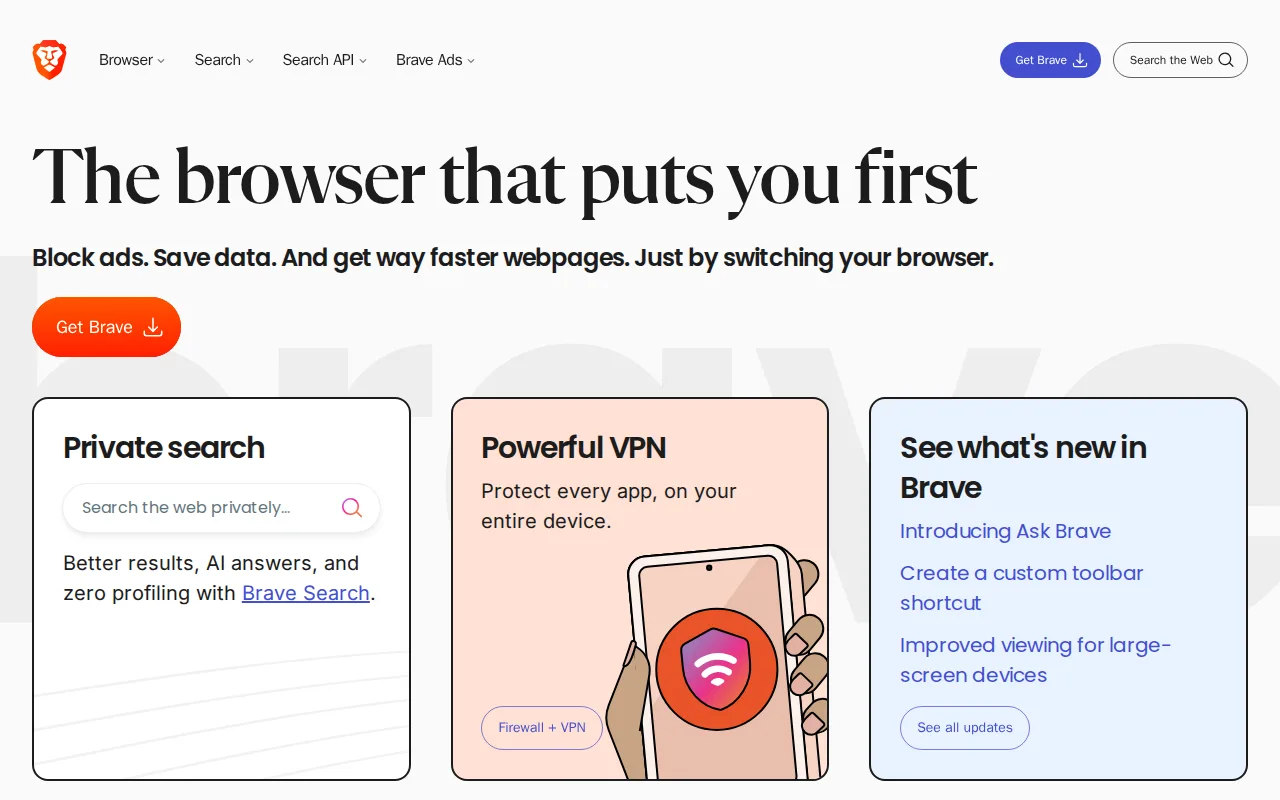
Brave is the best DuckDuckGo alternative for users who want ad and tracker blocking built into the browser itself rather than relying on DuckDuckGo's own separate browser app. Brave's browser is free on every platform with ad and tracker blocking on by default, matching DuckDuckGo's own free, no-account browser and search combination, and Brave's client code is open source under the Mozilla Public License 2.0, letting security researchers audit it directly, a transparency DuckDuckGo's closed-source browser doesn't offer. Brave Search, the default engine inside the Brave browser, runs on an independent index rather than reselling another provider's results, a different approach from DuckDuckGo's own search, which relies partly on licensed results from Bing. Brave's optional Firewall + VPN add-on costs $9.99/month or $99.99/year, priced identically to DuckDuckGo's own Privacy Pro subscription at $9.99/month, but Brave's VPN encrypts all device traffic across up to 10 devices rather than bundling data-broker removal and identity restoration the way DuckDuckGo's Privacy Pro does. DuckDuckGo remains the better choice for anyone who wants a simpler privacy tool without a built-in crypto wallet or Brave Rewards' opt-in BAT-token ad program, which some users find confusing to disable. For built-in tracker blocking with an independently auditable browser, though, Brave is the stronger match.
Compared to DuckDuckGo: open-source (MPL-2.0) browser code vs DuckDuckGo's closed-source browser, independent Brave Search index vs DuckDuckGo's partly Bing-licensed results, $9.99/month VPN covering 10 devices vs DuckDuckGo's $9.99/month Privacy Pro bundling VPN plus data-broker removal and identity restoration
Wins:Client code is open source (MPL-2.0) and independently auditable, unlike DuckDuckGo's closed-source browser · Brave Search runs on an independent index rather than reselling another provider's results, unlike DuckDuckGo's partly Bing-licensed search · Ships with script blocking and fingerprint randomization on by default, beyond DuckDuckGo's documented tracker-blocking feature set
Loses:Brave VPN covers device-wide traffic but doesn't bundle data-broker removal or identity theft restoration the way DuckDuckGo's Privacy Pro does at the same $9.99/month price · Brave Rewards' opt-in BAT-token ad program confuses some users about what's on by default, a complexity DuckDuckGo's simpler model avoids · Built on Chromium, inheriting Google's engine-level roadmap, while DuckDuckGo's browser doesn't share that dependency the same way
Pros
- Blocks ads and trackers by default with no extensions required to set up.
- Client code is open source (MPL-2.0) and independently auditable.
- Built-in Brave Search runs on an independent index rather than reselling another engine's results.
- Available on every major desktop and mobile platform with nearly 160 languages supported.
Cons
- Brave Rewards' opt-in BAT-token ad program confuses some users about what's on by default versus optional.
- Brave VPN is a separate $9.99/month subscription, not bundled free with the browser.
- Built on Chromium, so it inherits Google's engine-level decisions and roadmap even while blocking Google's tracking.
- Some sites misidentify Brave's fingerprint randomization as bot activity, occasionally breaking site functionality.
Pricing: Free tier · paid from $9.99/mo — $0 free browser, $9.99/month optional VPN add-on vs DuckDuckGo's $0 free search/browser, $9.99/month Privacy Pro (VPN plus data-broker removal and identity restoration) (verified undefined NaN, NaN)
3.Startpage — best DuckDuckGo alternative for privacy-conscious users who want Google-quality search results without personalized ad tracking or search history logging
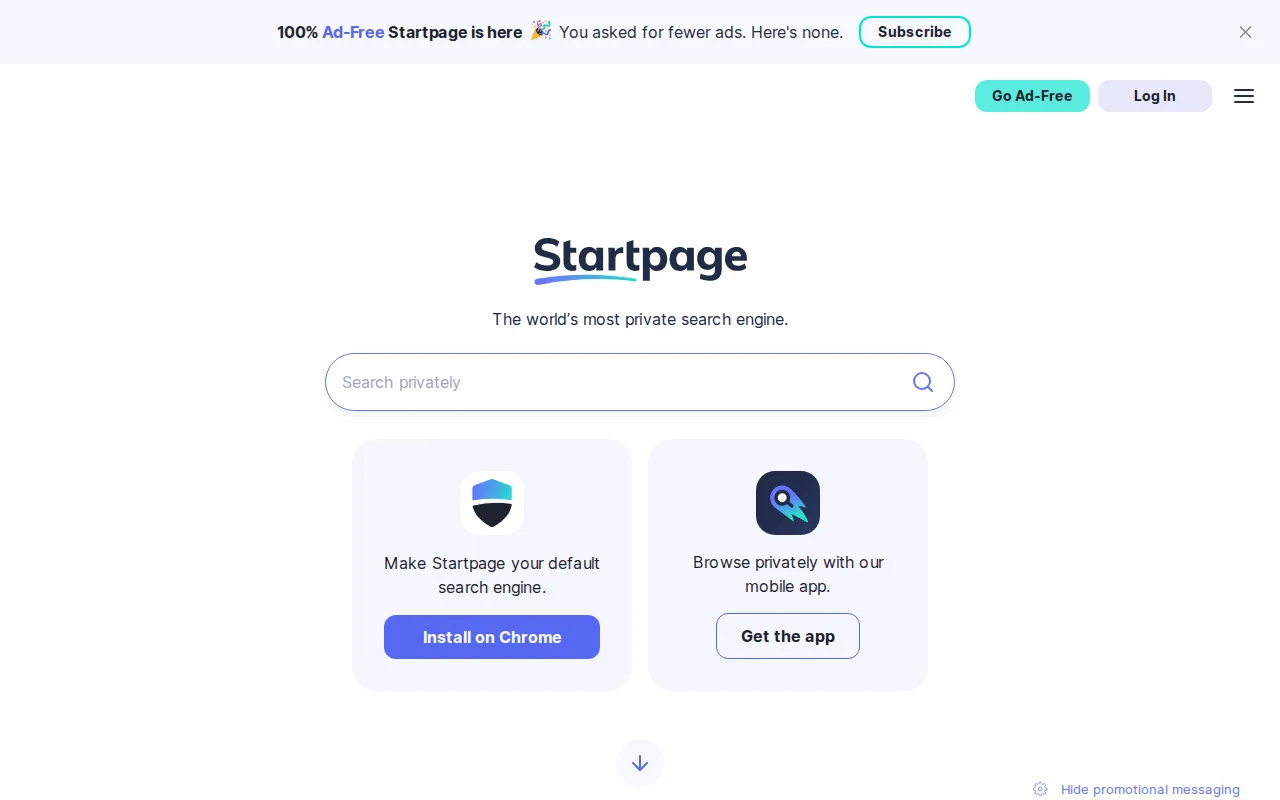
Startpage is the best DuckDuckGo alternative for users who specifically want Google's own search-result quality without Google's tracking, delivered through a private proxy rather than DuckDuckGo's own blended index. Startpage doesn't store IP addresses or search history, matching DuckDuckGo's own non-tracking model, and it adds an Anonymous View proxy that lets users open search results without revealing their IP to the destination site, a feature DuckDuckGo's own listing doesn't document. Startpage is free with no paid consumer tier at all, a simpler pricing structure than DuckDuckGo, which sells an optional $9.99/month Privacy Pro subscription. Startpage has a longer operating history than DuckDuckGo, dating back to 1998 as Ixquick, and is available in 82 languages. DuckDuckGo remains the better choice for anyone who wants an independently auditable privacy story or a bundled VPN and identity-protection subscription: Startpage is not open source, so its no-logging claims can't be verified in code the way an open-source competitor's could, and since 2019 its majority ownership by adtech company System1 has drawn scrutiny from privacy advocates, a corporate-ownership concern DuckDuckGo's own listing doesn't carry. Startpage also has no dedicated Privacy Pro-style bundle offering a VPN or data-broker removal, unlike DuckDuckGo. For Google-quality results with tracking stripped out, though, Startpage delivers what DuckDuckGo's own blended index doesn't fully replicate.
Compared to DuckDuckGo: delivers Google's own search results without tracking vs DuckDuckGo's partly Bing-licensed index, Anonymous View IP-hiding proxy vs no equivalent documented in DuckDuckGo's listing, $0 free with no paid tier vs DuckDuckGo's $0 free core plus $9.99/month optional Privacy Pro
Wins:Delivers Google's own search-result quality while stripping trackers and not storing IP addresses or search history · Anonymous View proxy lets users open results without revealing their real IP to the destination site, a feature DuckDuckGo's listing doesn't document · Entirely free with no paid tier at all, a simpler structure than DuckDuckGo's optional $9.99/month Privacy Pro upsell
Loses:Not open source, so its no-logging claims can't be independently verified in code, unlike an audited alternative · Majority ownership by adtech company System1 since 2019 has drawn privacy-community scrutiny, a corporate-ownership concern DuckDuckGo's listing doesn't carry · No bundled VPN, data-broker removal, or identity-theft restoration, unlike DuckDuckGo's $9.99/month Privacy Pro subscription
Pros
- Free to use with no paid tier required for full functionality.
- Returns Google-quality search results without Google's personalized tracking.
- Anonymous View proxy lets users open search results without revealing their IP to the destination site.
- Available in 82 languages with a long operating history dating back to 1998 as Ixquick.
Cons
- Not open source, so its no-logging claims cannot be independently verified in code.
- Majority ownership by adtech company System1 since 2019 has raised privacy-community concerns about the business model.
- Relies on Google's index, so search quality and any Google-side biases carry through to Startpage results.
- No dedicated business or enterprise tier; it is a consumer-only product.
Pricing: Free — $0 free, no paid tier at all vs DuckDuckGo's $0 free core plus an optional $9.99/month Privacy Pro subscription
4.Ecosia — best DuckDuckGo alternative for privacy-conscious users who want a default search engine that funds reforestation instead of paying for search
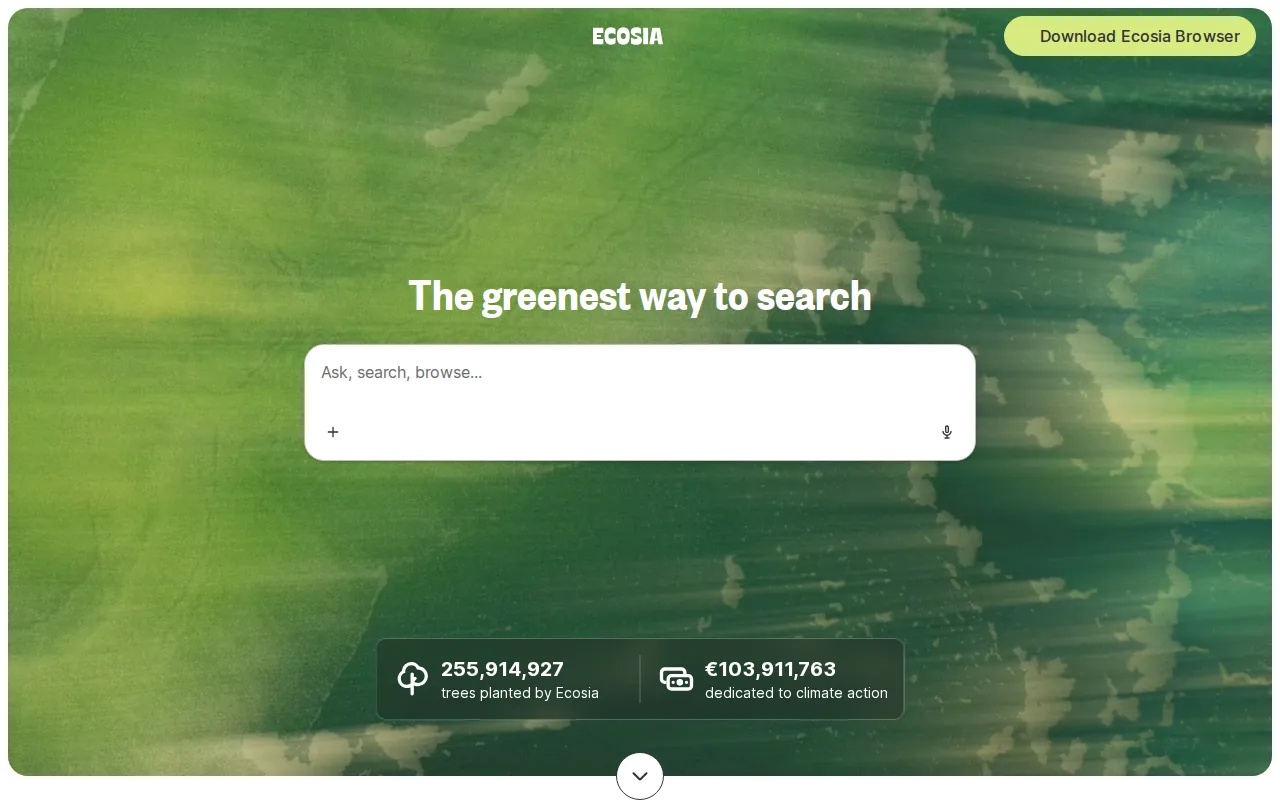
Ecosia is the best DuckDuckGo alternative for users who want their everyday searches to fund a cause rather than just avoid tracking. Ecosia has funded over 230 million trees planted as of 2025 according to its own reporting, and it publishes its financial results publicly, including roughly EUR43.2 million in 2025 revenue, a transparency practice DuckDuckGo's own listing doesn't document to the same degree. Ecosia is entirely free with no paid tier of any kind, a simpler structure than DuckDuckGo, which sells an optional $9.99/month Privacy Pro subscription bundling a VPN and identity protection. Ecosia's 2018 restructuring handed profit-taking rights to the nonprofit Purpose Foundation, meaning the company can't be sold for shareholder profit, a governance commitment distinct from DuckDuckGo's own corporate structure. DuckDuckGo remains the better choice for anyone whose primary goal is avoiding tracking rather than funding reforestation: Ecosia's search results are delivered through a Bing/Microsoft Advertising revenue-sharing partnership rather than an independent index, and Ecosia doesn't publish a per-query breakdown of how much of any given search actually funds tree planting, while DuckDuckGo's core value proposition is specifically built around non-personalized, non-tracked search rather than a cause-based revenue model. For users who want ad revenue to fund something beyond the search itself, though, Ecosia offers a mission DuckDuckGo's listing doesn't share.
Compared to DuckDuckGo: search-ad profits fund tree planting (230M+ trees as of 2025) vs DuckDuckGo's privacy-focused, non-monetized-cause model, publicly reported EUR43.2M 2025 revenue vs DuckDuckGo's undisclosed financials, $0 free with no paid tier vs DuckDuckGo's $0 free core plus $9.99/month optional Privacy Pro
Wins:Search-ad profits fund tree planting and climate projects, with over 230 million trees funded as of 2025 by Ecosia's own reporting · Publishes financial results publicly, including roughly EUR43.2 million in 2025 revenue, more transparency than DuckDuckGo's listing documents · Entirely free with no paid tier at all, simpler than DuckDuckGo's optional $9.99/month Privacy Pro upsell
Loses:Search results are delivered through a Bing/Microsoft Advertising partnership rather than an independent index, a dependency DuckDuckGo's blended-source model shares but doesn't emphasize the same way · No per-query breakdown of how much of any given search funds tree planting, reducing transparency at the individual-search level · No bundled VPN, data-broker removal, or identity-theft restoration, unlike DuckDuckGo's $9.99/month Privacy Pro subscription
Pros
- Entirely free with no subscription tier or paywalled features.
- Ad revenue funds tree planting and climate projects rather than shareholder payouts.
- Available as a website, browser extensions, a standalone Chromium browser, and iOS/Android apps.
- Publishes its financial results and tree-planting counts publicly rather than keeping them private.
Cons
- Search results are sourced through a revenue-sharing partnership with Bing rather than an independent index.
- No enterprise or advanced privacy tier; the product is a single free offering for all users.
- The standalone Ecosia browser is a newer 2024 product with a smaller feature set than established browsers like Chrome or Firefox.
- As a for-profit GmbH, Ecosia's tree-planting funding depends on continued ad revenue, which fluctuates with search ad market conditions.
Pricing: Free — $0 free, no paid tier at all vs DuckDuckGo's $0 free core plus an optional $9.99/month Privacy Pro subscription
5.Bing — best DuckDuckGo alternative for users who want Microsoft's Copilot AI assistant integrated directly into search results, or who are already inside the Windows/Edge ecosystem
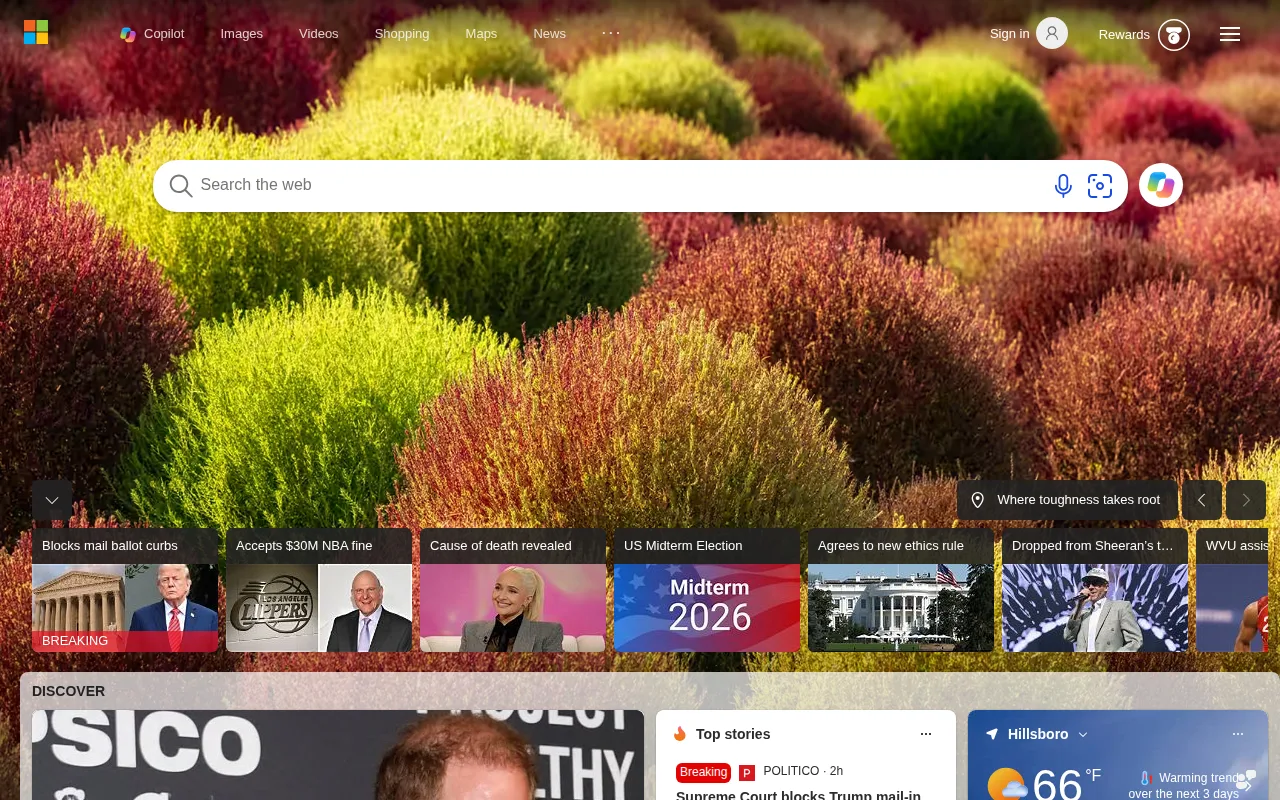
Bing is the best DuckDuckGo alternative for users already inside the Windows/Edge ecosystem who want Copilot's AI assistant embedded directly into the search results page, a feature DuckDuckGo's own listing doesn't document to the same depth despite DuckDuckGo's separate Duck.ai chat interface. Bing is free and ad-supported with no paid tier, the same $0 baseline as DuckDuckGo's core search product, and Microsoft Rewards pays users points for everyday searches, redeemable for gift cards and Xbox credit, a loyalty program DuckDuckGo's listing has no equivalent for. Bing is the default search engine in Windows and Microsoft Edge, so no setup is required for Microsoft users, unlike DuckDuckGo, which requires actively switching a default search provider. DuckDuckGo remains the better choice for anyone prioritizing non-personalized, non-tracked search: Bing's results are ad-supported and tied to Microsoft's broader account ecosystem, while DuckDuckGo doesn't log search history tied to an identity and blocks third-party trackers by default in its own browser. Bing also holds a small fraction of Google's global search market share, so location-specific and long-tail queries return thinner results, a limitation DuckDuckGo's own listing shares since it also relies partly on licensed results rather than a fully independent index. For built-in AI answers and Microsoft ecosystem integration, though, Bing offers a workflow fit DuckDuckGo doesn't target.
Compared to DuckDuckGo: Copilot AI assistant built directly into search results vs DuckDuckGo's separate Duck.ai chat interface, Microsoft Rewards points program vs DuckDuckGo's no-rewards model, default in Windows/Edge vs DuckDuckGo requiring an active default-search switch
Wins:Copilot AI assistant is built directly into the search results page, letting users ask follow-up questions without a separate app or tab · Microsoft Rewards pays points for everyday searches and purchases, redeemable for gift cards and Xbox credit · Default search engine in Windows and Microsoft Edge, requiring no setup for hundreds of millions of existing users
Loses:Search history and ad targeting are tied to Microsoft's broader account ecosystem, unlike DuckDuckGo's non-personalized, non-tracked search model · Small fraction of Google's global search market share means thinner results for hyper-local and long-tail queries · No dedicated privacy-bundle subscription like DuckDuckGo's Privacy Pro, which adds a VPN and identity protection for $9.99/month
Pros
- Copilot AI assistant is built into the search results page, not a separate app.
- Microsoft Rewards pays points for everyday searches, redeemable for gift cards and Xbox credit.
- Default search engine in Windows and Microsoft Edge, so no setup is required for Microsoft users.
- Free with no paid tier or account required to search.
Cons
- Small global market share compared to Google means thinner results for hyper-local and long-tail queries.
- Most publishers and SEO practices optimize for Google first, which can affect result freshness and depth on Bing.
- Ad-supported results include sponsored placements mixed with organic results.
Pricing: Free — $0 free, ad-supported, no paid tier, matching DuckDuckGo's own free core search; DuckDuckGo additionally offers optional $9.99/month Privacy Pro that Bing has no equivalent for
6.Google Search — best DuckDuckGo alternative for anyone doing general web search who wants the broadest, most current index along with integrated Maps, Shopping, and AI Overviews, without paying anything
Google Search is the best DuckDuckGo alternative for anyone who prioritizes result breadth and freshness over DuckDuckGo's non-tracking privacy model. Google Search holds over 90% of global search market share, the widest adoption of any product in this comparison, and its results integrate Google Maps, Shopping, Flights, and a Knowledge Graph directly, depth DuckDuckGo's own listing doesn't claim to match since DuckDuckGo relies partly on licensed results from Bing and other sources rather than its own comprehensive index. Google Search is entirely free with no paid consumer tier, the same $0 baseline as DuckDuckGo's own core search product. DuckDuckGo remains the better choice for anyone who wants search that isn't built from a stored personal profile: Google Search links search history to a signed-in account by default for ad personalization, a practice DuckDuckGo's own listing calls out as exactly what it avoids, and Google's results pages carry more ad and AI-Overview real estate above organic links than a decade ago. DuckDuckGo also doesn't require opting into Incognito mode to get non-personalized results, while Google does. For general search breadth and the most current index available, though, Google Search's scale outmatches what DuckDuckGo's privacy-first model can offer.
Compared to DuckDuckGo: over 90% global market share and the largest web index vs DuckDuckGo's smaller, partly Bing-licensed index, integrated Maps/Shopping/Flights/Knowledge Graph vs DuckDuckGo's leaner results page, search history tied to a signed-in account by default vs DuckDuckGo's non-personalized, non-tracked search
Wins:Over 90% global search market share, the widest adoption of any product in this comparison, versus DuckDuckGo's much smaller footprint · Deep integration with Maps, Shopping, Flights, and the Knowledge Graph directly in results, beyond what DuckDuckGo's listing documents · Free with no paid tier, the same $0 baseline as DuckDuckGo's own core search product
Loses:Search history is tied to a signed-in Google account and used for ad targeting by default, unlike DuckDuckGo's non-personalized model · Results pages carry more ad and AI-Overview real estate above organic links, a trade-off DuckDuckGo's leaner results avoid · No privacy-first mode without manually enabling Incognito, unlike DuckDuckGo's default non-tracking behavior
Pros
- Largest and most current web index of any mainstream search engine.
- Deep integration with Maps, Shopping, Flights, and the Knowledge Graph directly in results.
- Free with no paid tier required for full functionality.
- Default search provider across Chrome, Android, and most browsers, so no setup is needed.
Cons
- Results pages carry more ad and AI-Overview real estate above organic links than a decade ago.
- Search history is tied to a signed-in Google account and used for ad targeting by default.
- AI Overviews have been documented producing inaccurate or misleading summaries on some queries.
- No privacy-first mode without manually enabling Incognito or disabling Web & App Activity.
Pricing: Free — $0 free, no paid tier, matching DuckDuckGo's own free core search; DuckDuckGo additionally offers an optional Privacy Pro tier at $9.99/month that Google Search has no equivalent for